A few days before your period, you may notice sore breasts, bloating, tiredness or mood changes. Then your period does not arrive on time, and suddenly the same symptoms feel very different. Could it be PMS, or could you be pregnant?
The confusion is understandable because many early pregnancy symptoms are caused by hormonal changes that can also happen before menstruation. Knowing the differences can offer some context, but symptoms alone cannot confirm pregnancy. The timing of your symptoms and a pregnancy test are much more useful for finding the answer.

PMS and early pregnancy can feel remarkably similar. Both can cause breast tenderness, cramps, fatigue, mood changes, bloating and appetite changes.
When comparing PMS symptoms vs pregnancy symptoms, the main clues are often when symptoms appear, whether they follow your usual premenstrual pattern and whether your period arrives.
Breast soreness is common before a period as hormone levels change. In early pregnancy, breasts may also feel tender, swollen, heavier, or more sensitive.
When considering breast tenderness before period vs early pregnancy sign, the duration can provide a clue. PMS-related tenderness usually improves once menstruation begins, whereas pregnancy-related breast changes may continue after the expected period.
Mild lower abdominal cramps can occur before a period as the uterus prepares for menstruation. Some women also experience mild cramping in early pregnancy. The intensity and pattern matter more than the sensation alone. Severe, one-sided or worsening pain is not something to simply label as PMS or early pregnancy.
Irritability, anxiety, sadness and mood swings are common PMS symptoms. Hormonal changes and the emotional adjustment associated with early pregnancy can also affect mood.
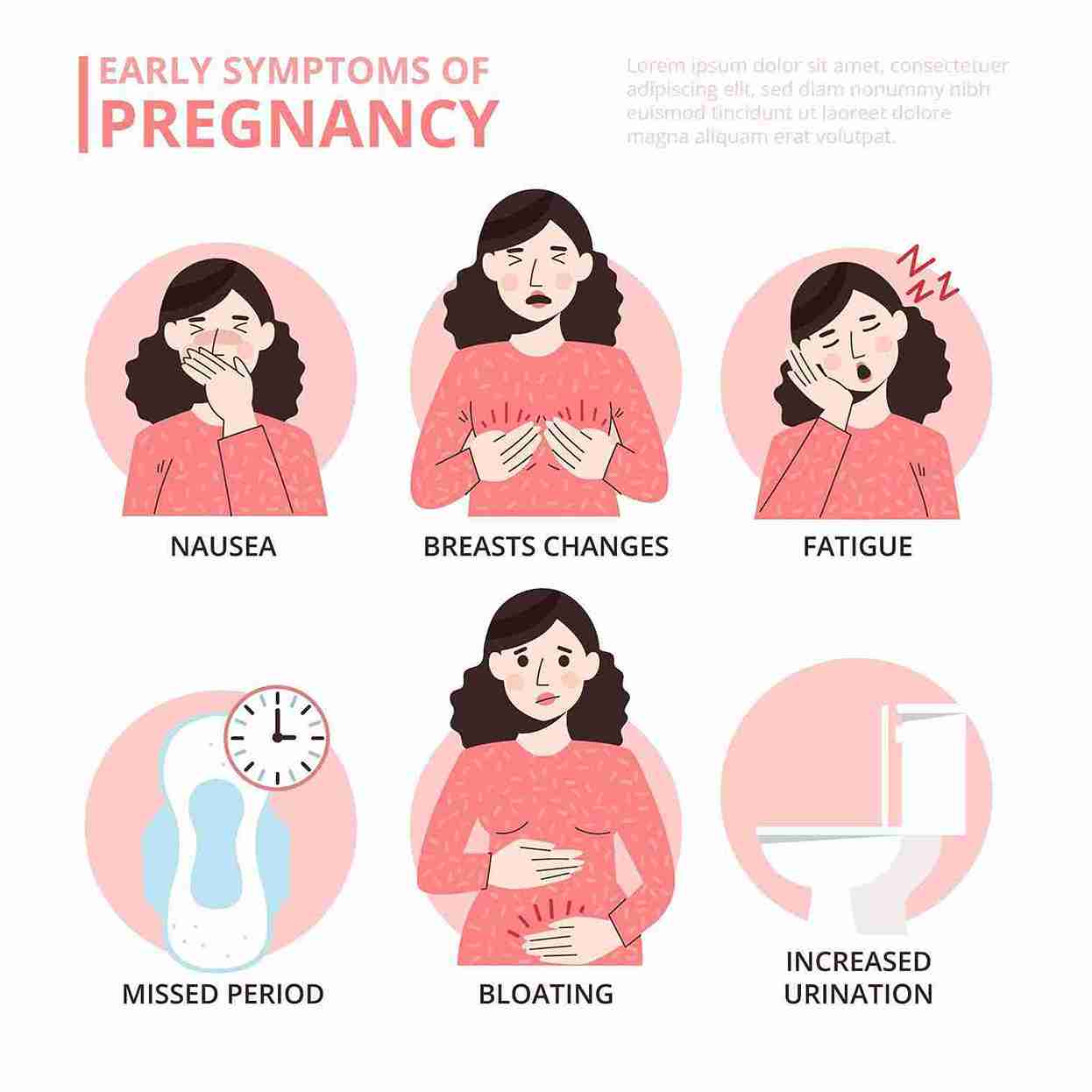
Feeling tired before a period is common. Early pregnancy can also bring noticeable fatigue, particularly as hormonal changes occur. However, fatigue by itself cannot distinguish pregnancy from PMS.
Hormonal fluctuations before menstruation can cause water retention and bloating. Similar hormonal changes can cause bloating during early pregnancy too.
PMS may bring cravings, especially for sweet or salty foods. Pregnancy can also change appetite, sometimes causing food aversions or a sudden dislike of foods you normally enjoy.
Changes in hormones can contribute to headaches both before menstruation and during early pregnancy. Frequent or severe headaches should be discussed with a healthcare professional.
Some symptoms are more suggestive of pregnancy, although they are not experienced by everyone. These include:
Even these symptoms do not prove pregnancy. A pregnancy test is needed for confirmation.
PMS symptoms usually appear during the days or week before a period and often improve once menstruation begins. Pregnancy symptoms can begin around the time of a missed period, although some women notice changes earlier.
There is considerable variation between individuals. Ovulation may occur at different times from one cycle to another, so the timing of symptoms is not always predictable.
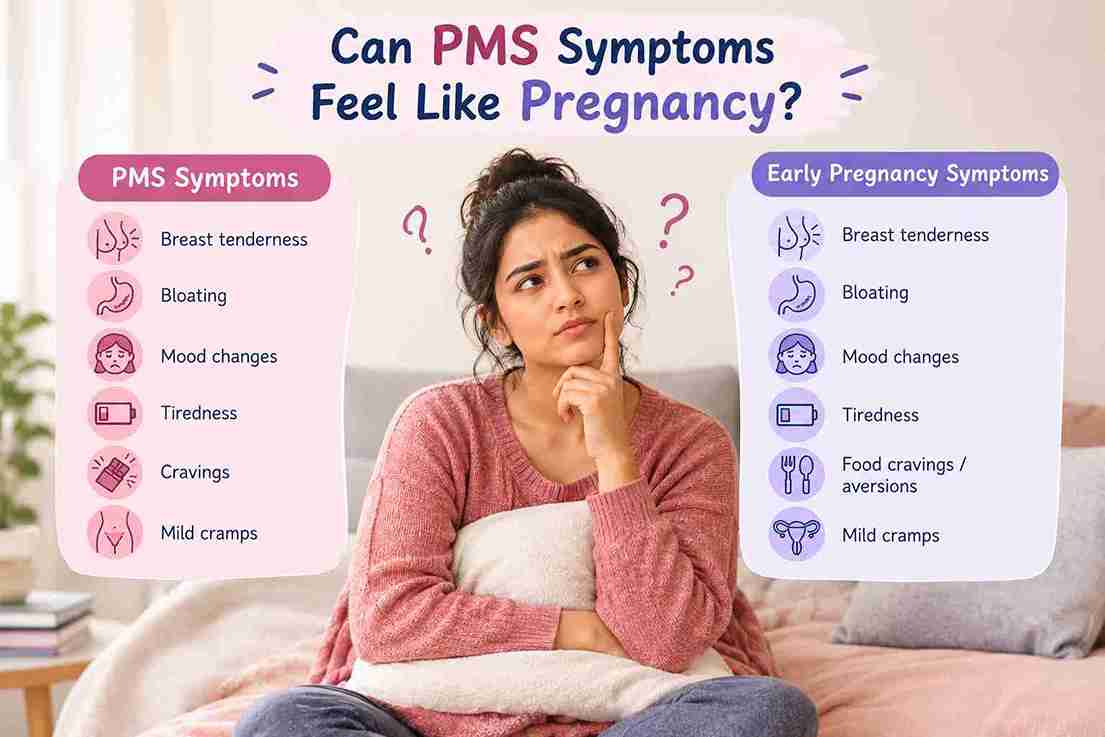
Yes. PMS symptoms can feel very similar to early pregnancy because both involve changes in reproductive hormones. This is why breast soreness, fatigue, cramps and bloating should not be used on their own to determine whether you are pregnant. If your period is late and pregnancy is possible, testing is a more dependable way to find out.
Keeping track of your period dates, usual cycle length, and recurring symptoms can help you understand whether what you are experiencing resembles your normal PMS pattern.
If your period is later than usual, especially after unprotected sex, pregnancy should be considered.
Home pregnancy tests detect human chorionic gonadotropin (hCG) in urine. Testing too early can give a negative result even when pregnancy has occurred because hCG may not yet be high enough to detect.
For most women with regular cycles, testing from the first day of a missed period is more useful. Follow the instructions on the test kit carefully.
If your period is due and does not arrive, you can take a home pregnancy test. Using the first urine of the morning may improve detection, particularly when testing early.
If the result is negative but your period still does not start, repeat the test after a few days. If repeated tests remain negative and your period continues to be delayed, speak with a gynaecologist. Other factors such as stress, illness, PCOS, thyroid problems, weight changes or delayed ovulation can also affect your cycle.

Seek medical advice if you have persistent or severe symptoms, unusual bleeding or symptoms that are significantly different from your usual cycle. If pregnancy is possible, severe abdominal or pelvic pain, heavy bleeding, fainting or marked dizziness requires prompt medical evaluation, particularly when pain is severe or one-sided.
At Cloudnine, concerns about menstrual changes, possible pregnancy and early pregnancy symptoms are approached with personalised care. Gynaecologists and obstetricians consider your menstrual history, symptoms, pregnancy possibility and overall health rather than relying on one symptom alone.
When required, pregnancy testing, ultrasound and other investigations can help clarify what is happening and provide appropriate guidance. This approach can help you get answers without unnecessary worry while ensuring symptoms that need medical attention are not overlooked.
There are many similarities between premenstrual syndrome (PMS) and early pregnancy, which is why it is easy to second-guess every symptom, such as cramps, cravings, or sore breasts. What comes afterwards is the most important indicator: whether the period comes and whether a pregnancy test gives a positive result. In case of a delayed period and possibility of pregnancy, do a pregnancy test on time instead of guessing by the symptoms and seek medical care promptly.


Yes. Early pregnancy can cause cramps, breast tenderness, fatigue, bloating and mood changes that feel similar to PMS. Symptoms alone cannot reliably distinguish between the two.
A missed period is one of the most useful early signs. Nausea, increased urination, breast changes, fatigue, food aversions and sensitivity to smells may also occur, although not every woman experiences them. A pregnancy test is needed for confirmation.
It is difficult to tell from cramps alone because both PMS and early pregnancy can cause mild cramping. The timing of your period and a pregnancy test provide more reliable information.
Mild cramping can occur in early pregnancy, but severe, persistent or one-sided pain should be assessed promptly, particularly if pregnancy is possible.







 Best Gynecologists in Bellandur Best Gynecologists in Electronic City Best Gynecologists in HRBR LayoutBest Gynecologists in Jayanagar Best Gynecologists in Kanakapura RoadBest Gynecologists in Malleswaram Best Gynecologists in Nagarbhavi Best Gynecologists in Old Airport RoadBest Gynecologists in Sahakarnagar Best Gynecologists in Sarjapur RoadBest Gynecologists in ThanisandraBest Gynecologists in Varthur RoadBest Gynecologists in Whitefield Best Gynecologists in Industrial Area Phase IIBest Gynecologists in OMRBest Gynecologists in T NagarBest Gynecologists in New Industrial TownBest Gynecologists in IndirapuramBest Gynecologists in Golf Course RoadBest Gynecologists in Sector 14Best Gynecologists in Sector 47Best Gynecologists in Banjara HillsBest Gynecologists in GachibowliBest Gynecologists in Hitech CityBest Gynecologists in KompallyBest Gynecologists in Gomti NagarBest Gynecologists in MaladBest Gynecologists in NerulBest Gynecologists in VashiBest Gynecologists in Kailash ColonyBest Gynecologists in PatparganjBest Gynecologists in Punjabi BaghBest Gynecologists in VikaspuriBest Gynecologists in Gaur CityBest Gynecologists in Pari ChowkBest Gynecologists in Sector 51Best Gynecologists in Sector 5 Swastik ViharBest Gynecologists in Kalyani NagarBest Gynecologists in SB RoadBest Gynecologists in Pimple SaudagarBest Pediatricians in BellandurBest Pediatricians in Electronic CityBest Pediatricians in HRBR LayoutBest Pediatricians in JayanagarBest Pediatricians in Kanakapura RoadBest Pediatricians in MalleswaramBest Pediatricians in NagarbhaviBest Pediatricians in Old Airport RoadBest Pediatricians in SahakarnagarBest Pediatricians in Sarjapur RoadBest Pediatricians in ThanisandraBest Pediatricians in Varthur RoadBest Pediatricians in WhitefieldBest Pediatricians in Industrial Area Phase IIBest Pediatricians in OMRBest Pediatricians in T NagarBest Pediatricians in New Industrial TownshipBest Pediatricians in IndirapuramBest Pediatricians in Golf Course RoadBest Pediatricians in Sector 14Best Pediatricians in Sector 47Best Pediatricians in Hitech CityBest Pediatricians in Banjara HillsBest Pediatricians in GachibowliBest Pediatricians in KompallyBest Pediatricians in Gomti NagarBest Pediatricians in MaladBest Pediatricians in NerulBest Pediatricians in VashiBest Pediatricians in Kailash ColonyBest Pediatricians in PatparganjBest Pediatricians in Punjabi BaghBest Pediatricians in VikaspuriBest Pediatricians in Gaur CityBest Pediatricians in Pari ChowkBest Pediatricians in Sector 51Best Pediatricians in Sector 5 Swastik ViharBest Pediatricians in Kalyani NagarBest Pediatricians in SB RoadBest Pediatricians in Pimple Saudagar