An ultrasound report mentions an ovarian cyst. Or perhaps it describes the ovaries as “polycystic”. It is easy to see why this can lead to the same question: Does this mean I have PMOS?
Ovarian cysts and polycystic ovary syndrome (PMOS) are not the same condition. An ovarian cyst is a fluid-filled sac that forms on or inside an ovary. On the other hand, PMOS is a complex hormonal and metabolic disorder that can affect ovulation, menstrual cycles, and multiple areas of overall health. Some symptoms may overlap, and the terminology used in ultrasound reports can sometimes add to this confusion.
Understanding the difference is important because the two conditions are diagnosed and managed differently.

Much of the confusion comes from the word “polycystic” in PMOS. Despite the name, PCOS does not simply mean that someone has multiple ovarian cysts.
In PMOS, an ultrasound may show a particular pattern called polycystic ovarian morphology, which reflects multiple small follicles in the ovaries. These follicles are not the same as the ovarian cysts that may develop independently.
An ovarian cyst is a sac or cystic growth that develops in or on an ovary. Ovarian cysts can have different appearances and contents, and there are several types.
Many develop as part of the normal menstrual cycle and are benign. These functional cysts often disappear on their own over time without requiring treatment. Other ovarian cysts are unrelated to normal ovulation and may require closer evaluation based on their size, appearance, symptoms, and duration.
Many ovarian cysts cause no symptoms at all and are found unexpectedly during an ultrasound performed for another reason.
When ovarian cyst symptoms do occur, they can vary depending on the cyst and the individual. Some people may experience:
● Pelvic pain or a feeling of pressure.
● Bloating or fullness in the lower abdomen.
● Discomfort during certain activities or sexual intercourse.
● Changes in menstrual patterns in some cases.
Having these symptoms does not confirm that an ovarian cyst is the cause, as several gynaecological conditions can produce similar symptoms. If symptoms persist or recur, a clinical assessment can help determine their cause.
PMOS is a hormonal and metabolic condition that can affect how the ovaries function. Unlike an individual ovarian cyst, it is a broader condition that may influence ovulation, menstrual cycles, androgen levels and metabolic health.
Women with PMOS can experience a variety of symptoms and characteristics. These may include irregular or infrequent periods, difficulties with regular ovulation, acne, increased facial or body hair, or other signs associated with higher androgen levels. Some may also have metabolic concerns, such as insulin resistance.
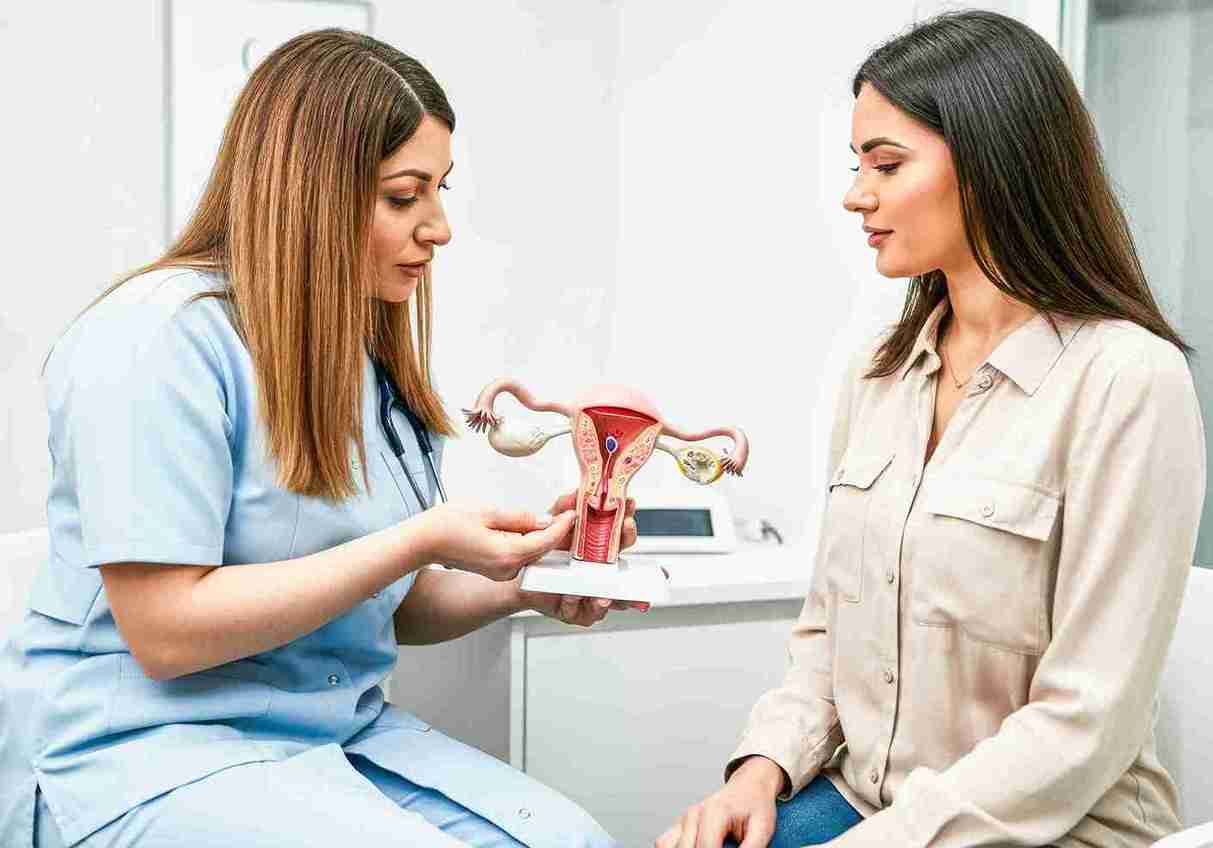
PCOS was renamed polyendocrine metabolic ovarian syndrome (PMOS) in 2026. The updated name highlights that PCOS is primarily a hormonal and metabolic disorder, not one defined by the presence of ovarian cysts.
Because some symptoms of an ovarian cyst and PMOS can overlap, symptoms alone may not be enough to tell the two apart.
For an ovarian cyst, your gynaecologist may consider your symptoms, menstrual history and findings from a pelvic ultrasound. The scan can provide information about the cyst’s size and appearance, which helps determine whether it simply needs monitoring or further evaluation.
Diagnosis is based on established diagnostic criteria rather than merely having polycystic ovaries.The international guidelines combination of ovulatory dysfunction, hyperandrogenism and ovarian morphology/AMH , and exclusion of relavant alternative diagnoses.
Here’s a quick comparison to help you understand how an ovarian cyst and PCOS differ in their features, diagnosis and management.
Yes. PCOS and ovarian cysts can occur together. If a scan identifies a cyst in someone who also has PCOS, it is assessed based on its characteristics and the person's symptoms.
The approach to an ovarian cyst depends on what the scan shows and whether it is causing symptoms. Many cysts, particularly those related to the menstrual cycle, may resolve on their own and only need monitoring.
When ovarian cyst treatment is needed, your gynaecologist will consider factors such as the cyst's size and appearance, whether it is changing over time, and the symptoms it is causing. In some situations, surgery may be recommended, but finding a cyst does not automatically mean an operation is necessary.
PCOS usually requires a different, longer-term approach. Management is tailored to the concerns that matter to the individual, which may include menstrual irregularity, androgen-related symptoms, fertility or metabolic health. These needs can evolve; hence the management plan may need to be adjusted accordingly.
Consider speaking with a gynaecologist if you have persistent or recurring pelvic discomfort, noticeable changes in your menstrual cycle or symptoms that may suggest PCOS. An ovarian finding identified on a scan may also need follow-up depending on your doctor's assessment.
Some symptoms need more immediate attention. Seek urgent medical care for sudden, severe pelvic or abdominal pain, particularly if it is accompanied by nausea, vomiting, fainting, feeling extremely unwell or very weak. These symptoms can occasionally occur with complications such as ovarian torsion or a ruptured cyst and should be assessed promptly.

Seeing the words ovarian cyst or polycystic ovaries on a scan report can understandably raise questions. Rather than concluding from the terminology alone, discuss the finding with your gynaecologist in the context of your symptoms and medical history.
An appropriate assessment can clarify what the scan finding means for you and whether monitoring, further evaluation or ongoing management is needed.

An ovarian cyst is a fluid-filled sac that develops in or on an ovary, while PCOS is a hormonal and metabolic condition that can affect ovulation, menstrual cycles, and other aspects of health.
No. PCOS is a hormonal and metabolic condition, while ovarian cysts are separate ovarian findings. The small follicles associated with polycystic ovarian morphology are not the same as typical ovarian cysts.
No. Having ovarian cysts does not mean you have PCOS. PCOS is diagnosed using a combination of clinical and, where appropriate, laboratory or ultrasound findings.
Not in the way the name may suggest. The “polycystic” appearance associated with PCOS refers to multiple small ovarian follicles rather than typical ovarian cysts.







 Best Gynecologists in Bellandur Best Gynecologists in Electronic City Best Gynecologists in HRBR LayoutBest Gynecologists in Jayanagar Best Gynecologists in Kanakapura RoadBest Gynecologists in Malleswaram Best Gynecologists in Nagarbhavi Best Gynecologists in Old Airport RoadBest Gynecologists in Sahakarnagar Best Gynecologists in Sarjapur RoadBest Gynecologists in ThanisandraBest Gynecologists in Varthur RoadBest Gynecologists in Whitefield Best Gynecologists in Industrial Area Phase IIBest Gynecologists in OMRBest Gynecologists in T NagarBest Gynecologists in New Industrial TownBest Gynecologists in IndirapuramBest Gynecologists in Golf Course RoadBest Gynecologists in Sector 14Best Gynecologists in Sector 47Best Gynecologists in Banjara HillsBest Gynecologists in GachibowliBest Gynecologists in Hitech CityBest Gynecologists in KompallyBest Gynecologists in Gomti NagarBest Gynecologists in MaladBest Gynecologists in NerulBest Gynecologists in VashiBest Gynecologists in Kailash ColonyBest Gynecologists in PatparganjBest Gynecologists in Punjabi BaghBest Gynecologists in VikaspuriBest Gynecologists in Gaur CityBest Gynecologists in Pari ChowkBest Gynecologists in Sector 51Best Gynecologists in Sector 5 Swastik ViharBest Gynecologists in Kalyani NagarBest Gynecologists in SB RoadBest Gynecologists in Pimple SaudagarBest Pediatricians in BellandurBest Pediatricians in Electronic CityBest Pediatricians in HRBR LayoutBest Pediatricians in JayanagarBest Pediatricians in Kanakapura RoadBest Pediatricians in MalleswaramBest Pediatricians in NagarbhaviBest Pediatricians in Old Airport RoadBest Pediatricians in SahakarnagarBest Pediatricians in Sarjapur RoadBest Pediatricians in ThanisandraBest Pediatricians in Varthur RoadBest Pediatricians in WhitefieldBest Pediatricians in Industrial Area Phase IIBest Pediatricians in OMRBest Pediatricians in T NagarBest Pediatricians in New Industrial TownshipBest Pediatricians in IndirapuramBest Pediatricians in Golf Course RoadBest Pediatricians in Sector 14Best Pediatricians in Sector 47Best Pediatricians in Hitech CityBest Pediatricians in Banjara HillsBest Pediatricians in GachibowliBest Pediatricians in KompallyBest Pediatricians in Gomti NagarBest Pediatricians in MaladBest Pediatricians in NerulBest Pediatricians in VashiBest Pediatricians in Kailash ColonyBest Pediatricians in PatparganjBest Pediatricians in Punjabi BaghBest Pediatricians in VikaspuriBest Pediatricians in Gaur CityBest Pediatricians in Pari ChowkBest Pediatricians in Sector 51Best Pediatricians in Sector 5 Swastik ViharBest Pediatricians in Kalyani NagarBest Pediatricians in SB RoadBest Pediatricians in Pimple Saudagar