





Uterine fibroids are among the most common gynaecological conditions in India, affecting a significant proportion of women between their thirties and menopause. It is usually an incidental finding during a routine ultrasound. Others seek help because of heavy periods, pelvic pressure, or difficulty conceiving. And for most, the first question after diagnosis is the same: do I need surgery?
The answer, in many cases, is no. Non-surgical fibroid treatment has expanded significantly over the last decade. Depending on the size, location, and symptoms caused by the fibroids, there are several effective options to manage symptoms, slow fibroid growth, and, in some cases, shrink fibroids substantially without surgery.

Fibroids, also called uterine leiomyomas or myomas, are non-cancerous growths of the uterine muscle. They range in size from a few millimetres to several centimetres. They can be located within the uterine muscle (intramural), just beneath the inner lining (submucosal), or on the outer surface of the uterus (subserosal).
Their location matters as much as their size. A small submucosal fibroid inside the uterine cavity can cause heavy bleeding and fertility problems, while a much larger intramural or subserosal fibroid may cause no symptoms at all.
Most fibroids are estrogen-sensitive; they grow when estrogen is high, which is during the reproductive years, and shrink after menopause when estrogen levels fall. This hormonal dependence is what most medical treatments work with.
Non-surgical options work best when:
● Fibroids are causing symptoms, but the woman wants to avoid surgery.
● The woman wants to preserve her uterus, either for fertility or personal preference.
● The fibroids are not located in a position that requires surgical removal for conception to be possible.
● The woman is approaching menopause, after which fibroids typically shrink on their own.
● Symptoms are manageable with medication and close monitoring.
Surgery becomes the more appropriate conversation when fibroids are very large, are causing severe anaemia or significant pressure symptoms, are clearly blocking the fallopian tubes or distorting the uterine cavity in a way affecting fertility, or when non-surgical approaches have not controlled symptoms adequately.
Gonadotropin-releasing hormone (GnRH) agonists, such as leuprolide, suppress estrogen production, creating a temporary medical menopause. Without estrogen to stimulate them, fibroids typically shrink by 30–50% over 3–6 months of treatment. They may be considered as part of an individual's uterine fibroid treatment options, especially in the short term. It is used:
● To reduce fibroid size before surgery, making the operation easier.
● To manage symptoms in women approaching menopause, buying time until natural shrinkage occurs post-menopause.
● Short-term before IVF in women where fibroids may be affecting implantation.
The limitation is duration. GnRH agonists cause menopausal side effects, like hot flushes, bone density reduction, and mood changes, and cannot be used for more than six months continuously. Fibroids typically regrow after treatment is stopped. They are a bridge, not a permanent solution.
Newer GnRH antagonists work similarly to GnRH agonists in suppressing estrogen and shrinking fibroids but act more quickly and have a more manageable side effect profile when combined with low-dose add-back hormone therapy. These are increasingly available in India and represent a significant advance in fibroid treatment without surgery and medication dependence on older regimens.
The hormonal IUD does not shrink fibroids but significantly reduces heavy menstrual bleeding, which is one of the most disruptive symptoms fibroids cause. It works by locally thinning the uterine lining and is particularly useful for women with intramural fibroids when the uterine cavity is not significantly distorted.
For women whose primary complaint is heavy bleeding rather than pain or pressure, the Mirena IUD can dramatically improve quality of life without any systemic hormonal treatment.
Combined pills and progestogen-only preparations do not reliably shrink fibroids but can help manage cycle-related bleeding and reduce period heaviness. They are a reasonable first step for symptom management in women with small fibroids where bleeding is the main concern.
Tranexamic acid is a non-hormonal medication taken during the period that reduces blood loss by promoting clotting. It does not affect the fibroids themselves but can significantly reduce the volume of menstrual bleeding, often by 40-50%, and is safe for women who cannot or prefer not to use hormonal medication.
Not a fibroid treatment in itself, but an essential accompanying measure. Heavy fibroid-related bleeding causes iron deficiency anaemia in a large proportion of affected Indian women. Addressing anaemia improves fatigue, energy, and quality of life while other fibroid management is being considered.
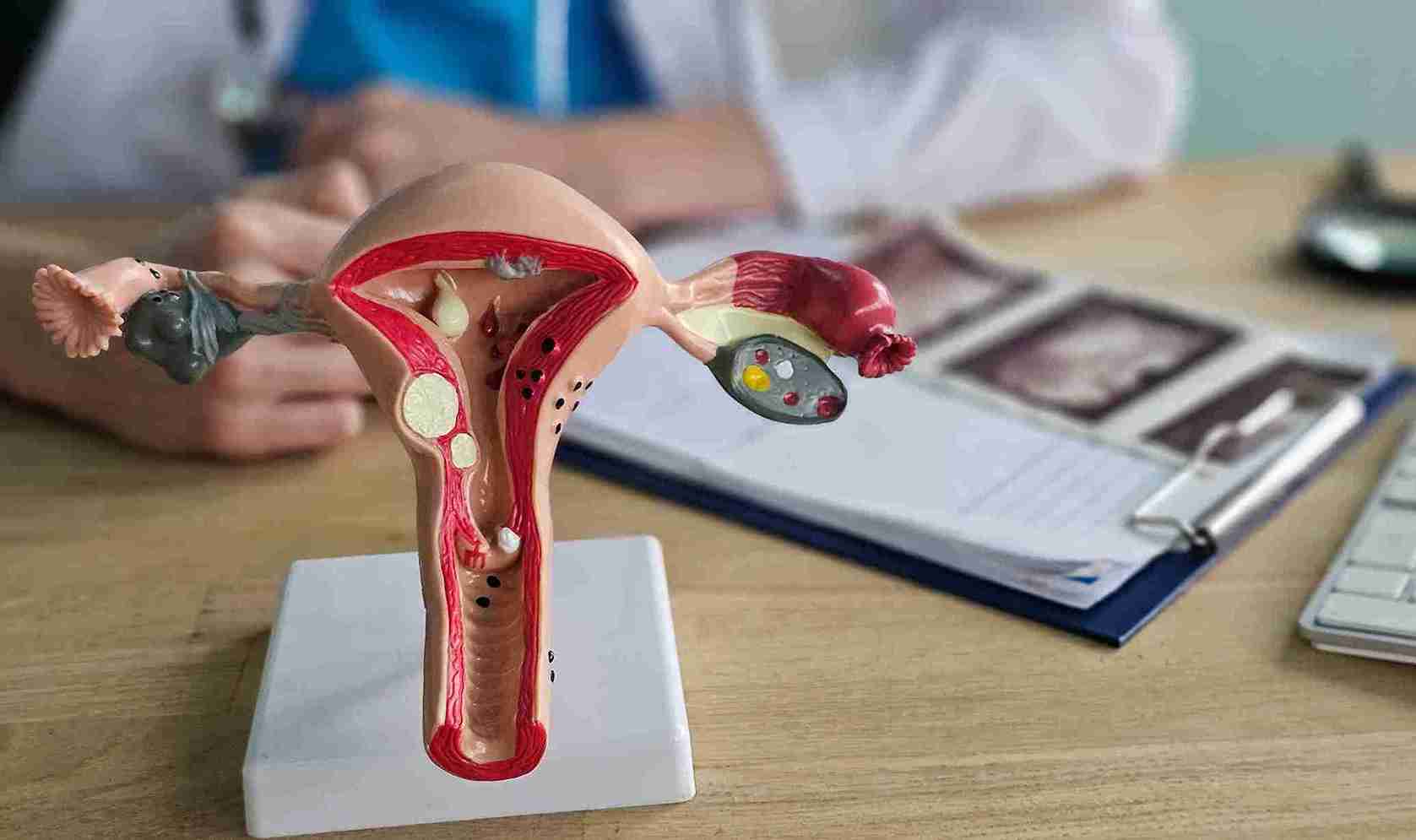
Beyond medication, several procedures can treat fibroids without conventional surgery.
Uterine fibroid embolisation is a radiologically guided procedure in which tiny particles are injected into the blood vessels supplying the fibroids, cutting off their blood supply. Without blood flow, the fibroids shrink and die. Most women experience a significant reduction in symptoms, both bleeding and bulk-related pressure, over the following months.
UFE is done under conscious sedation, not general anaesthesia. Hospital stay is 1-2 days, and most women return to normal activity within 1-2 weeks, compared with 4-6 weeks after open surgery.
UFE is useful for fibroid treatment without hysterectomy in women who want to preserve the uterus and are not prioritising future fertility.
These techniques use focused ultrasound waves to heat and destroy fibroid tissue without any incision. Treatment is performed while the patient is inside an MRI scanner, which precisely guides the ultrasound beam. It is completely non-invasive: no cuts, no needles.
Limitations include availability, suitability criteria, as not all fibroid locations are accessible, and the possibility that multiple sessions may be needed for larger fibroids.
Endometrial ablation destroys the inner lining of the uterus to reduce heavy bleeding. It is not a fibroid treatment; it does not affect the fibroids, but it can significantly reduce bleeding in women with small submucosal or intramural fibroids that do not severely distort the cavity.
It is not appropriate for women who want to preserve fertility, as the procedure makes pregnancy very unlikely and potentially dangerous afterwards.
After menopause, when estrogen levels fall naturally, fibroids shrink, sometimes dramatically. For women who are close to menopause and whose symptoms are manageable, a watchful waiting approach with regular monitoring may be entirely reasonable.
For premenopausal women, fibroids rarely disappear entirely on their own and typically grow slowly over time. However, not all fibroids need treatment; a fibroid that is not causing symptoms and is not affecting fertility can be monitored annually with an ultrasound without any active intervention.

Surgery is not the only answer to uterine fibroids. A growing range of non-surgical and minimally invasive options can effectively manage symptoms, reduce fibroid size, and preserve the uterus. These are tailored to the individual woman's symptoms, fibroid profile, fertility goals, and proximity to menopause. The right treatment is the one that addresses your specific situation, not a default to the most dramatic intervention available. An informed discussion with your gynaecologist can help you understand the surgical and non-surgical options based on your individual condition and investigations, supporting a decision that is right for you.

Yes. Non-surgical fibroid treatment options can be medications like GnRH agonists, hormonal IUDs, tranexamic acid, and minimally invasive procedures like uterine fibroid embolisation (UFE) and focused ultrasound. The right option depends on fibroid size, location, symptoms, and whether fertility preservation is a priority. Not all fibroids need treatment; those causing no symptoms can be monitored annually.
Uterine fibroid treatment options without surgery include GnRH agonists to shrink fibroids, GnRH antagonists, the hormonal IUD for heavy bleeding, tranexamic acid for blood loss reduction, combined oral contraceptive pills, uterine fibroid embolisation (UFE) to cut off fibroid blood supply, and MRI-guided focused ultrasound (MRgFUS) to destroy fibroid tissue without incision.
Yes, significantly. GnRH agonists are the most effective medical option; they suppress oestrogen and typically shrink fibroids. Newer GnRH antagonists with add-back therapy offer a more sustainable approach. However, most medical treatments provide temporary shrinkage, and fibroids tend to regrow after stopping medication. Medication is often used as a bridge before a procedure or to manage symptoms in women approaching menopause.
After menopause, fibroids typically shrink as estrogen levels fall. For premenopausal women, fibroids rarely disappear on their own. They tend to grow slowly over the reproductive years. Fibroid treatment without hysterectomy or surgery may not be needed if fibroids are small and asymptomatic; these can be safely monitored with annual ultrasound. Treatment is recommended when symptoms affect quality of life, cause anaemia, or interfere with fertility.


 Best Gynecologists in Bellandur Best Gynecologists in Electronic City Best Gynecologists in HRBR LayoutBest Gynecologists in Jayanagar Best Gynecologists in Kanakapura RoadBest Gynecologists in Malleswaram Best Gynecologists in Nagarbhavi Best Gynecologists in Old Airport RoadBest Gynecologists in Sahakarnagar Best Gynecologists in Sarjapur RoadBest Gynecologists in ThanisandraBest Gynecologists in Varthur RoadBest Gynecologists in Whitefield Best Gynecologists in Industrial Area Phase IIBest Gynecologists in OMRBest Gynecologists in T NagarBest Gynecologists in New Industrial TownBest Gynecologists in IndirapuramBest Gynecologists in Golf Course RoadBest Gynecologists in Sector 14Best Gynecologists in Sector 47Best Gynecologists in Banjara HillsBest Gynecologists in GachibowliBest Gynecologists in Hitech CityBest Gynecologists in KompallyBest Gynecologists in Gomti NagarBest Gynecologists in MaladBest Gynecologists in NerulBest Gynecologists in VashiBest Gynecologists in Kailash ColonyBest Gynecologists in PatparganjBest Gynecologists in Punjabi BaghBest Gynecologists in VikaspuriBest Gynecologists in Gaur CityBest Gynecologists in Pari ChowkBest Gynecologists in Sector 51Best Gynecologists in Sector 5 Swastik ViharBest Gynecologists in Kalyani NagarBest Gynecologists in SB RoadBest Gynecologists in Pimple SaudagarBest Pediatricians in BellandurBest Pediatricians in Electronic CityBest Pediatricians in HRBR LayoutBest Pediatricians in JayanagarBest Pediatricians in Kanakapura RoadBest Pediatricians in MalleswaramBest Pediatricians in NagarbhaviBest Pediatricians in Old Airport RoadBest Pediatricians in SahakarnagarBest Pediatricians in Sarjapur RoadBest Pediatricians in ThanisandraBest Pediatricians in Varthur RoadBest Pediatricians in WhitefieldBest Pediatricians in Industrial Area Phase IIBest Pediatricians in OMRBest Pediatricians in T NagarBest Pediatricians in New Industrial TownshipBest Pediatricians in IndirapuramBest Pediatricians in Golf Course RoadBest Pediatricians in Sector 14Best Pediatricians in Sector 47Best Pediatricians in Hitech CityBest Pediatricians in Banjara HillsBest Pediatricians in GachibowliBest Pediatricians in KompallyBest Pediatricians in Gomti NagarBest Pediatricians in MaladBest Pediatricians in NerulBest Pediatricians in VashiBest Pediatricians in Kailash ColonyBest Pediatricians in PatparganjBest Pediatricians in Punjabi BaghBest Pediatricians in VikaspuriBest Pediatricians in Gaur CityBest Pediatricians in Pari ChowkBest Pediatricians in Sector 51Best Pediatricians in Sector 5 Swastik ViharBest Pediatricians in Kalyani NagarBest Pediatricians in SB RoadBest Pediatricians in Pimple Saudagar


