


Few things send a parent into a panic faster than a hot, crying baby. Fever in infants is one of the most common reasons parents rush to a paediatrician or emergency room, and understandably so. In very young babies, fever can be a sign of a serious infection. In older infants, it is usually the body fighting off a mild illness. Knowing the difference and understanding exactly when to act is what this guide is for.
Fever in babies is not a disease. It is a sign that the immune system is working. But in young babies, especially those less than three months old, it always needs to be taken seriously, regardless of how minor the cause might be.
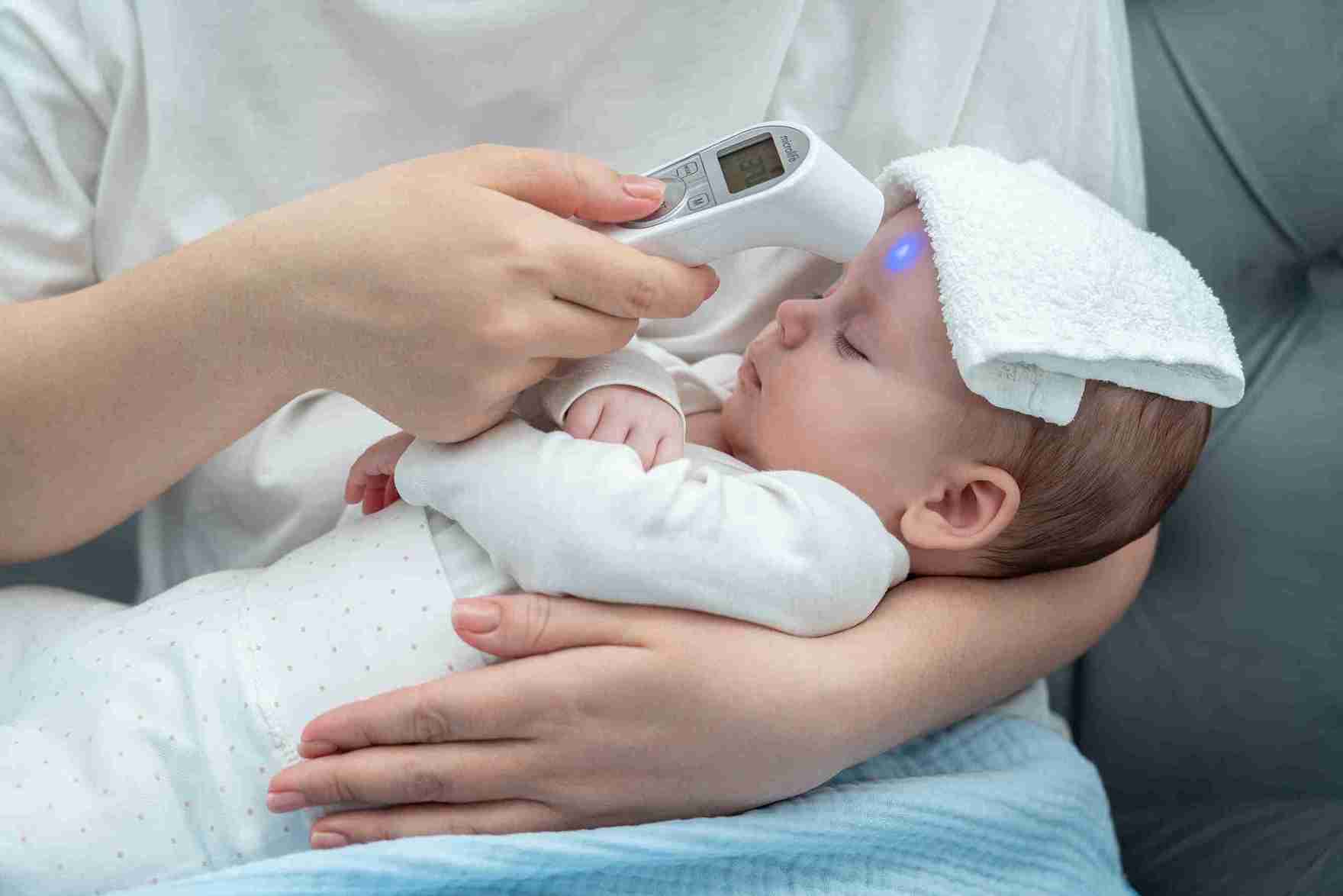
Before knowing what a fever is, it helps to know what normal looks like.
Normal temperature for babies is generally between 97.7°F and 99.5°F, regardless of how it is measured. This range is similar to that of adults, though babies have less ability to regulate body temperature; they heat up and cool down more quickly than older children.
A baby's temperature can vary slightly depending on the time of day, recent feeding, clothing, room temperature, and activity level. This normal variation is not a fever.
A baby fever temperature is generally defined as:
100.4°F or above when measured rectally.
100°F or above when measured orally.
99.3°F or above when measured in the armpit.
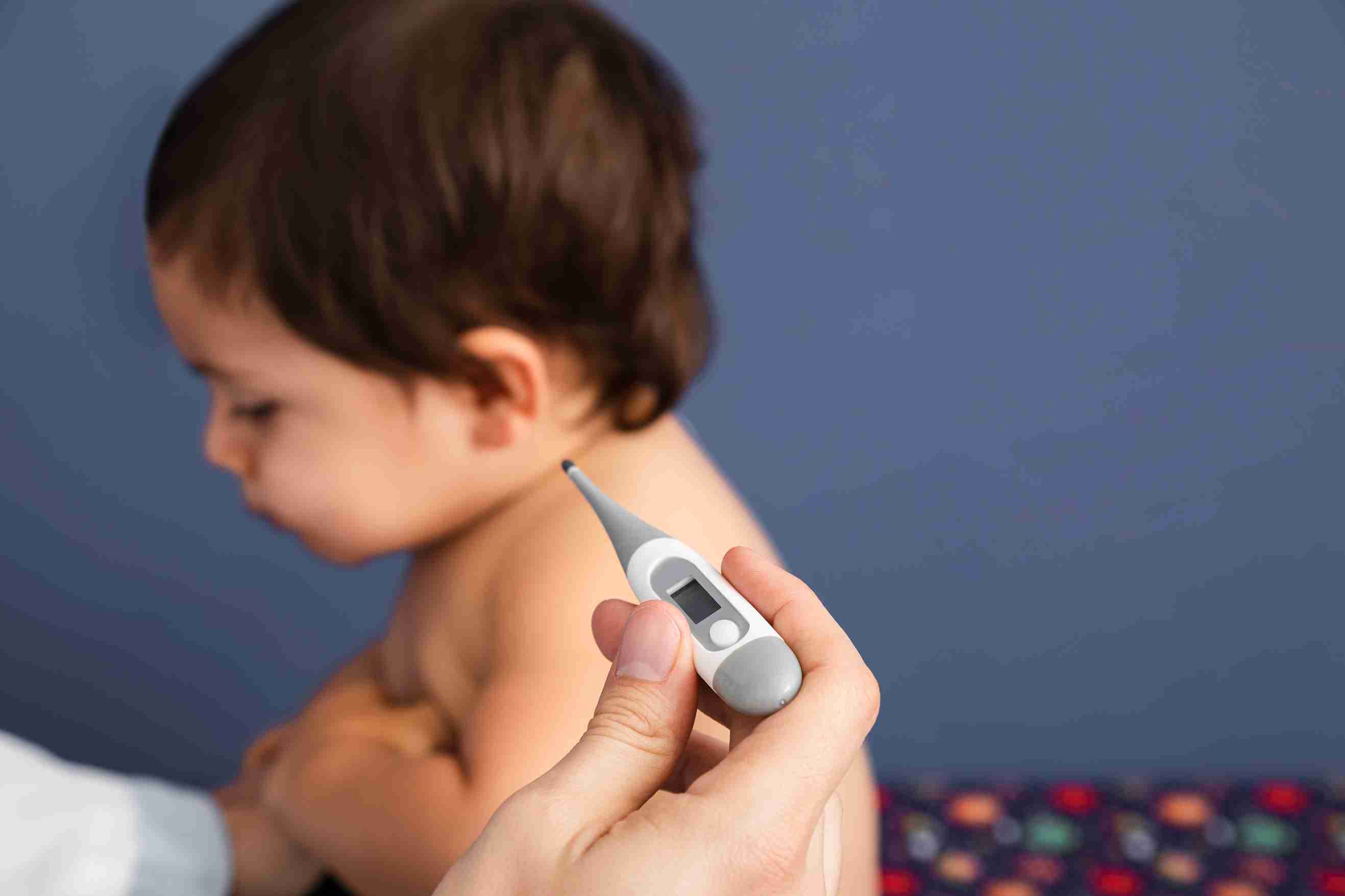
Rectal temperature is the most accurate and is preferred by most paediatricians for young infants. Axillary (armpit) temperature is the most commonly used method by parents at home and is convenient, but it tends to read slightly lower than the true core temperature. If you are measuring under the arm and get a reading above 99.3°F, treat it as a fever.
Ear thermometers are popular in Indian households because they are fast and easy to use. They can be accurate when used correctly, but require the right positioning of the ear canal. In children under 6 months, ear thermometers are less reliable due to the smaller ear canal.
What to use: A digital thermometer is the most reliable, affordable, and accurate option for home use. Avoid forehead strips and mercury thermometers, as the former is inaccurate and the latter poses a risk of mercury poisoning if broken.
The number on the thermometer is one piece of information. How the baby looks and behaves tells you just as much. Baby fever symptoms that suggest the illness is mild and manageable at home:
The baby is unhappy and fussy, but can be comforted.
They are still feeding: at the breast, bottle, or with some solids if older.
They are responsive: making eye contact, reacting to sounds and faces.
They are having some wet nappies, which implies that hydration is being maintained.
The fever comes down with paracetamol, and the baby is more comfortable for a few hours.
The baby is under three months old and has a temperature of 100.4°F or above.
The baby is between 3-6 months with a fever of 102°F or above.
The baby is inconsolable and cannot be settled despite feeding, cuddling, or paracetamol.
Breathing is fast, laboured, or noisy.
The baby has a high-pitched, unusual cry.
The skin has a purple or red rash that does not fade when pressed with a glass; this is a medical emergency indicating a possible meningococcal infection.
The baby is limp, floppy, or very difficult to wake.
The fontanelle (soft spot on the head) is bulging.
There are convulsions.
Most fevers in babies are caused by viral infections, like colds, upper respiratory infections, ear infections, and stomach bugs. These are the same viruses that affect everyone in the household and are far more common than serious bacterial infections. Other causes can be:
Bacterial infections, like urinary tract infections, pneumonia, and, in serious cases, meningitis or sepsis.
Teething can also cause a very slight temperature rise and is quite common, but a fever above 100.4°F may not be due to teething alone.
Post-vaccination fever after vaccines is normal. It typically appears within 24 hours of the vaccination and resolves within 1-2 days.
Overheating, if babies are dressed too warmly or in a very hot room, can cause a raised temperature that is not a true fever. Remove a layer of clothing, wait 15 minutes, and measure again.
Go to the doctor the same day or the same night if:
The baby is under three months and has a fever of 100.4°F or above.
A fever is above 104°F in any baby.
Fever has lasted more than three days in babies under two years.
The baby is not feeding or producing significantly fewer wet nappies than usual.
There are other worrying symptoms, like ear pulling, persistent crying, unusual rash, breathing changes.
There is a rash that does not fade with pressure (glass test).
The baby is having a convulsion.
The baby is limp, unresponsive, or very difficult to rouse.
Breathing is seriously laboured or very fast.
The fontanelle is bulging.
Febrile convulsions are seizures triggered by fever and affect a small proportion of children between six months and five years of age. They look alarming but are usually brief, typically under 5 minutes, and do not cause brain damage in most cases. During a febrile convulsion:
Lay the baby on their side on a flat surface.
Do not put anything in their mouth.
Do not restrain them.
Time the seizure.
Call an ambulance if the seizure lasts more than five minutes or if the baby does not recover quickly.
After any febrile convulsion, the baby should be assessed by a doctor, even if they have recovered.

Fever in babies is common and usually not dangerous in babies over three months who are feeding, alert, and responding normally. But in the early weeks of life, and whenever specific warning signs are present, it needs prompt medical attention. Know your baby's normal temperature, keep a reliable digital thermometer at home, dose paracetamol correctly by weight, and trust your instinct when something feels seriously wrong.

A baby has a fever of 100.4°F or above when measured rectally, which is the standard definition of fever in babies. When measured in the armpit, a reading above 99.3°F is considered a fever. The normal temperature for babies ranges from 97.7°F to 99.5°F. A digital thermometer is the most reliable home tool.
Fever in a baby under three months is always taken seriously, not because fever itself is dangerous, but because it can indicate a serious bacterial infection that needs urgent investigation and treatment. Newborns and very young infants have limited ability to fight infection and may not show the obvious signs older babies do.
Give infant paracetamol at the correct dose for the baby's weight in kg; never guess the dose or overdose. Dress the baby lightly in a single layer of cotton. Feed frequently to maintain hydration. Keep the room comfortable, not cold, not hot. Do not wrap the baby in extra blankets. Always call or visit the paediatrician to get the recommended dosage.
Go to the emergency department immediately if baby fever symptoms include a rash that does not fade when pressed with a glass, a convulsion, a limp or very difficult-to-rouse baby, fast or laboured breathing, or a bulging fontanelle. Also seek same-day attention for any fever in a baby under three months, fever above 104°F in any baby, fever lasting more than three days, or a baby who is not feeding or producing wet nappies.


 Best Gynecologists in Bellandur Best Gynecologists in Electronic City Best Gynecologists in HRBR LayoutBest Gynecologists in Jayanagar Best Gynecologists in Kanakapura RoadBest Gynecologists in Malleswaram Best Gynecologists in Nagarbhavi Best Gynecologists in Old Airport RoadBest Gynecologists in Sahakarnagar Best Gynecologists in Sarjapur RoadBest Gynecologists in ThanisandraBest Gynecologists in Varthur RoadBest Gynecologists in Whitefield Best Gynecologists in Industrial Area Phase IIBest Gynecologists in OMRBest Gynecologists in T NagarBest Gynecologists in New Industrial TownBest Gynecologists in IndirapuramBest Gynecologists in Golf Course RoadBest Gynecologists in Sector 14Best Gynecologists in Sector 47Best Gynecologists in Banjara HillsBest Gynecologists in GachibowliBest Gynecologists in Hitech CityBest Gynecologists in KompallyBest Gynecologists in Gomti NagarBest Gynecologists in MaladBest Gynecologists in NerulBest Gynecologists in VashiBest Gynecologists in Kailash ColonyBest Gynecologists in PatparganjBest Gynecologists in Punjabi BaghBest Gynecologists in VikaspuriBest Gynecologists in Gaur CityBest Gynecologists in Pari ChowkBest Gynecologists in Sector 51Best Gynecologists in Sector 5 Swastik ViharBest Gynecologists in Kalyani NagarBest Gynecologists in SB RoadBest Gynecologists in Pimple SaudagarBest Pediatricians in BellandurBest Pediatricians in Electronic CityBest Pediatricians in HRBR LayoutBest Pediatricians in JayanagarBest Pediatricians in Kanakapura RoadBest Pediatricians in MalleswaramBest Pediatricians in NagarbhaviBest Pediatricians in Old Airport RoadBest Pediatricians in SahakarnagarBest Pediatricians in Sarjapur RoadBest Pediatricians in ThanisandraBest Pediatricians in Varthur RoadBest Pediatricians in WhitefieldBest Pediatricians in Industrial Area Phase IIBest Pediatricians in OMRBest Pediatricians in T NagarBest Pediatricians in New Industrial TownshipBest Pediatricians in IndirapuramBest Pediatricians in Golf Course RoadBest Pediatricians in Sector 14Best Pediatricians in Sector 47Best Pediatricians in Hitech CityBest Pediatricians in Banjara HillsBest Pediatricians in GachibowliBest Pediatricians in KompallyBest Pediatricians in Gomti NagarBest Pediatricians in MaladBest Pediatricians in NerulBest Pediatricians in VashiBest Pediatricians in Kailash ColonyBest Pediatricians in PatparganjBest Pediatricians in Punjabi BaghBest Pediatricians in VikaspuriBest Pediatricians in Gaur CityBest Pediatricians in Pari ChowkBest Pediatricians in Sector 51Best Pediatricians in Sector 5 Swastik ViharBest Pediatricians in Kalyani NagarBest Pediatricians in SB RoadBest Pediatricians in Pimple Saudagar