
A generation ago, a chubby child was considered a healthy child in most Indian households. Extra weight meant the family was eating well. That thinking has shifted, but not fast enough. India now has one of the highest numbers of overweight and obese children in the world, and the health consequences are showing up earlier than ever - high blood pressure, fatty liver, pre-diabetes, and joint problems in children who are still in primary school.
Childhood obesity is not about appearance. It is a medical condition with real health consequences that follow children into adulthood. And it is largely preventable, not through punishing diets or extreme exercise, but through consistent, practical changes to everyday habits.
In adults, obesity is defined by BMI. In children, BMI is plotted on an age-sex-specific growth chart. A child above the 95th percentile for their age and sex is considered obese. Between the 85th and 95th percentile is considered overweight.
A paediatrician assesses this at routine check-ups. Parents who are concerned about their child's weight should ask for the BMI percentile at the next visit rather than relying on visual assessment alone, as children carry weight differently at different ages, and what looks normal may not always be.
Understanding why a child is gaining excess weight is the first step. There is rarely a single cause. In most cases, it is a combination of diet, activity, environment, and in some cases, medical factors.
Over the last 15 years, the Indian child's diet has shifted towards packaged snacks, sugary drinks, fast food, and refined carbohydrates, foods that are energy-dense and nutrient-poor. A child who drinks two cold drinks a day and snacks on biscuits and chips between meals is consuming excess calories consistently, often without anyone tracking it.
Many children in Indian cities go to school by car or auto, spend hours at a desk doing homework, have limited outdoor play space, and fill remaining time with screens. The hours of running, cycling, and playing that previous generations took for granted have simply disappeared from many children's days.
Eating in front of a screen reduces awareness of how much is being eaten and is consistently linked to overeating in children.
Children who sleep less than the recommended hours for their age produce more ghrelin (the hunger hormone) and less leptin (the satiety hormone). The result is increased appetite and reduced ability to feel full. Late nights are a real contributor to childhood obesity causes.
Children of parents who are overweight are at higher risk, partly due to genetics and partly because dietary and activity habits are family-wide, not individual. Changing one child's eating habits without changing the household environment rarely works in the long run.
Thyroid disorders, PCOD in adolescent girls, Cushing's syndrome, and certain medications can contribute to weight gain. These are less common but should be ruled out in children who are gaining weight rapidly despite reasonable diet and activity habits. A paediatrician can screen for these with basic blood tests.
The consequences of childhood obesity are not theoretical or distant. They are showing up in clinics right now:
Type 2 diabetes - previously rare in children, now being diagnosed in teenagers with obesity and insulin resistance
Fatty liver disease - non-alcoholic fatty liver disease (NAFLD) is increasingly common in obese children and can progress to liver damage
High blood pressure and early cardiovascular risk
Sleep apnoea - disrupted sleep from airway obstruction during sleep, which worsens fatigue and academic performance
Joint problems - excess weight on developing joints causes pain and can affect gait
Mental health - children who are overweight face higher rates of bullying, social withdrawal, low self-esteem, and anxiety
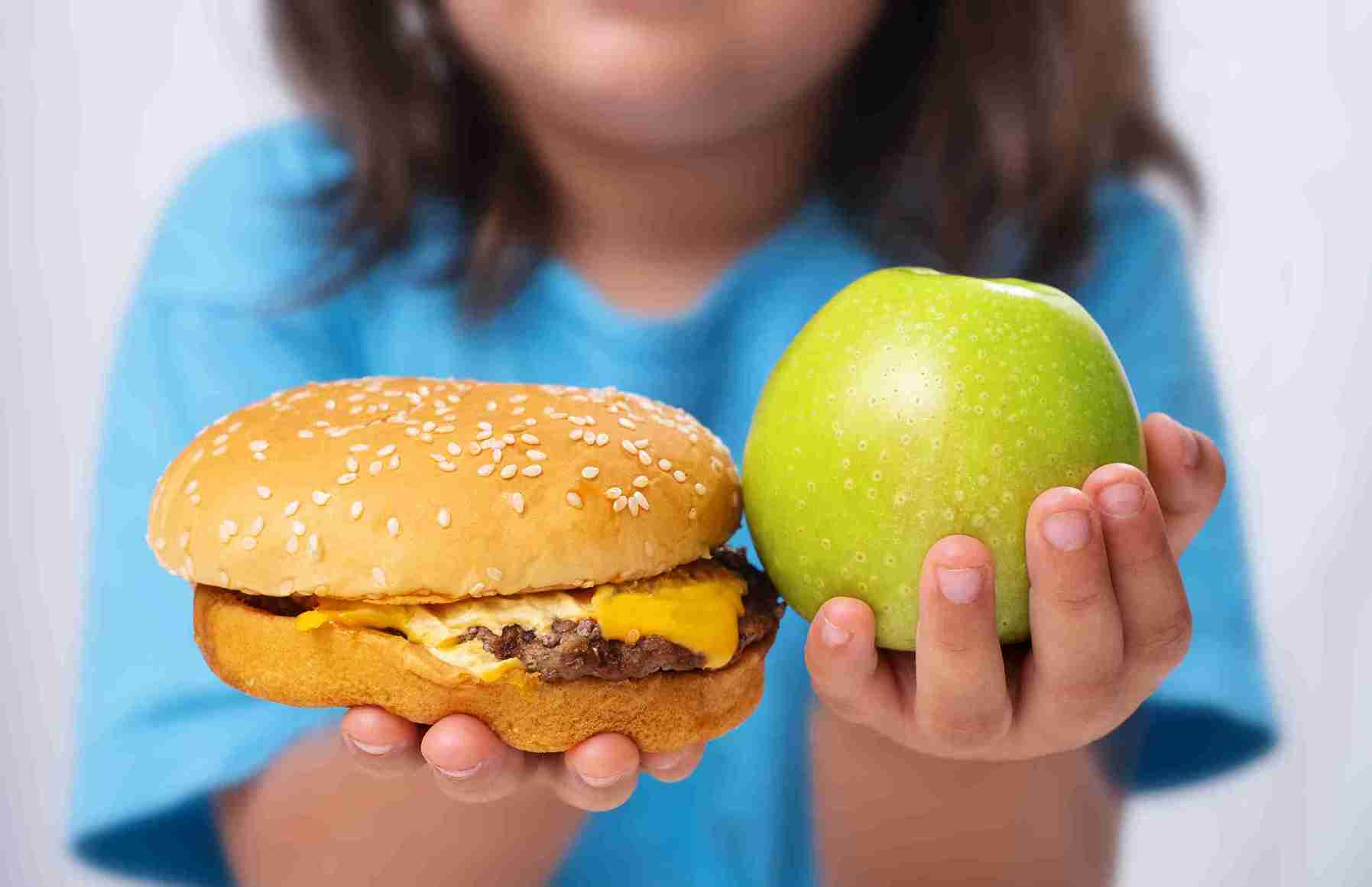
Managing obesity in children does not mean putting a child on a diet in the adult sense. Children are growing and need adequate nutrition. The goal is improving the quality of what they eat and reducing empty calories, not dramatic calorie restriction. A healthy diet for overweight children focuses on:
Replace white bread, maida-based snacks, and white rice with jowar rotis, ragi, oats, and whole wheat chapatis. These digest more slowly, keep children fuller for longer, and do not spike insulin the way refined carbohydrates do.
Dal is protein-rich and fibre-rich; it fills children up without being calorie-dense. Seasonal vegetables should be at every meal, not just occasionally.
Packaged juices are essentially sugary drinks with a health halo. Whole fruit provides fibre alongside natural sugar and is a much better snack option than juice or cold drinks.
Cold drinks, packaged juices, sports drinks, and flavoured milk with added sugar are among the biggest contributors to excess calorie intake in children. Replacing these with water, plain milk, or nimbu pani without excess sugar makes a measurable difference.
If fruit, roasted chana, and boiled peanuts are visible and accessible, children reach for them. If chips and biscuits are visible, children reach for those. What is kept in the house matters.
Eating together at a table, without phones or television, helps children eat more slowly, recognise when they are full, and eat smaller portions naturally.
No dietary change is as effective as when combined with increased physical activity. Healthy habits for kids around movement do not need to be structured gym sessions; they need to be regular and enjoyable.
This does not mean 60 minutes of organised sport - running, playing, cycling, swimming, dancing, and recreational games all count.
After 45 to 60 minutes of sitting, children should get up and move, even for 5 to 10 minutes. This is relevant for both school hours and homework time at home.
For short distances, walking instead of taking the car or auto builds movement into the day naturally.
This is the IAP recommendation. Screen time beyond this is consistently associated with reduced physical activity and higher weight in children.
Children who play a sport they like do not need to be pushed to be active. Cricket, badminton, football, swimming, dance, and martial arts are all excellent options available in most cities.

Childhood obesity is a family and community issue, not a personal failure of the child. The habits built before age 10 tend to follow children for life. Starting now, with better food at home, more movement built into the day, and less screen time, gives children the best chance of a healthy weight and a healthy future. Early action is always easier than trying to reverse years of entrenched habits.
Want to consult the Best Pediatrician in India? Please find the links below

Prevention starts at home. Offer whole grains, dal, vegetables, and fruit as everyday food rather than treats. Replace cold drinks with water. Ensure 60 minutes of physical activity daily. Limit screen time to two hours. Eat meals together without screens. Healthy habits for kids around food and movement are the most effective prevention for obesity and its long-term health consequences.
Overweight children should avoid cold drinks, packaged juices, biscuits, chips, instant noodles, and fast food - all of which are high in calories, sugar, and refined carbohydrates with little nutritional value. A healthy diet for overweight children is not about extreme restriction; it is about replacing these with whole grains, dal, vegetables, fruit, and plain water. What is kept in the house shapes what children eat.
Childhood obesity causes include a diet high in processed food and sugary drinks, low physical activity, excessive screen time, inadequate sleep, and family eating and activity patterns. Genetics play a role, as do medical conditions like thyroid disorders, though these are less common.
Children need at least 60 minutes of physical activity every day. This does not have to be structured sport - active play, cycling, swimming, dancing, and games all count. The Indian Academy of Paediatrics also recommends limiting recreational screen time to 2 hours per day, since time spent on screens directly displaces time available for movement. Children who are consistently active maintain healthier weight and have better sleep, mood, and academic performance.







 Best Gynecologists in Bellandur Best Gynecologists in Electronic City Best Gynecologists in HRBR LayoutBest Gynecologists in Jayanagar Best Gynecologists in Kanakapura RoadBest Gynecologists in Malleswaram Best Gynecologists in Nagarbhavi Best Gynecologists in Old Airport RoadBest Gynecologists in Sahakarnagar Best Gynecologists in Sarjapur RoadBest Gynecologists in ThanisandraBest Gynecologists in Varthur RoadBest Gynecologists in Whitefield Best Gynecologists in Industrial Area Phase IIBest Gynecologists in OMRBest Gynecologists in T NagarBest Gynecologists in New Industrial TownBest Gynecologists in IndirapuramBest Gynecologists in Golf Course RoadBest Gynecologists in Sector 14Best Gynecologists in Sector 47Best Gynecologists in Banjara HillsBest Gynecologists in GachibowliBest Gynecologists in Hitech CityBest Gynecologists in KompallyBest Gynecologists in Gomti NagarBest Gynecologists in MaladBest Gynecologists in NerulBest Gynecologists in VashiBest Gynecologists in Kailash ColonyBest Gynecologists in PatparganjBest Gynecologists in Punjabi BaghBest Gynecologists in VikaspuriBest Gynecologists in Gaur CityBest Gynecologists in Pari ChowkBest Gynecologists in Sector 51Best Gynecologists in Sector 5 Swastik ViharBest Gynecologists in Kalyani NagarBest Gynecologists in SB RoadBest Gynecologists in Pimple SaudagarBest Pediatricians in BellandurBest Pediatricians in Electronic CityBest Pediatricians in HRBR LayoutBest Pediatricians in JayanagarBest Pediatricians in Kanakapura RoadBest Pediatricians in MalleswaramBest Pediatricians in NagarbhaviBest Pediatricians in Old Airport RoadBest Pediatricians in SahakarnagarBest Pediatricians in Sarjapur RoadBest Pediatricians in ThanisandraBest Pediatricians in Varthur RoadBest Pediatricians in WhitefieldBest Pediatricians in Industrial Area Phase IIBest Pediatricians in OMRBest Pediatricians in T NagarBest Pediatricians in New Industrial TownshipBest Pediatricians in IndirapuramBest Pediatricians in Golf Course RoadBest Pediatricians in Sector 14Best Pediatricians in Sector 47Best Pediatricians in Hitech CityBest Pediatricians in Banjara HillsBest Pediatricians in GachibowliBest Pediatricians in KompallyBest Pediatricians in Gomti NagarBest Pediatricians in MaladBest Pediatricians in NerulBest Pediatricians in VashiBest Pediatricians in Kailash ColonyBest Pediatricians in PatparganjBest Pediatricians in Punjabi BaghBest Pediatricians in VikaspuriBest Pediatricians in Gaur CityBest Pediatricians in Pari ChowkBest Pediatricians in Sector 51Best Pediatricians in Sector 5 Swastik ViharBest Pediatricians in Kalyani NagarBest Pediatricians in SB RoadBest Pediatricians in Pimple Saudagar


