
If there is one thing most parents of young children have in common, it is at least one visit to the paediatrician for an ear infection. Most children get at least one ear infection before they turn five. Many children get more than this.
The tricky part is that young children cannot tell you their ears hurt. So parents are often left guessing: is it a cold? Is it the tooth? Is it something else? Knowing what ear infections in children look like, what causes them, and when to act can save you a lot of stress.
It comes down to how a child's body is built. There is a small tube inside the ear called the Eustachian tube. In adults, this tube runs at a steep angle, which helps fluid drain easily. In children, it is shorter and nearly flat. Fluid gets trapped easily. Bacteria and viruses can travel up into the ear much more easily too.
On top of that, children's immune systems are still learning how to fight infections. Children who attend daycare, are around cigarette smoke, or were bottle-fed lying down are at higher risk. Ear infections in children tend to spike during the cold and monsoon seasons, when respiratory infections are common.
Most child ear pain causes may be due to a cold. When a child gets a cold, the lining of the Eustachian tube swells up. Fluid gets stuck behind the eardrum. That warm, damp space is where bacteria and viruses grow.
The bacteria behind most middle ear infections in kids are Streptococcus pneumoniae and Haemophilus influenzae. Viruses from the common cold and flu are also frequent culprits.
Allergies can block the Eustachian tube too, which sets off the same chain of events. Children who use a pacifier after six months of age are also at a slightly higher risk.
The symptoms of ear infection in children vary by age. Here is what to look for.
In babies and toddlers:
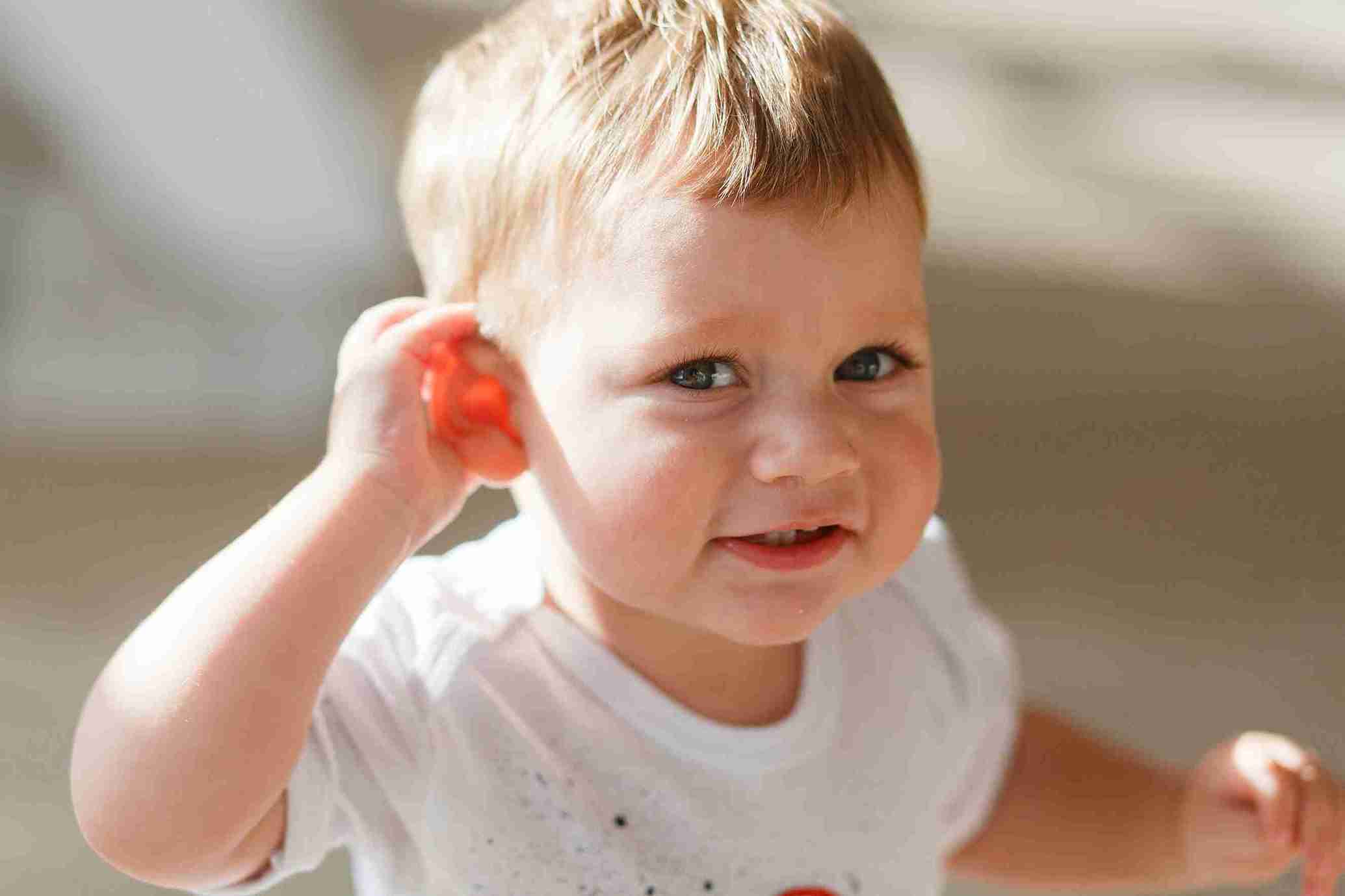
● Pulling or tugging at one or both ears
● Crying more than usual, especially at night
● Trouble sleeping
● Fever above 100.4°F
● Not responding to sounds the way they normally do
● Fluid coming out of the ear
In older children:
Child ear pain is usually the first and clearest sign. It is often a dull ache that gets worse when the child lies down. Some children also describe a blocked feeling in the ear, muffled hearing, or a ringing sound.
One thing worth knowing is that not every ear infection causes a fever. Some children have a middle ear infection with very few signs at all. If your child has just had a cold and is now very cranky, not sleeping, or keeps touching their ear, get them checked.
Acute otitis media is the most common type of ear infection in children. This is what most people mean when they say middle ear infection in kids. There is fluid behind the eardrum, and it is infected. This is what causes the pain and fever.
Otitis media with effusion, also called as glue ear, is when fluid sits behind the eardrum but there is no active infection. It usually does not cause pain. But it can muffle sounds, which may slow down speech in young children if it goes on too long.
Otitis externa, also known as the swimmer's ear, affects the outer ear canal. It is not as common in young children, but it can happen after a lot of water exposure.
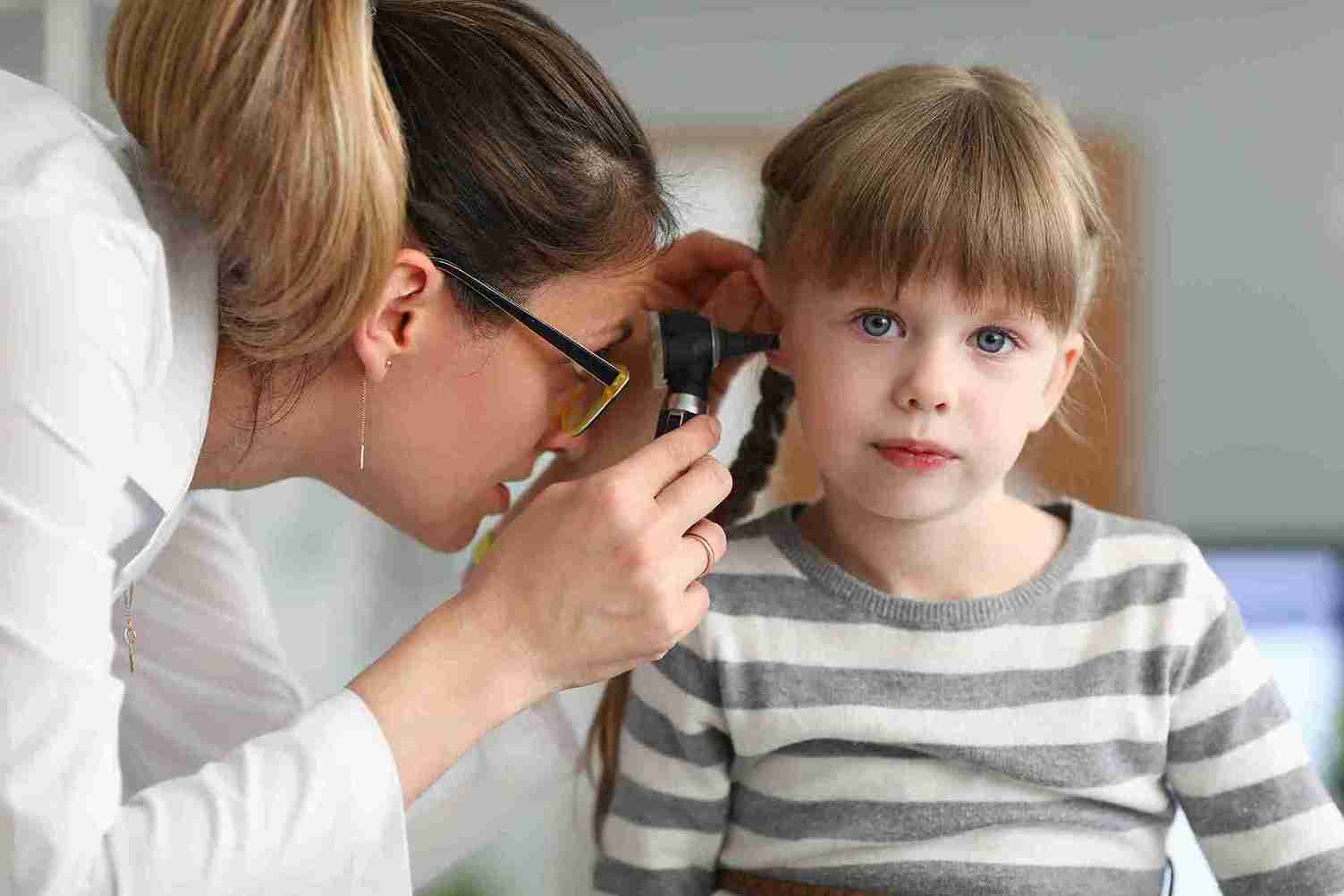
For children under two, do not wait and watch. Ear infections at this age need to be seen by a doctor promptly. Do not try to treat an ear infection at home without a proper check. A doctor needs to look inside the ear with an otoscope to confirm what is going on. Delaying treatment can let the infection spread.
Treatment depends on the child's age, how bad the infection is, and whether it keeps coming back.
● For children over two with mild symptoms, many doctors suggest waiting 48 to 72 hours first. A lot of ear infections clear up on their own.
● Paracetamol or ibuprofen (at the right dose for your child's weight in kg) can bring down the fever and ease the pain.
● If the infection does not clear or the child is very young, antibiotics are prescribed. Amoxicillin is the most common choice. Always finish the full course, even if your child feels better after a couple of days. Stopping early can bring the infection back.
If your child is getting three or more ear infections in six months, an ENT specialist may recommend ear tubes (grommets). These small tubes are placed in the eardrum to help fluid drain out and stop infections from building up.

Ear infections are very common in young children and are usually straightforward to treat. The key is knowing when to watch and wait, and when to head to the doctor. Keep an eye on how often your child is getting infections. If it keeps happening, or if you notice any drop in their hearing, bring it up with your paediatrician.
Want to consult the best Pediatrician in India? Please find the links below.
best child specialist in hyderabad
best child specialist doctor in bangalore
Top pediatricians near me in chennai
top child specialist in chandigarh
Good pediatricians near me in faridabad
best pediatricians in gurgaon
best pediatricians near me in ludhiana
best child specialist in new delhi
best child specialist doctor in mumbai
Top pediatricians near me in panchkula
top child specialist in pune
Good pediatricians near me in noida

Yes, many do. For children over two with mild symptoms, doctors often suggest waiting 48 to 72 hours before starting antibiotics. Pain relief and rest help during this time. But if things get worse, symptoms last more than three days, or your child is under two, see a doctor. Do not wait it out in those cases.
Most start with a cold or viral infection that causes swelling in the Eustachian tube. Fluid gets trapped behind the eardrum and gets infected. Daycare, secondhand smoke, allergies, and the cold and monsoon seasons in India all raise the chances of ear infections in children.
Look for child ear pain, tugging at the ear, fever, poor sleep, crying, and reduced hearing. In babies, unusual crankiness after a cold is often the first clue. Fluid draining from the ear is a clear sign that something is wrong. Only a doctor with an otoscope can confirm the symptoms of ear infection in children.
Very much so. Middle ear infection in kids is most common between six months and two years of age. Their Eustachian tubes are short and flat, which makes fluid drainage harder. Spending time in group settings like crèches also raises the risk, as children pick up more colds and pass them to each other easily.







 Best Gynecologists in Bellandur Best Gynecologists in Electronic City Best Gynecologists in HRBR LayoutBest Gynecologists in Jayanagar Best Gynecologists in Kanakapura RoadBest Gynecologists in Malleswaram Best Gynecologists in Nagarbhavi Best Gynecologists in Old Airport RoadBest Gynecologists in Sahakarnagar Best Gynecologists in Sarjapur RoadBest Gynecologists in ThanisandraBest Gynecologists in Varthur RoadBest Gynecologists in Whitefield Best Gynecologists in Industrial Area Phase IIBest Gynecologists in OMRBest Gynecologists in T NagarBest Gynecologists in New Industrial TownBest Gynecologists in IndirapuramBest Gynecologists in Golf Course RoadBest Gynecologists in Sector 14Best Gynecologists in Sector 47Best Gynecologists in Banjara HillsBest Gynecologists in GachibowliBest Gynecologists in Hitech CityBest Gynecologists in KompallyBest Gynecologists in Jawahar NagarBest Gynecologists in Gomti NagarBest Gynecologists in Phase 3, Sector 58Best Gynecologists in MaladBest Gynecologists in NerulBest Gynecologists in VashiBest Gynecologists in Kailash ColonyBest Gynecologists in PatparganjBest Gynecologists in Punjabi BaghBest Gynecologists in RohiniBest Gynecologists in VikaspuriBest Gynecologists in Gaur CityBest Gynecologists in Pari ChowkBest Gynecologists in Sector 51Best Gynecologists in Sector 5 Swastik ViharBest Gynecologists in Kalyani NagarBest Gynecologists in SB RoadBest Gynecologists in Pimple SaudagarBest Pediatricians in BellandurBest Pediatricians in Electronic CityBest Pediatricians in HRBR LayoutBest Pediatricians in JayanagarBest Pediatricians in Kanakapura RoadBest Pediatricians in MalleswaramBest Pediatricians in NagarbhaviBest Pediatricians in Old Airport RoadBest Pediatricians in SahakarnagarBest Pediatricians in Sarjapur RoadBest Pediatricians in ThanisandraBest Pediatricians in Varthur RoadBest Pediatricians in WhitefieldBest Pediatricians in Industrial Area Phase IIBest Pediatricians in OMRBest Pediatricians in T NagarBest Pediatricians in New Industrial TownshipBest Pediatricians in IndirapuramBest Pediatricians in Golf Course RoadBest Pediatricians in Sector 14Best Pediatricians in Sector 47Best Pediatricians in Hitech CityBest Pediatricians in Banjara HillsBest Pediatricians in GachibowliBest Pediatricians in KompallyBest Pediatricians in Jawahar NagarBest Pediatricians in Gomti NagarBest Pediatricians in Phase 3, Sector 58Best Pediatricians in MaladBest Pediatricians in NerulBest Pediatricians in VashiBest Pediatricians in Kailash ColonyBest Pediatricians in PatparganjBest Pediatricians in Punjabi BaghBest Pediatricians in RohiniBest Pediatricians in VikaspuriBest Pediatricians in Gaur CityBest Pediatricians in Pari ChowkBest Pediatricians in Sector 51Best Pediatricians in Sector 5 Swastik ViharBest Pediatricians in Kalyani NagarBest Pediatricians in SB RoadBest Pediatricians in Pimple Saudagar


