
Irregular periods, unwanted facial hair, acne or difficulty conceiving can leave you wondering if PCOS is behind the changes. The difficulty is that these symptoms can have several causes, and there is no single PCOS test that confirms the condition. Diagnosis combines menstrual history, signs of androgen excess, targeted blood tests and, in some adults, ultrasound or AMH testing. Teenage diagnosis needs extra caution because puberty can resemble PCOS. Let's take a look at the useful tests, at-home testing, preparation and conditions that need exclusion before a diagnosis is made and how results are interpreted clinically.
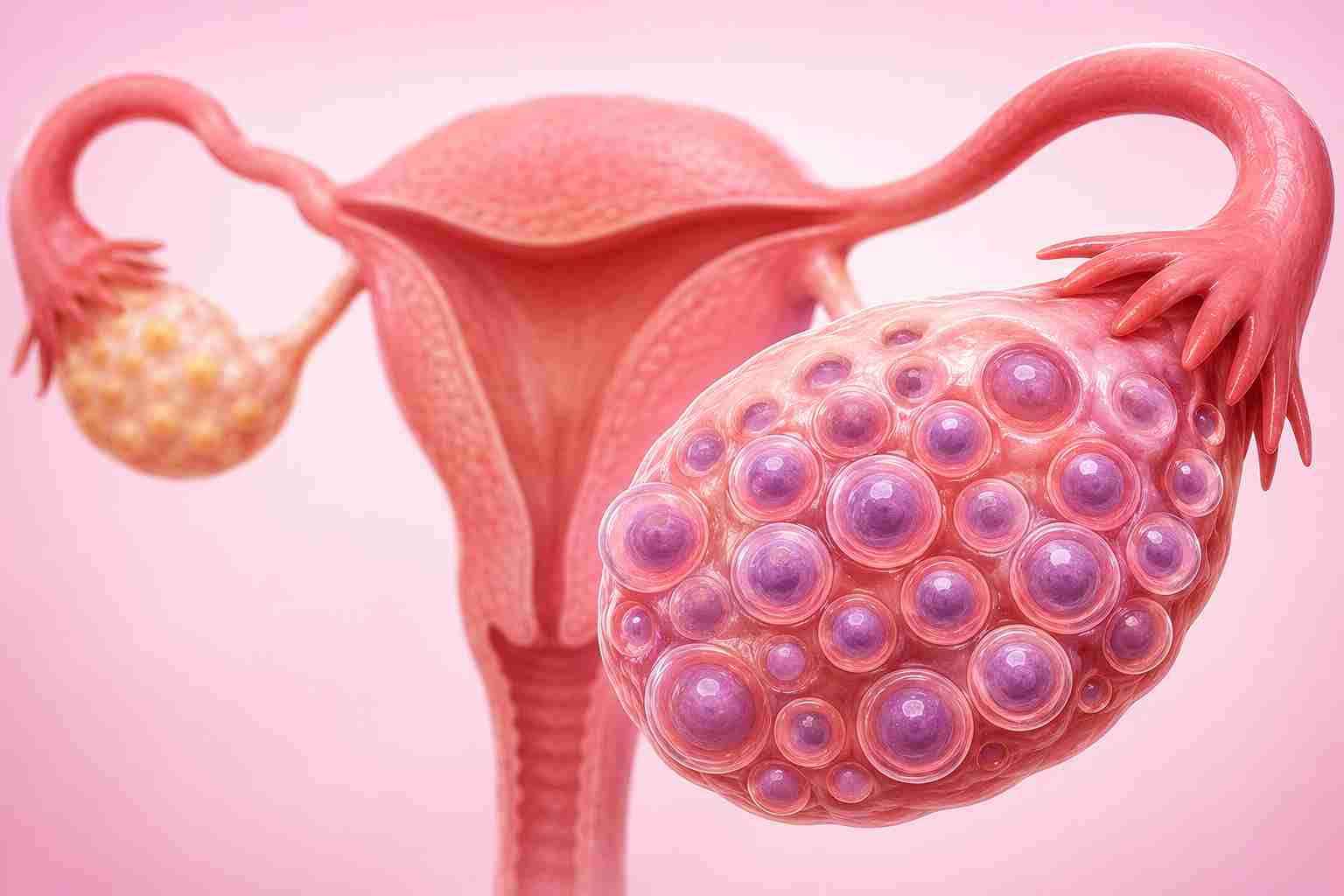
Polycystic ovary syndrome (PCOS) is a common hormonal and metabolic condition that can affect ovulation, androgen levels and the way the body processes insulin. It may cause irregular or absent periods, excess facial or body hair, acne and difficulty conceiving. Some women may also have polycystic-appearing ovaries on ultrasound, but ovarian appearance alone does not mean someone has PCOS. Symptoms and their severity can vary considerably.
It is important to get a PCOS test for persistent irregular or absent periods, presence of excess androgens, and unexplained fertility issues. Family history may also matter, but weight changes themselves are not enough to diagnose PCOS.
In adolescents, it is important to be more careful since normal pubertal changes can resemble PCOS. Diagnostic guidance requires persistent menstrual irregularity along with signs of clinical or biochemical hyperandrogenism, after excluding other causes. Patients with any of those features may be suspected of having PCOS and should be monitored.
Adults need two of three features after other causes are excluded:
When irregular cycles and hyperandrogenism are both present, ultrasound or AMH is not needed. AMH can substitute for ultrasound in adults. Since PCOS can affect ovulation, an ovulation calculator can also help estimate the fertile window based on your menstrual cycle.
Your doctor may ask about cycle length, skipped periods, fertility history, acne and unwanted hair. Examination may include blood pressure, BMI, hirsutism, acne and acanthosis nigricans. Rapid virilisation needs evaluation.
A 75-g oral glucose tolerance test (OGTT) is generally the most accurate test for assessing blood sugar levels; fasting glucose or HbA1c may be used if an OGTT is not practical. Additionally, hormonal contraceptives can alter androgen test results, so testing should be planned accordingly.
The LH ratio and fasting insulin are not diagnostic.

In adults, ultrasound can assess polycystic ovarian morphology using follicle number and ovarian volume. Multiple small follicles do not confirm PCOS, and some women with PCOS do not have polycystic-appearing ovaries.
Ultrasound is not recommended for diagnosing PCOS in adolescents because normal pubertal ovarian changes can appear similar. AMH is also not used for adolescent diagnosis.
A PCOS at-home test may use a finger-prick sample sent to a laboratory and measure hormones such as testosterone or SHBG. Panels differ.
An at-home kit offers privacy but cannot assess menstrual history or rule out mimics.
A PCOS diagnosis depends on the overall pattern, not one abnormal report.
Your doctor may recommend follow-up based on your symptoms, fertility plans and metabolic risk.

Several conditions can produce similar symptoms, so excluding them is part of the diagnosis.
Consult a medical professional if:
Excessive thirst or frequent urination could also indicate abnormal glucose levels.
Cloudnine’s gynaecology and fertility teams assess suspected PCOS using menstrual history, examination findings, hormone results and metabolic health rather than relying on one test. Women can receive blood testing, pelvic imaging and fertility assessment. It is also useful when symptoms overlap with thyroid conditions. For adolescents, assessment helps distinguish puberty from persistent features.
Polycystic Ovary Syndrome may present itself differently in each woman, making it hard to diagnose PCOS based on just one test result or even an ultrasound. Therefore, diagnosis can include testing for symptoms and excluding other possible conditions. If your irregular periods, excess hair growth, acne or difficulty conceiving make you worried, testing could help to clear things up.


In adults, two of three diagnoses are needed: ovulatory dysfunction, hyperandrogenism, and polycystic ovarian morphology or elevated AMH, after other causes are excluded. No single PCOS test may confirm it.
PCOS has no official “first stage.” It is diagnosed using clinical criteria rather than stages. However, the early phase of PCOS usually begins around puberty or adolescence.
PCOS can become apparent during adolescence, but diagnosis needs caution because puberty can mimic PCOS. Persistent menstrual irregularity with hyperandrogenism is required.
PCOS can cause very light or short bleeding because irregular ovulation affects the uterine lining. However, a little bleeding but no period can also have other causes, including pregnancy-related bleeding.


 Best Gynecologists in Bellandur Best Gynecologists in Electronic City Best Gynecologists in HRBR LayoutBest Gynecologists in Jayanagar Best Gynecologists in Kanakapura RoadBest Gynecologists in Malleswaram Best Gynecologists in Nagarbhavi Best Gynecologists in Old Airport RoadBest Gynecologists in Sahakarnagar Best Gynecologists in Sarjapur RoadBest Gynecologists in ThanisandraBest Gynecologists in Varthur RoadBest Gynecologists in Whitefield Best Gynecologists in Industrial Area Phase IIBest Gynecologists in OMRBest Gynecologists in T NagarBest Gynecologists in New Industrial TownBest Gynecologists in IndirapuramBest Gynecologists in Golf Course RoadBest Gynecologists in Sector 14Best Gynecologists in Sector 47Best Gynecologists in Banjara HillsBest Gynecologists in GachibowliBest Gynecologists in Hitech CityBest Gynecologists in KompallyBest Gynecologists in Jawahar NagarBest Gynecologists in Gomti NagarBest Gynecologists in Phase 3, Sector 58Best Gynecologists in MaladBest Gynecologists in NerulBest Gynecologists in VashiBest Gynecologists in Kailash ColonyBest Gynecologists in PatparganjBest Gynecologists in Punjabi BaghBest Gynecologists in RohiniBest Gynecologists in VikaspuriBest Gynecologists in Gaur CityBest Gynecologists in Pari ChowkBest Gynecologists in Sector 51Best Gynecologists in Sector 5 Swastik ViharBest Gynecologists in Kalyani NagarBest Gynecologists in SB RoadBest Gynecologists in Pimple SaudagarBest Pediatricians in BellandurBest Pediatricians in Electronic CityBest Pediatricians in HRBR LayoutBest Pediatricians in JayanagarBest Pediatricians in Kanakapura RoadBest Pediatricians in MalleswaramBest Pediatricians in NagarbhaviBest Pediatricians in Old Airport RoadBest Pediatricians in SahakarnagarBest Pediatricians in Sarjapur RoadBest Pediatricians in ThanisandraBest Pediatricians in Varthur RoadBest Pediatricians in WhitefieldBest Pediatricians in Industrial Area Phase IIBest Pediatricians in OMRBest Pediatricians in T NagarBest Pediatricians in New Industrial TownshipBest Pediatricians in IndirapuramBest Pediatricians in Golf Course RoadBest Pediatricians in Sector 14Best Pediatricians in Sector 47Best Pediatricians in Hitech CityBest Pediatricians in Banjara HillsBest Pediatricians in GachibowliBest Pediatricians in KompallyBest Pediatricians in Jawahar NagarBest Pediatricians in Gomti NagarBest Pediatricians in Phase 3, Sector 58Best Pediatricians in MaladBest Pediatricians in NerulBest Pediatricians in VashiBest Pediatricians in Kailash ColonyBest Pediatricians in PatparganjBest Pediatricians in Punjabi BaghBest Pediatricians in RohiniBest Pediatricians in VikaspuriBest Pediatricians in Gaur CityBest Pediatricians in Pari ChowkBest Pediatricians in Sector 51Best Pediatricians in Sector 5 Swastik ViharBest Pediatricians in Kalyani NagarBest Pediatricians in SB RoadBest Pediatricians in Pimple Saudagar


