
Most conversations about AMH (Anti-Müllerian Hormone) centre on low levels. Women are told their reserve is diminishing, their window is narrowing, and they need to act quickly. But what happens when AMH comes back high? Is that better? Does it mean everything is fine?
Not necessarily. High AMH levels and fertility have a more complicated relationship than most people expect. A high AMH is not simply the opposite of a low AMH. In many cases, a high result points to an underlying condition that needs attention, and in others, it has real implications for fertility treatment.
AMH is a hormone produced by small follicles in the ovaries. It gives a reliable estimate of how many eggs remain in the ovarian pool, the ovarian reserve. In general, more follicles mean more AMH.
Normal AMH ranges vary slightly between laboratories, but broadly:
A high AMH means a larger than average number of follicles are present in the ovaries. This sounds straightforward - more eggs, better fertility. But a large number of follicles does not automatically mean better results. The issue is why there are so many follicles, and whether they are developing and releasing properly.
This is by far the most common cause. In PCOS, multiple small follicles develop in the ovaries but do not mature properly and do not release an egg. As AMH is produced by these small resting follicles, women with PCOS have a much larger pool of them, and therefore much higher AMH levels.
High AMH and PCOS are so frequently linked that a high AMH result is now considered one of the diagnostic markers of PCOS under updated criteria used by many specialists. In Indian women, a high AMH reading without other context very often turns out to be PCOS when investigated further.
The problem in PCOS is not the number of follicles; it is that they are not ovulating. A large pool of non-ovulating follicles does not help conception. This is the key distinction.
Women with high AMH levels respond very strongly to the hormone injections used in IVF stimulation. A large follicle pool means many follicles respond simultaneously, which can lead to Ovarian Hyperstimulation Syndrome (OHSS), a potentially serious complication where the ovaries become swollen and fluid shifts into the abdomen.
OHSS causes bloating, nausea, abdominal pain, and in severe cases, breathing difficulty and blood clotting problems requiring hospitalisation. Women with high AMH, especially above 5 ng/mL, are in the highest risk category for OHSS and need modified, lower-dose stimulation protocols to minimise this risk.
AMH naturally declines with age. Younger women, in their teens and early twenties, are likely to have higher AMH levels simply because they are younger. A 22-year-old with an AMH of 5 ng/mL may not have PCOS at all; she may simply be young with a healthy ovarian reserve at the upper end of the normal range.
Context matters enormously when interpreting AMH results. Age, cycle regularity, ultrasound findings, and clinical symptoms all need to be considered alongside the number.
In rare cases, a high AMH can indicate a granulosa cell tumour, a type of ovarian tumour that produces AMH. These are uncommon but are an important consideration, especially if the AMH is dramatically elevated (above 10 ng/mL) and other symptoms are present, such as abnormal uterine bleeding or a palpable ovarian mass.
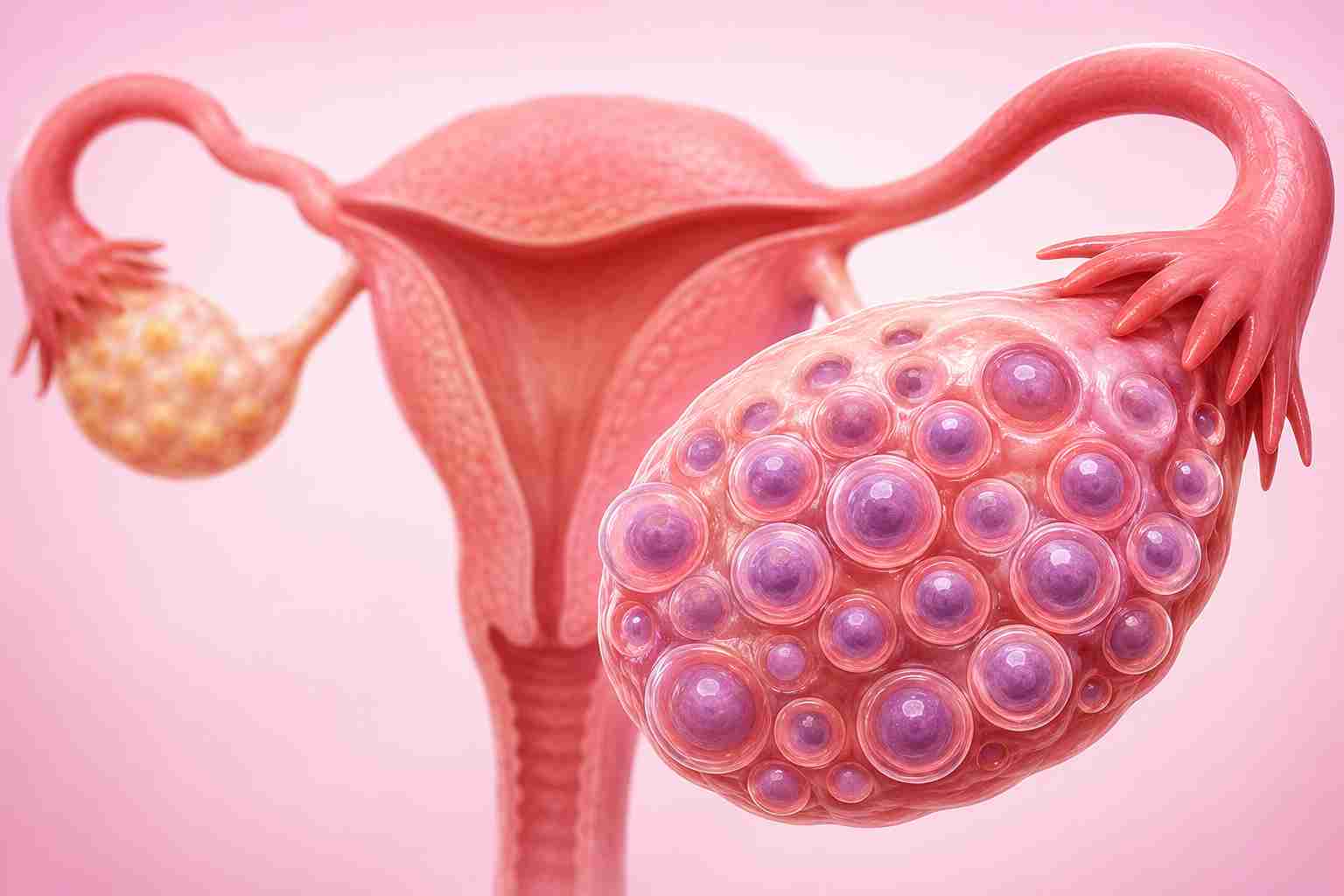
In women with PCOS, AMH levels are approximately 2-3 times higher than in women without the condition. This is because the antral follicle count is significantly elevated, and each of these produces AMH.
High AMH and PCOS interact in the fertility picture in several ways:
Managing PCOS through lifestyle changes, weight management, and where needed, medication improves the hormonal environment, sometimes brings AMH levels down to a more moderate range, and most importantly, restores more regular ovulation.
The answer depends on the reason for the high level. In a young woman with no other findings - regular cycles, no PCOS features on ultrasound, no hormonal abnormalities - a high AMH is largely reassuring. It indicates a good ovarian reserve with no sign of age-related decline.
In a woman with PCOS, the high AMH reflects the underlying hormonal problem. Fertility in this case is affected not by the quantity of eggs but by the absence of ovulation. Treating PCOS allows conception to occur for most women, and results are generally good.
A high AMH result should not be interpreted in isolation. A complete assessment includes:

There is no treatment for High AMH levels, and in most cases, lowering AMH is not the goal. The focus is on managing the underlying cause and its impact on fertility.
Surgical removal of the tumour is the treatment. AMH normalises after the tumour is removed and can be used as a monitoring marker for recurrence.
No specific treatment is needed. Regular monitoring and awareness of OHSS risk if undergoing IVF are the main considerations.
A high AMH is not simply good news, and it is not cause for alarm either; it depends entirely on the context. In most Indian women, a high result points to PCOS, which is treatable. In others, it reflects a healthy young ovarian reserve. What it always calls for is proper investigation, not a standalone interpretation of a single number.

Book an appointment now

High AMH levels and fertility are complicated. In young women with regular cycles and no PCOS, high AMH is generally reassuring; it indicates a good egg reserve. In women with PCOS, high AMH reflects the condition's hormonal disruption, and irregular or absent ovulation is what affects fertility. In IVF, a very high AMH raises the risk of ovarian hyperstimulation syndrome and requires modified stimulation protocols.
There is no medication that directly lowers AMH, and reducing the number itself is rarely the goal. Treatment for high AMH levels focuses on the underlying cause. In PCOS, lifestyle changes, metformin, and ovulation induction address the hormonal problem effectively. In granulosa cell tumours, surgical removal normalises AMH. For women undergoing IVF, careful stimulation protocols and freeze-all strategies manage the high-AMH risk without needing to change the AMH level itself.
No, but it is the most common cause in women of reproductive age in India. Causes of high AMH in women also include young age with a naturally large ovarian reserve, and rarely, granulosa cell tumours of the ovary.
A high AMH indicates a larger than average number of small follicles in the ovaries. This can reflect youth and a healthy ovarian reserve, PCOS with multiple non-ovulating follicles, or rarely, an ovarian tumour.







 Best Gynecologists in Bellandur Best Gynecologists in Electronic City Best Gynecologists in HRBR LayoutBest Gynecologists in Jayanagar Best Gynecologists in Kanakapura RoadBest Gynecologists in Malleswaram Best Gynecologists in Nagarbhavi Best Gynecologists in Old Airport RoadBest Gynecologists in Sahakarnagar Best Gynecologists in Sarjapur RoadBest Gynecologists in ThanisandraBest Gynecologists in Varthur RoadBest Gynecologists in Whitefield Best Gynecologists in Industrial Area Phase IIBest Gynecologists in OMRBest Gynecologists in T NagarBest Gynecologists in New Industrial TownBest Gynecologists in IndirapuramBest Gynecologists in Golf Course RoadBest Gynecologists in Sector 14Best Gynecologists in Sector 47Best Gynecologists in Banjara HillsBest Gynecologists in GachibowliBest Gynecologists in Hitech CityBest Gynecologists in KompallyBest Gynecologists in Gomti NagarBest Gynecologists in MaladBest Gynecologists in NerulBest Gynecologists in VashiBest Gynecologists in Kailash ColonyBest Gynecologists in PatparganjBest Gynecologists in Punjabi BaghBest Gynecologists in VikaspuriBest Gynecologists in Gaur CityBest Gynecologists in Pari ChowkBest Gynecologists in Sector 51Best Gynecologists in Sector 5 Swastik ViharBest Gynecologists in Kalyani NagarBest Gynecologists in SB RoadBest Gynecologists in Pimple SaudagarBest Pediatricians in BellandurBest Pediatricians in Electronic CityBest Pediatricians in HRBR LayoutBest Pediatricians in JayanagarBest Pediatricians in Kanakapura RoadBest Pediatricians in MalleswaramBest Pediatricians in NagarbhaviBest Pediatricians in Old Airport RoadBest Pediatricians in SahakarnagarBest Pediatricians in Sarjapur RoadBest Pediatricians in ThanisandraBest Pediatricians in Varthur RoadBest Pediatricians in WhitefieldBest Pediatricians in Industrial Area Phase IIBest Pediatricians in OMRBest Pediatricians in T NagarBest Pediatricians in New Industrial TownshipBest Pediatricians in IndirapuramBest Pediatricians in Golf Course RoadBest Pediatricians in Sector 14Best Pediatricians in Sector 47Best Pediatricians in Hitech CityBest Pediatricians in Banjara HillsBest Pediatricians in GachibowliBest Pediatricians in KompallyBest Pediatricians in Gomti NagarBest Pediatricians in MaladBest Pediatricians in NerulBest Pediatricians in VashiBest Pediatricians in Kailash ColonyBest Pediatricians in PatparganjBest Pediatricians in Punjabi BaghBest Pediatricians in VikaspuriBest Pediatricians in Gaur CityBest Pediatricians in Pari ChowkBest Pediatricians in Sector 51Best Pediatricians in Sector 5 Swastik ViharBest Pediatricians in Kalyani NagarBest Pediatricians in SB RoadBest Pediatricians in Pimple Saudagar


