
Every parent of a young baby has done it: lifted the baby, felt the heft of them, and wondered whether they are heavy enough. Or too light. Or exactly right but somehow still worrying. Baby weight gain is one of the most closely watched aspects of infant health in the first year, and for good reason. How a baby grows tells you a lot about whether they are feeding well, absorbing nutrition, and developing as expected.
Babies come in different sizes, grow at different paces, and have days where they seem to be bursting out of their clothes, followed by weeks where nothing much seems to change. Understanding the broad patterns, what is expected when, and what genuinely warrants attention takes the guesswork out of those paediatrician visits.
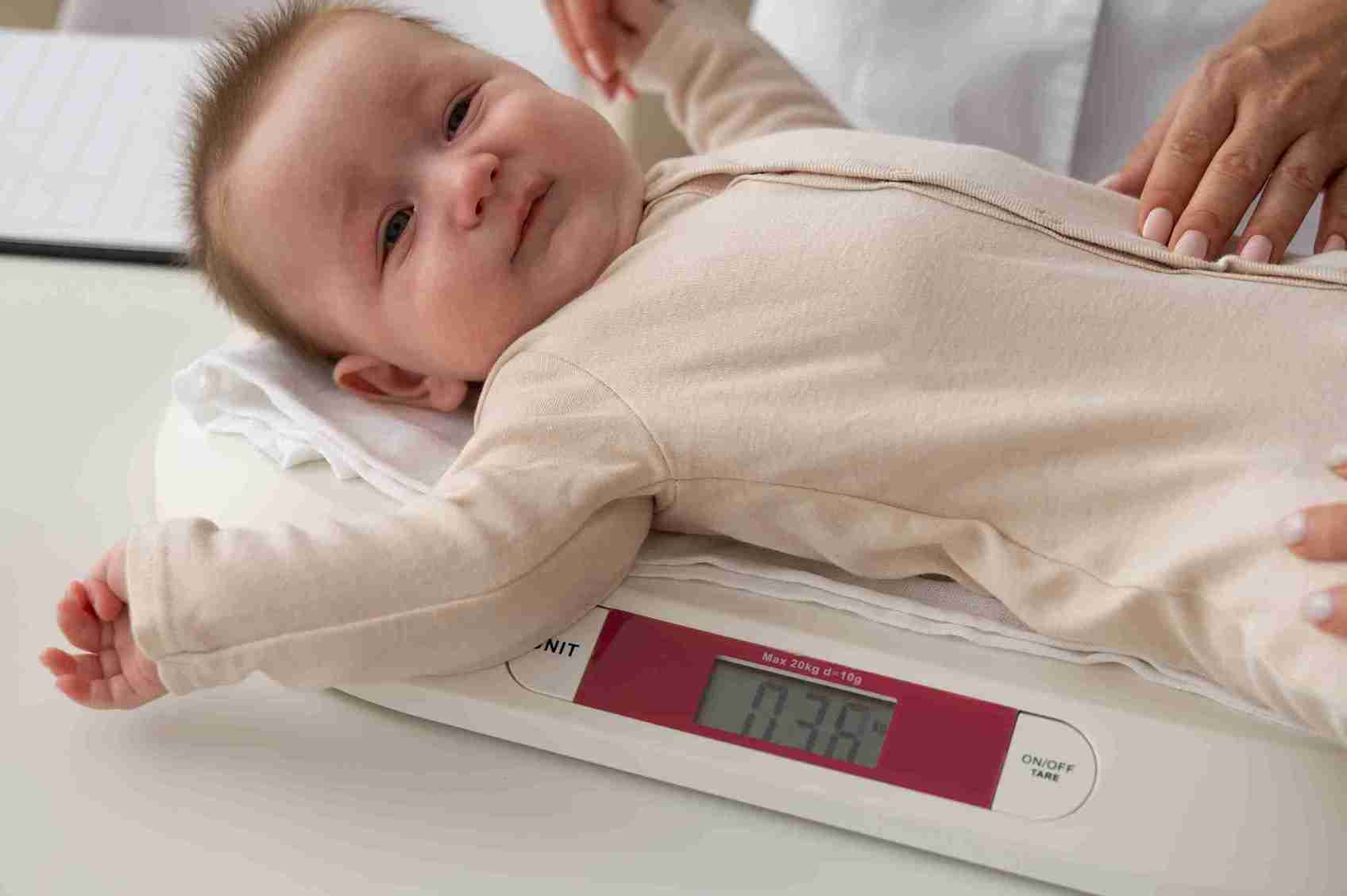
Most full-term babies are born weighing between 2.5 kg and 3.5 kg. A birth weight below 2.5 kg is considered low birth weight and will be monitored more closely from the start.
Almost all newborns lose some weight in the first few days after birth. This is normal. Newborns lose the excess fluid they were born with, and feeding, whether breast or formula, takes a few days to establish properly. Most babies lose up to 7 to 10 percent of their birth weight in the first week. A baby born at 3 kg might drop to around 2.7 to 2.8 kg before starting to climb back up. By 10 to 14 days, most babies are back to their birth weight. If a baby has not regained birth weight by two weeks, the paediatrician will look more closely at feeding.
The first three months of life are when newborn growth is at its most rapid. Babies typically gain weight quickly during this period, and it is very visible. A baby who looked thin and scrunched up at birth looks entirely different by three months.
Expected gain in the first three months:
● Weeks 1 to 4 (first month): Babies will normally gain 150-200 grams per week. At the end of the first month, babies would normally weigh between 4 and 4.5 kg.
● Second and third months: Babies would normally continue gaining weight at an approximate rate of 150-200 grams per week. By three months, most babies have doubled their birth weight or are close to it.
These are averages. A baby gaining 120 grams a week who is feeding well, producing enough wet nappies, and is alert and content is not necessarily a cause for concern. The trend matters more than any single number.
From month four onwards, the weekly rate of gain begins to ease. It is quite natural, because the baby’s body continues to grow, albeit not at such a rapid rate as in the previous period.
● Months 4 to 6: Babies usually gain an average of 100 to 150 grams weekly
The baby’s weight doubles by the sixth month.
● A baby born at 3 kg should weigh approximately 6 kg at six months.
This is also the window when solids are introduced, usually from around six months. Solids complement milk feeding at this stage rather than replacing it. It is their main source of nourishment for 12 months.
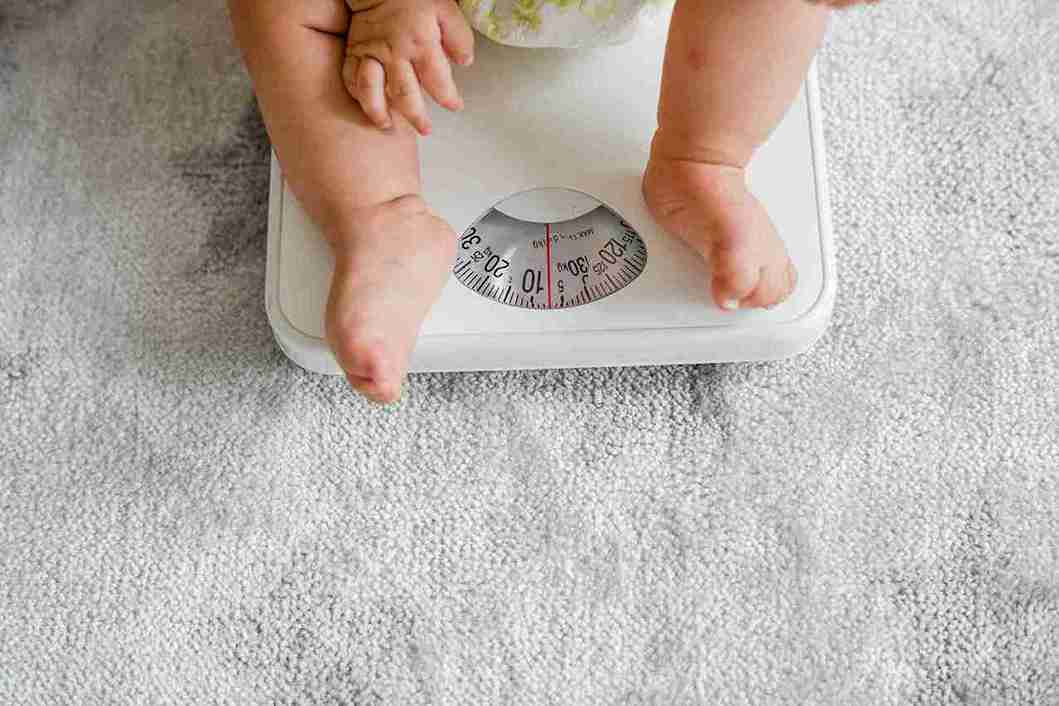
With babies becoming more active, including rolling, sitting up, and learning to crawl, they burn more energy. Weight gain slows further during this period.
● Months 7 to 9: Typical gain is around 70 to 90 grams per week
This is the period when many parents start to worry because the rate of gain has visibly slowed compared to the early months. This is expected. An active baby, feeding well, meeting developmental milestones, and tracking their own curve on the infant growth chart is growing normally, even if the number on the scale is not climbing as fast as it used to.
In the final quarter of the first year, weight gain continues to slow down.
● Months 10 to 12: Babies typically gain around 50 to 70 grams per week
● By 12 months, most babies have tripled their birth weight. A baby born at 3 kg should weigh approximately 9 to 9.5 kg at one year
Some babies triple their birth weight before twelve months. Others hit that milestone a little later. Both are within the range of normal, provided growth has been consistent and the baby is well.
A baby weight chart or growth chart is a tool that plots your baby's weight against age and compares it to the expected range for that age. The chart shows percentile lines. What matters most is not which percentile your baby sits on, but whether they are following their own curve consistently. A baby who has always been on the 10th percentile and continues to track along it is growing normally for them. A baby who drops from the 60th percentile to the 20th over two to three months, that is a shift worth investigating.
The infant growth chart tracks weight, height, and head circumference. All three together give a fuller picture than weight alone.
Most variations in baby weight gain are within the range of normal and settle on their own. But certain signs are worth bringing up promptly:
● The baby has not regained birth weight by two weeks of age
● Weight gain has stalled for two or more consecutive months
● The baby has dropped two or more percentile bands on the growth chart
● The baby is feeding poorly, long feeds with no satisfaction, refusing feeds, or falling asleep at the breast every time before taking enough
● There is weight loss after the initial newborn dip
● The baby seems lethargic, unwell, or is producing far fewer wet nappies than expected, fewer than six in 24 hours, which is a concern in young infants
Any of these is a reason to call the paediatrician rather than wait for the next scheduled visit.

Baby weight gain in the first year follows a predictable broad pattern: rapid early, then gradually slowing. What matters is consistency on your baby's own growth curve, not hitting a precise number at each stage. Keep your scheduled paediatrician visits, track your baby on the infant growth chart over time, and trust your instincts if something does not seem right.
Want to consult the best pediatrician in India? Please find the links below

In the first three months, babies gain roughly 150 to 200 grams a week. This slows to around 100 to 150 grams per week between months four and six, and around 70 to 90 grams per week from months seven to nine. By twelve months, most babies have tripled their birth weight. These are averages; individual babies vary, and consistent tracking on a baby weight chart matters more than weekly numbers.
Normal newborn growth follows a clear arc fast in the early months, gradually slowing through the first year. Babies lose up to 10 percent of birth weight in the first week, regain it by two weeks, and then grow steadily. The key is that the baby follows their own percentile curve consistently on the infant growth chart. Dropping significantly across percentile bands over a short period is more concerning than sitting on a lower percentile from birth.
Speak to your paediatrician if your baby has not regained birth weight by two weeks, weight gain stalls for two or more months, the baby drops significantly on the baby weight chart, feeding is poor, or the baby seems lethargic, or there are fewer than six wet nappies in 24 hours. A single slow week is usually not a problem; it is a sustained pattern of poor gain or a visible drop in percentiles that needs attention
Feed breastfed babies on demand and ensure the latch is correct. For formula-fed babies, prepare feeds at the right concentration; never dilute formula. From six months, introduce a wide variety of solid foods, including dal, curd, egg yolk, and mashed vegetables, while continuing milk feeds. Avoid comparing your baby to others. Baby weight gain follows individual patterns. Consistent feeding and regular paediatrician check-ups are the most reliable support.







 Best Gynecologists in Bellandur Best Gynecologists in Electronic City Best Gynecologists in HRBR LayoutBest Gynecologists in Jayanagar Best Gynecologists in Kanakapura RoadBest Gynecologists in Malleswaram Best Gynecologists in Nagarbhavi Best Gynecologists in Old Airport RoadBest Gynecologists in Sahakarnagar Best Gynecologists in Sarjapur RoadBest Gynecologists in ThanisandraBest Gynecologists in Varthur RoadBest Gynecologists in Whitefield Best Gynecologists in Industrial Area Phase IIBest Gynecologists in OMRBest Gynecologists in T NagarBest Gynecologists in New Industrial TownBest Gynecologists in IndirapuramBest Gynecologists in Golf Course RoadBest Gynecologists in Sector 14Best Gynecologists in Sector 47Best Gynecologists in Banjara HillsBest Gynecologists in GachibowliBest Gynecologists in Hitech CityBest Gynecologists in KompallyBest Gynecologists in Gomti NagarBest Gynecologists in MaladBest Gynecologists in NerulBest Gynecologists in VashiBest Gynecologists in Kailash ColonyBest Gynecologists in PatparganjBest Gynecologists in Punjabi BaghBest Gynecologists in VikaspuriBest Gynecologists in Gaur CityBest Gynecologists in Pari ChowkBest Gynecologists in Sector 51Best Gynecologists in Sector 5 Swastik ViharBest Gynecologists in Kalyani NagarBest Gynecologists in SB RoadBest Gynecologists in Pimple SaudagarBest Pediatricians in BellandurBest Pediatricians in Electronic CityBest Pediatricians in HRBR LayoutBest Pediatricians in JayanagarBest Pediatricians in Kanakapura RoadBest Pediatricians in MalleswaramBest Pediatricians in NagarbhaviBest Pediatricians in Old Airport RoadBest Pediatricians in SahakarnagarBest Pediatricians in Sarjapur RoadBest Pediatricians in ThanisandraBest Pediatricians in Varthur RoadBest Pediatricians in WhitefieldBest Pediatricians in Industrial Area Phase IIBest Pediatricians in OMRBest Pediatricians in T NagarBest Pediatricians in New Industrial TownshipBest Pediatricians in IndirapuramBest Pediatricians in Golf Course RoadBest Pediatricians in Sector 14Best Pediatricians in Sector 47Best Pediatricians in Hitech CityBest Pediatricians in Banjara HillsBest Pediatricians in GachibowliBest Pediatricians in KompallyBest Pediatricians in Gomti NagarBest Pediatricians in MaladBest Pediatricians in NerulBest Pediatricians in VashiBest Pediatricians in Kailash ColonyBest Pediatricians in PatparganjBest Pediatricians in Punjabi BaghBest Pediatricians in VikaspuriBest Pediatricians in Gaur CityBest Pediatricians in Pari ChowkBest Pediatricians in Sector 51Best Pediatricians in Sector 5 Swastik ViharBest Pediatricians in Kalyani NagarBest Pediatricians in SB RoadBest Pediatricians in Pimple Saudagar


