
Most children cough. A lot. Especially in the school years, when they are constantly swapping germs with other children in a classroom. A cough that comes with a cold, lasts a week or two, and then disappears is completely normal. That is not what this is about.
A persistent cough in children does not go away. It hangs around for three weeks or more, sometimes much longer. It disturbs sleep. It disrupts school. It worries parents. And it is often managed with a rotation of cough syrups that do very little because the underlying cause has not been found.
Understanding what actually causes a long-running cough in a child and what the treatment depends on makes the path to fixing it a lot more direct.
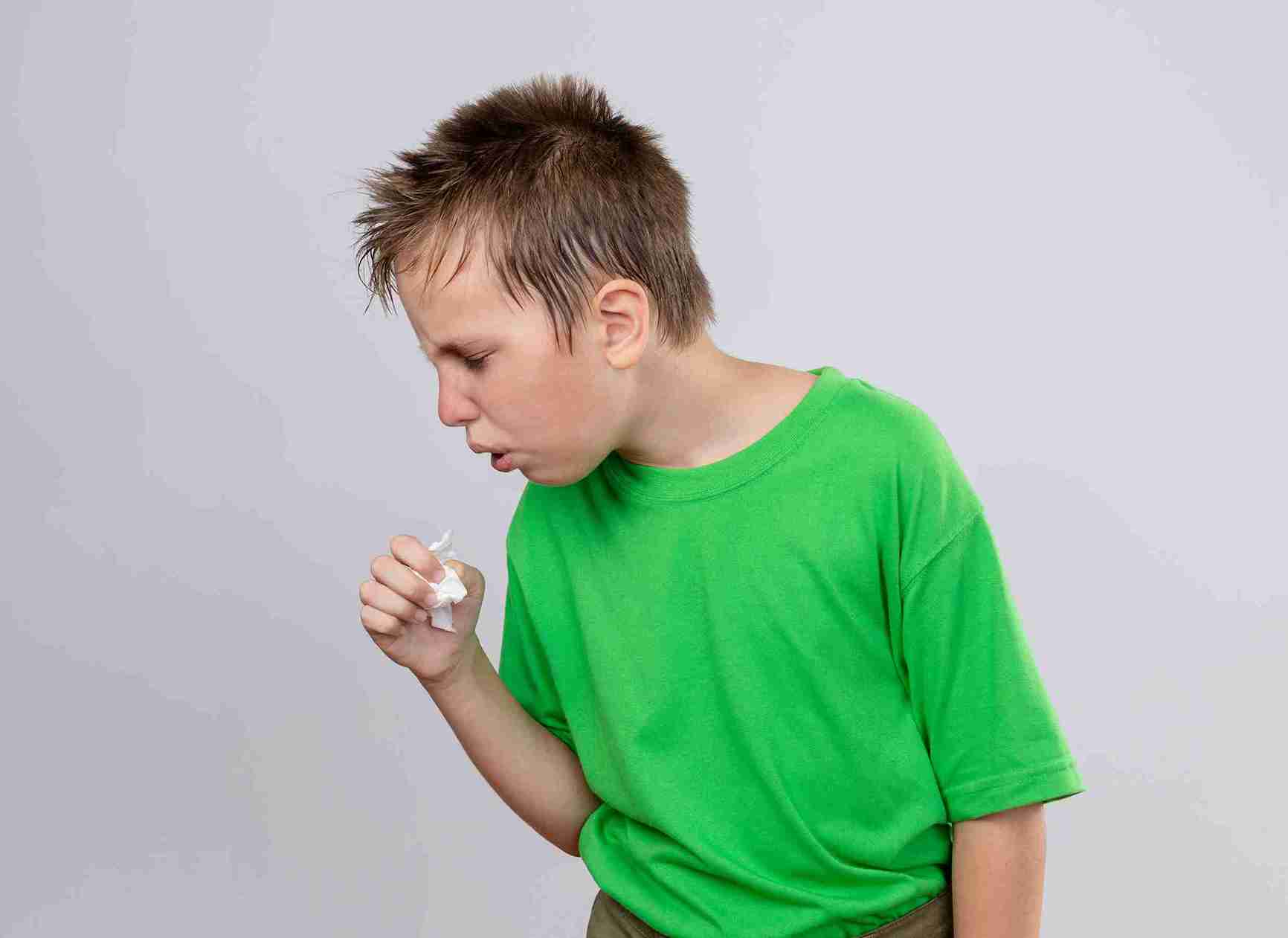
A cough is considered acute if it lasts less than three weeks. Between three and eight weeks, it is called a subacute cough. Beyond eight weeks, it is classified as a chronic cough in kids.
In practice, many parents bring their child in well before the eight-week mark, often after three to four weeks, because the cough is affecting sleep, feeding, or school attendance. That instinct is right. A cough that is not improving after three weeks deserves a proper assessment, not another round of the same syrup.
This is the most common reason a cough lingers in children. A viral infection, like a cold, flu, or other respiratory illness, irritates the airways. The infection clears, but the airway lining remains inflamed and sensitive for weeks afterwards. The cough continues even though the virus is long gone.
Post-infectious cough is dry, often worse at night, and typically improves on its own over two to four weeks after the original infection. No specific treatment is needed beyond time. The mistake most parents make is assuming the continued cough means the child is still sick or needs antibiotics. It usually does not.
Asthma is one of the most frequently missed child cough causes, particularly because not every child with asthma wheezes. In some children, the only symptom of asthma is a persistent dry cough, often called cough-variant asthma.
The cough tends to be worse at night and in the early morning. It often flares with exercise, cold air, dust, or during respiratory infections. If your child has a cough that keeps returning, especially seasonally or with colds, asthma should be on the list of things to rule out. A paediatrician can assess this with a detailed history and sometimes with breathing tests in older children.
When mucus drips from the back of the nose down the throat, it triggers a cough reflex. This is called upper airway cough syndrome, or more commonly, post-nasal drip. In children, it is most often caused by allergic rhinitis, an allergy to dust mites, pollen, pet dander or mould.
The cough tends to be worse on waking in the morning and after lying down, because mucus pools at the back of the throat overnight. The child may also have a blocked or runny nose, frequent throat clearing, or dark circles under the eyes.
Treatment is directed at the allergy - antihistamines, nasal steroid sprays, and reducing dust exposure at home, rather than the cough itself.
.jpg)
Acid from the stomach can travel up the oesophagus and irritate the throat and airway, triggering a chronic cough in kids. Unlike in adults, reflux in children does not always cause heartburn or a burning sensation. The cough may be the only visible symptom.
Reflux-related cough tends to be worse after meals, when lying flat, and at night. Children who have frequent hiccups, complain of a sore throat often, or seem uncomfortable after eating may have reflux contributing to the cough.
If this is suspected, the paediatrician will likely trial a course of acid-reducing medication to see whether the cough improves.
Pertussis, also called whooping cough, is a bacterial infection that causes a very specific type of chronic cough in kids: prolonged, intense coughing fits that end in a high-pitched whooping sound as the child gasps for breath. Vomiting at the end of a coughing fit is also common.
Despite the vaccination that is part of India's immunisation schedule, pertussis still occurs, especially in children whose vaccinations are not up to date or in areas with lower vaccination coverage. It is most severe in young babies and can be life-threatening in infants under one year.
If a child has had a cough lasting more than two weeks with intense spells and a whooping sound, pertussis needs to be considered and tested for.
India has one of the highest TB burdens in the world, and children are not exempt. A child's cough that has lasted more than two to three weeks, especially with fever, night sweats, weight loss, or a known contact with a TB-positive adult, should be investigated for TB.
The paediatrician will typically do a Mantoux test, chest X-ray, and sometimes further investigations. TB in children is treatable, but it requires a full course of anti-TB medication and close monitoring.
A sudden onset of persistent cough in a young child, especially a toddler, with no cold or fever, should raise the possibility of a foreign body lodged in the airway. Young children put things in their mouths. Small objects, like a bead, a piece of food, or a fragment of a toy, can slip into the airway and stay there, causing a cough that does not resolve.
If there was a sudden choking episode followed by a cough that never went away, this needs urgent evaluation, even a chest X-ray and possibly a bronchoscopy to look inside the airway directly.
The Indian Academy of Paediatrics advises against using cough syrups like expectorants and suppressants in young children. They do not shorten the cough, do not treat the cause, and some carry risks of side effects.
Cough treatment for children depends entirely on the cause. The right treatment follows the right diagnosis, which is why the assessment matters so much.
Most persistent coughs in children are not emergencies, but go on the same day if:
● The child is under one year old with a significant cough
● The cough is accompanied by breathing difficulty, fast breathing, or chest retractions
● There is a high fever alongside the cough
● The child is turning blue around the lips during a coughing fit
● You suspect something may have been inhaled
● The child has lost weight, has night sweats, or has had known contact with a TB patient

A cough that will not go away in a child needs a cause, not just a medicine to suppress it. Post-infectious irritation, asthma, allergies, reflux, TB, and pertussis are all on the list, and they each need a different approach. If your child has been coughing for more than three weeks, a proper evaluation is the right next step.
Want to consult the best pediatrician in India? Please find the links below

Persistent cough in children most commonly follows a viral infection, where airway irritation lingers after the illness clears. Other common child cough causes include asthma, post-nasal drip from allergies, acid reflux, and pertussis. In India, TB is also an important cause to consider, especially with other symptoms like fever, weight loss, or night sweats.
Go to the doctor promptly if the cough is in a baby under one year, is accompanied by breathing difficulty or fast breathing, comes with a high fever, involves a whooping sound or vomiting after coughing fits, or follows a suspected choking episode. Cough with weight loss, night sweats, or contact with a TB patient also needs same-day attention.
The most common causes of chronic cough in kids are post-infectious airway irritation, asthma, allergic post-nasal drip, and gastro-oesophageal reflux. In India, pertussis and TB are also causes that cannot be dismissed. A foreign body in the airway should be considered in toddlers with a sudden-onset cough and no cold.
Cough treatment for children depends entirely on the underlying cause. Asthma is treated with inhalers. Allergic post-nasal drip responds to antihistamines and nasal steroid sprays. Reflux is managed with dietary changes and acid-reducing medication. TB and pertussis need specific antibiotics. Post-infectious cough resolves with time.







 Best Gynecologists in Bellandur Best Gynecologists in Electronic City Best Gynecologists in HRBR LayoutBest Gynecologists in Jayanagar Best Gynecologists in Kanakapura RoadBest Gynecologists in Malleswaram Best Gynecologists in Nagarbhavi Best Gynecologists in Old Airport RoadBest Gynecologists in Sahakarnagar Best Gynecologists in Sarjapur RoadBest Gynecologists in ThanisandraBest Gynecologists in Varthur RoadBest Gynecologists in Whitefield Best Gynecologists in Industrial Area Phase IIBest Gynecologists in OMRBest Gynecologists in T NagarBest Gynecologists in New Industrial TownBest Gynecologists in IndirapuramBest Gynecologists in Golf Course RoadBest Gynecologists in Sector 14Best Gynecologists in Sector 47Best Gynecologists in Banjara HillsBest Gynecologists in GachibowliBest Gynecologists in Hitech CityBest Gynecologists in KompallyBest Gynecologists in Gomti NagarBest Gynecologists in MaladBest Gynecologists in NerulBest Gynecologists in VashiBest Gynecologists in Kailash ColonyBest Gynecologists in PatparganjBest Gynecologists in Punjabi BaghBest Gynecologists in VikaspuriBest Gynecologists in Gaur CityBest Gynecologists in Pari ChowkBest Gynecologists in Sector 51Best Gynecologists in Sector 5 Swastik ViharBest Gynecologists in Kalyani NagarBest Gynecologists in SB RoadBest Gynecologists in Pimple SaudagarBest Pediatricians in BellandurBest Pediatricians in Electronic CityBest Pediatricians in HRBR LayoutBest Pediatricians in JayanagarBest Pediatricians in Kanakapura RoadBest Pediatricians in MalleswaramBest Pediatricians in NagarbhaviBest Pediatricians in Old Airport RoadBest Pediatricians in SahakarnagarBest Pediatricians in Sarjapur RoadBest Pediatricians in ThanisandraBest Pediatricians in Varthur RoadBest Pediatricians in WhitefieldBest Pediatricians in Industrial Area Phase IIBest Pediatricians in OMRBest Pediatricians in T NagarBest Pediatricians in New Industrial TownshipBest Pediatricians in IndirapuramBest Pediatricians in Golf Course RoadBest Pediatricians in Sector 14Best Pediatricians in Sector 47Best Pediatricians in Hitech CityBest Pediatricians in Banjara HillsBest Pediatricians in GachibowliBest Pediatricians in KompallyBest Pediatricians in Gomti NagarBest Pediatricians in MaladBest Pediatricians in NerulBest Pediatricians in VashiBest Pediatricians in Kailash ColonyBest Pediatricians in PatparganjBest Pediatricians in Punjabi BaghBest Pediatricians in VikaspuriBest Pediatricians in Gaur CityBest Pediatricians in Pari ChowkBest Pediatricians in Sector 51Best Pediatricians in Sector 5 Swastik ViharBest Pediatricians in Kalyani NagarBest Pediatricians in SB RoadBest Pediatricians in Pimple Saudagar


