
It starts with a cough that does not quite go away. Or a wheeze you notice when your child breathes at night. Or repeated colds that seem to take longer than they should. For many Indian parents, childhood asthma announces itself so gradually that, in fact, it is often confused with recurrent respiratory infections for months before a proper diagnosis is made.
Asthma is one of the most common chronic conditions in children, and it is entirely manageable when identified early. The challenge is knowing what to look for. This guide walks you through the key symptoms, common triggers, and what effective treatment looks like, so that the next time something feels off with your child's breathing, you know exactly what to do.

Asthma is a long-term lung condition in which the airways become inflamed and narrow, making breathing difficult. In children, the airways are already smaller than in adults, which means even mild swelling or excess mucus can cause significant breathing difficulty.
When a child with asthma is exposed to something that irritates their airways, three things happen at once: the airway lining swells, the muscles surrounding the airways tighten, and the airways produce more mucus than normal. Together, these changes reduce airflow in and out of the lungs. This is what causes the symptoms parents notice and, in more severe episodes, what constitutes an asthma attack.
Children experience asthma differently from adults, and younger children often cannot describe what they are feeling. Knowing the visible signs matters.
A cough that keeps coming back, especially at night or in the early morning hours, is one of the most common early signs. It may not sound like a typical chesty cough. In some children, this is the only symptom for a long time before other signs appear.
Wheezing in children is a high-pitched whistling sound heard when breathing out. It happens because air is being pushed through narrowed airways. Parents often describe it as a musical or squeaky quality to the breath. Wheezing in children is a well-known sign of asthma, but it can also be seen with other respiratory illnesses. Therefore, it’s important to have a doctor evaluate any child who wheezes.
Take note if your child often pauses during play, avoids running, or mentions chest tightness while being active. Many children with undiagnosed asthma quietly reduce their own activity levels to avoid the discomfort, without mentioning it.
Older children may describe their chest as feeling "heavy" or "like something is sitting on it." Younger children are unlikely to describe this clearly, but may be unusually irritable, reluctant to lie flat, or visibly uncomfortable in that position.
If you notice your child struggling to breathe, with the skin pulling in at the neck or between the ribs, it means they are working much harder than normal to get air. This warrants immediate medical attention.
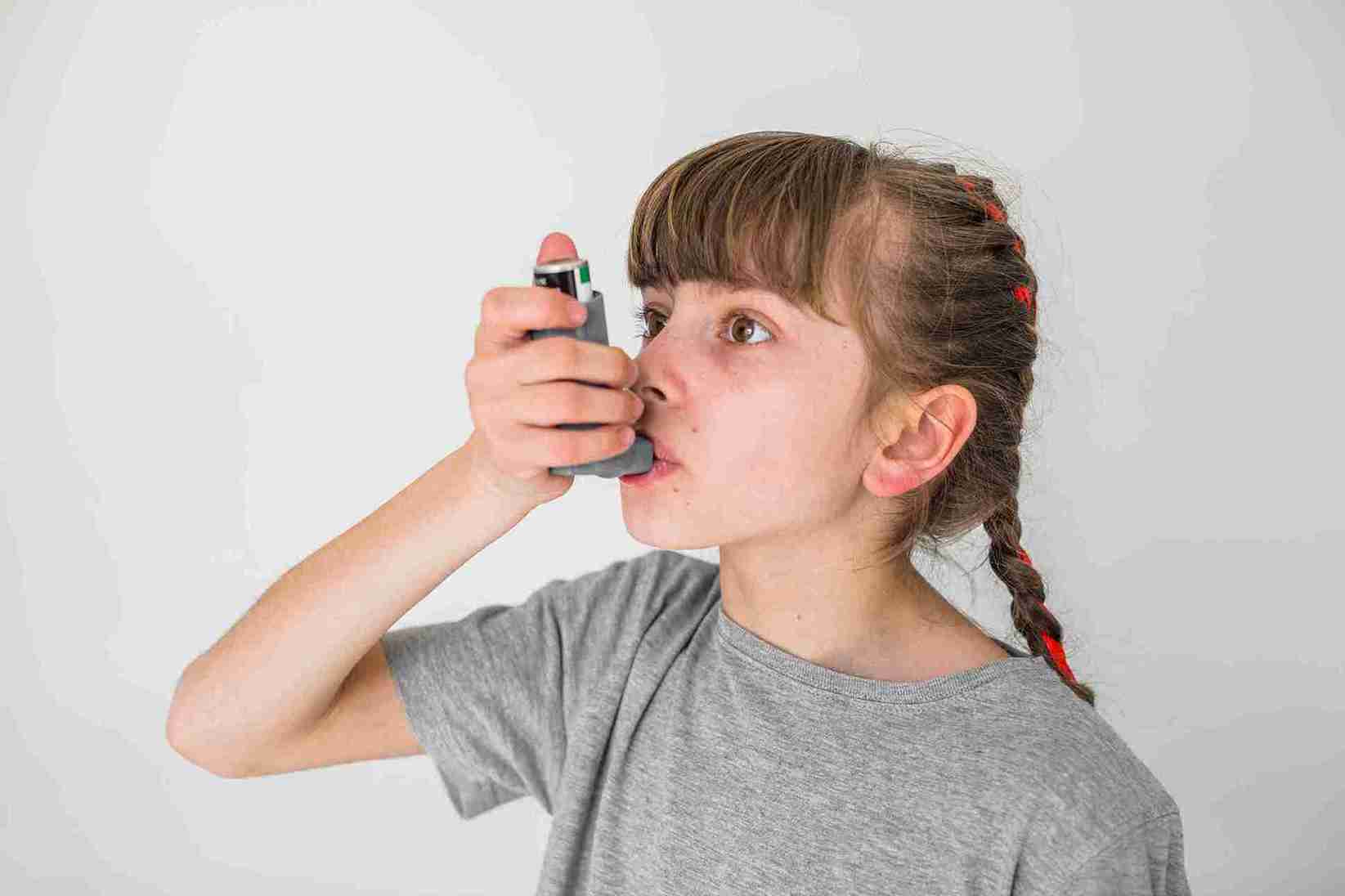
An asthma attack is not the same as everyday asthma symptoms. It is a sudden and significant worsening that requires prompt action.
Asthma attack symptoms in children include very rapid breathing, an inability to speak more than a few words at a time, lips or fingernails turning pale or bluish, a hunched posture as the child tries to use every muscle to breathe, and an obvious look of distress or panic. If your child stops midsentence to catch their breath or cannot walk a few steps without panting, it is best to seek immediate medical attention. Some asthma attack symptoms build gradually over hours, while others come on quickly. In either case, if your child's inhaler (usually a salbutamol inhaler) does not bring improvement within 15 to 20 minutes, take them to a hospital immediately.
Understanding what triggers your child's symptoms helps reduce how often attacks occur.
There is no cure for childhood asthma, but it can be managed effectively so that most children live fully active lives without limitations. Paediatric asthma treatment is usually a two-pronged approach: controller medicines and reliever medicines.
For most children, treatment also involves a written asthma action plan that outlines the child's baseline, when to use the reliever inhaler, when to step up treatment, and when to go to the hospital.
Paediatric asthma treatment is adjusted regularly based on symptom control. If a child has frequent flare-ups, the doctor may increase the controller dose or add another medication. If asthma is well controlled for several months, the dose may be reduced. This stepwise approach aims to keep the child on the minimum effective treatment.

Asthma in children is manageable, not something to simply endure. The earlier it is identified and treated, the better the long-term outcome for your child's lungs and quality of life. If your child coughs persistently at night, wheezes regularly, or seems to tire easily during play, do not wait for it to pass. A conversation with your paediatrician is the right next step.
Want to consult the best pediatrician in India? Please find the links below
best pediatrician in Bangalore
Best pediatrician in Chandigarh
best pediatrician in faridabad
best pediatrician in hyderabad
Best pediatrician in New Delhi
Best pediatrician in Panchkula
Best pediatrician in Ghaziabad

Asthma cannot be cured, but it can be well controlled. Some children find their symptoms improve significantly as they grow older, and a few appear to outgrow them entirely. However, asthma can return in adulthood. The focus of treatment is keeping symptoms under control so the child can live a full life, play sports, sleep well, and attend school without interruption.
Diagnosis involves a detailed medical history, a physical examination, and lung function tests, such as spirometry, for children aged 6 years and older. Younger children may be observed over time on a trial of inhalers. Allergy tests and chest X-rays help identify triggers and rule out other conditions. Because children often cannot accurately describe their symptoms, a parent's account of what they observe at home is crucial.
Common triggers include dust mites, cockroach allergens, pet dander, pollen, air pollution, tobacco smoke, agarbatti smoke, mosquito coil smoke, cold air, respiratory infections, exercise, and emotional stress. In India, indoor cooking smoke and high-AQI days also matter. Identifying your child's personal triggers through observation and allergy testing allows parents to reduce exposure and lower the frequency of attacks.
The earliest signs are often a persistent nighttime cough, mild wheezing on exhalation, and a child who tires quickly during physical activity. Frequent respiratory infections that take longer than usual to resolve can also be an early signal. Many children unconsciously avoid running or active play to prevent the discomfort - a pattern that parents or teachers may notice before the child ever complains directly.







 Best Gynecologists in Bellandur Best Gynecologists in Electronic City Best Gynecologists in HRBR LayoutBest Gynecologists in Jayanagar Best Gynecologists in Kanakapura RoadBest Gynecologists in Malleswaram Best Gynecologists in Nagarbhavi Best Gynecologists in Old Airport RoadBest Gynecologists in Sahakarnagar Best Gynecologists in Sarjapur RoadBest Gynecologists in ThanisandraBest Gynecologists in Varthur RoadBest Gynecologists in Whitefield Best Gynecologists in Industrial Area Phase IIBest Gynecologists in OMRBest Gynecologists in T NagarBest Gynecologists in New Industrial TownBest Gynecologists in IndirapuramBest Gynecologists in Golf Course RoadBest Gynecologists in Sector 14Best Gynecologists in Sector 47Best Gynecologists in Banjara HillsBest Gynecologists in GachibowliBest Gynecologists in Hitech CityBest Gynecologists in KompallyBest Gynecologists in Gomti NagarBest Gynecologists in MaladBest Gynecologists in NerulBest Gynecologists in VashiBest Gynecologists in Kailash ColonyBest Gynecologists in PatparganjBest Gynecologists in Punjabi BaghBest Gynecologists in VikaspuriBest Gynecologists in Gaur CityBest Gynecologists in Pari ChowkBest Gynecologists in Sector 51Best Gynecologists in Sector 5 Swastik ViharBest Gynecologists in Kalyani NagarBest Gynecologists in SB RoadBest Gynecologists in Pimple SaudagarBest Pediatricians in BellandurBest Pediatricians in Electronic CityBest Pediatricians in HRBR LayoutBest Pediatricians in JayanagarBest Pediatricians in Kanakapura RoadBest Pediatricians in MalleswaramBest Pediatricians in NagarbhaviBest Pediatricians in Old Airport RoadBest Pediatricians in SahakarnagarBest Pediatricians in Sarjapur RoadBest Pediatricians in ThanisandraBest Pediatricians in Varthur RoadBest Pediatricians in WhitefieldBest Pediatricians in Industrial Area Phase IIBest Pediatricians in OMRBest Pediatricians in T NagarBest Pediatricians in New Industrial TownshipBest Pediatricians in IndirapuramBest Pediatricians in Golf Course RoadBest Pediatricians in Sector 14Best Pediatricians in Sector 47Best Pediatricians in Hitech CityBest Pediatricians in Banjara HillsBest Pediatricians in GachibowliBest Pediatricians in KompallyBest Pediatricians in Gomti NagarBest Pediatricians in MaladBest Pediatricians in NerulBest Pediatricians in VashiBest Pediatricians in Kailash ColonyBest Pediatricians in PatparganjBest Pediatricians in Punjabi BaghBest Pediatricians in VikaspuriBest Pediatricians in Gaur CityBest Pediatricians in Pari ChowkBest Pediatricians in Sector 51Best Pediatricians in Sector 5 Swastik ViharBest Pediatricians in Kalyani NagarBest Pediatricians in SB RoadBest Pediatricians in Pimple Saudagar


