
Women all over the world put on their bravest faces when they are going through the experience of pregnancy. Those nine months of their lives change them as a person. Their bodies go through major changes and they have to take extra care of themselves to ensure that the new life they hold within their bodies is brought to the world safely and healthily. They get to witness the magic that their body is capable of, nurturing and bringing to this world a new life altogether.
Pregnancy is a beautiful experience for all mothers, but it comes with its own complications. On Cloudnine, we respect and encourage all the women to be strong and proud of themselves, who brave through this experience with a smile on their faces.

Do you want to know the "Estimated date of when your baby is due?" Check out Cloudnine's Pregnancy Due Date Calculator now!
However, we hold an all-new level of admiration for the moms who are braving the adversity in the face of a global pandemic. We know moms, and for their immense courage, we salute them!
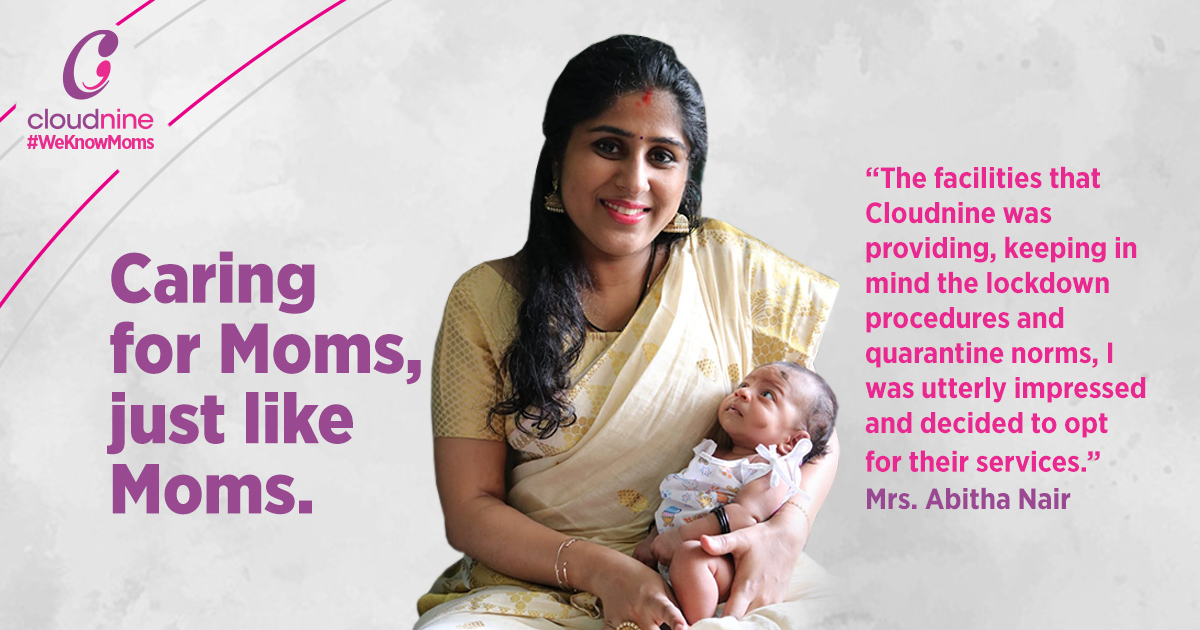
Cloudnine Mumbai recently hosted one such brave Warrior Mom, Abitha Nair. This Malayalam speaking lady is a stay-at-home mommy, who is now handling her new responsibilities as a mother apart from holding fort at home to support the whole family. We got the opportunity to have a short conversation with her regarding her pregnancy journey with us on Cloudnine. She was very gracious while answering all of our questions and we fell in love with her strength!
Abitha: I got pregnant in the month of August 2019. The news about the pandemic came in December. We were a little bit disappointed and clueless as to what was to come next. I honestly was not taking things positively and I would say I was rather worried. It was very challenging and I also was on complete bed rest as I was suggested that it would help me gain back my confidence and achieve mental peace. Staying at home is very tough I must admit.

By January and February, I again met my doctor and it was again advised to me to stay at home. Then the lockdown happened and we literally couldn’t leave our house now. The most important part that most miss out is that everyone should be mentally strong. My mom came and supported me a lot during this crisis. My extended family supported me a lot too during this time and of course my husband. He stayed by my side the whole while. He took care of all that I required and made sure that my anxiety would not creep in.
Abitha: I am not great with decisions so I trusted the judgment of a few people who are close to me and had gone through the experience a few months or years back. Quite obviously, the names of many other hospitals came up, but Cloudnine was the most commonly mentioned one in most references we took.
After that, I did my own research and the facilities that Cloudnine was providing, keeping in mind the lockdown procedures and quarantine norms, I was utterly impressed and decided to opt for their services.
I can safely say that my references were not wrong.

Abitha: I must admit that my journey wasn’t too smooth because of the complications I faced during my pregnancy. Cloudnine was extremely helpful with its services that eased my difficulties to a huge extent. I did not have to travel to the hospital for regular check-ups with my doctor. Video consultation was provided. Pick up service was also very helpful. It would have been so difficult to get cabs during the lockdown. Even in the hospital, they took care to measure temperatures regularly. Tests were done for all entering the premises. I had a C-section done after 4 days of sudden pain and it was an emergency situation.
But Cloudnine handled it so maturely and I was assured of the safety of my own health and my baby’s. I had to go back to the hospital after the delivery because of a few complications and again I was welcomed back like a close member. Cloudnine was like a mom to me during my stay at the hospital. I am so grateful for them.

Abitha: I was thoroughly supported by my doctor. From video consultations to check-ups where my complications were figured out, my doctor took care of everything. I must say I was very worried about what was going to happen and my doctor was the best I could hope for. All my questions, however stupid were answered from time to time. I never felt uncomfortable in their presence, be it the on-duty doctor or the pediatrician.
The support staff on Cloudnine was also highly helpful, but most importantly they were aware and alert of the precarious situation around us.
Good News! Now you can Avail Home Vaccination Sevices for babies
Well, I don’t know if my advice is the best but of course, everyone should remember that this situation is not permanent and we will see better days. Till then hold on tight and keep the faith. Trust in your doctors and those who take care of you. The medical fraternity is already going through a lot. Let’s not make life difficult for them. Eat healthily and keep healthy.
We are elated that you enjoyed your experience on Cloudnine, Abitha!

You were a delight to host and an immense inspiration to all of us who witnessed you there. We wish you all the best for your future endeavours and the new life that you set upon with your little bundle of joy. Thank you for choosing to be on Cloudnine!
“Cloudnine loves you and will always be there for you!”
Must Read: It’s never too late to choose the best
Want to consult the best gynecologists in India? Please find the links below.
Want to consult the best Maternity Packages in India? Please find the links below.

Unlike many people we come across in our lives, a mother will always love her child, irrespective of what the child is capable of, what the child has done, or how the child behaves. There are no ifs or buts when it comes to a mother’s love for her children. It is pure, unconditional, and limitless.
If you want to describe a mother’s love for her child in just one word, it is “unconditional”. No matter what happens or how events turn out, she will love her child as always.
"The depth of a mother’s love cannot be explained in words. Different mothers show their love in different ways. All mothers will go out of their way, exceed their limitations to keep their child safe, happy, and healthy. According to various sources, approximately 90% of cancers are caused by environmental and lifestyle factors. Tobacco use, exposure to radiation, infections, obesity, pollution, etc., are more responsible for cancers than genetic factors. For women, the detection of ovarian cancer is the most challenging. The symptoms are very ambiguous and easily mistaken for other issues. There are no effective screening methods to detect this particular cancer in its early stages, either. A common symptom among most gynaecological cancers is vaginal bleeding or unusual vaginal discharge. Bleeding between periods or after menopause comes under these symptoms. These are often accompanied by pelvic or abdominal pain, bloating, and loss of appetite. Cancer in the reproductive system of a female is diagnosed after analysis of the symptoms, physical examination, and required diagnostic tests. The Pap smear test and HPV tests are taken for cervical cancer diagnosis. For uterine and ovarian cancers, a transvaginal ultrasound and biopsies of the endometrium are taken. Pelvic cancer can affect the ovaries, cervix, uterus, or even the pelvic bones. Some common symptoms of pelvic cancer include pelvic pain or pressure, abnormal vaginal discharge or bleeding, bloating, urge to urinate frequently, and unexplained weight loss. Some women may notice a change in their bowel habits as well. Unlike many people we come across in our lives, a mother will always love her child, irrespective of what the child is capable of, what the child has done, or how the child behaves. There are no ifs or buts when it comes to a mother’s love for her children. It is pure, unconditional, and limitless. If you want to describe a mother’s love for her child in just one word, it is “unconditional”. No matter what happens or how events turn out, she will love her child as always. You cannot completely stop morning sickness in early pregnancy, as it is a side effect of the rising pregnancy hormones. You can control your morning sickness to an extent by eating small, frequent meals, opting for bland foods over spicy or flavourful ones, and drinking plenty of liquids to stay well-hydrated. Morning sickness in the middle of the night could be due to hunger or acid reflux. Eat a nutritious, bland dinner. Keep a few biscuits or crackers by your bedside, to munch on if you are hungry or nauseous. Constant nausea and vomiting can tire you both physically and mentally. It can interfere with your daily tasks, concentration, food habits, and cause mood swings. Practice relaxation techniques like yoga or breathing exercises to cultivate a calm mind. Distract yourself with mentally challenging activities like crosswords, puzzles, or reading. Generally, morning sickness starts in the first few weeks of pregnancy. It is most commonly experienced between 4 and 9 weeks. Some women may experience it throughout their first trimester, and some throughout the pregnancy. In most cases, the intensity will decrease after the 20th week of pregnancy. The most common cancer among women is breast cancer, but the deadliest is lung cancer. Lung cancer is predominantly caused by lifestyle factors, so unlike breast cancer, you cannot gauge the risk genetically. Also, lung cancer is not diagnosed until it reaches an advanced stage, thus giving very little chance for effective treatment. The experience varies from pregnancy to pregnancy. Some women don’t experience morning sickness at all. If you are suffering from morning sickness, you will most likely feel nauseous, feel like vomiting, but may not do so every time. You will also experience reflux or heartburn when you eat spicy foods. Some smells can also make you feel nauseous. You cannot completely avoid morning sickness during pregnancy, as it is caused by hormonal changes during pregnancy. You can control the symptoms and their impact by avoiding foods or smells that trigger your nausea. Eating frequent small meals and bland food can reduce heartburn and reflux. Also, avoid going hungry for too long. The best remedy for morning sickness depends on the triggers. In general, eating smaller, more frequent meals, avoiding very spicy or flavoured foods, drinking plenty of liquids, and sipping on ginger or peppermint tea can help control the nausea and vomiting. In the case of severe morning sickness, your doctor might prescribe B6 supplements. Morning sickness starts in the first trimester. It is one of the earliest signs of pregnancy. Contrary to its name, morning sickness can occur at any time of day or night. While some women may not experience any morning sickness, some may suffer from it throughout the pregnancy. One can know the gender of the fetus only through an ultrasound scan taken after the completion of 20 weeks. In India, finding the gender of an unborn child is against the law and a punishable offence. There are many old wives’ tales that associate food cravings, changes in the mother’s skin, and the size of the bump with the gender of the baby. No, morning sickness is related to rising pregnancy hormones, not the baby's gender. In many cultures, the gender of the baby is associated with the severity of morning sickness. However, there is no scientific backing to these claims. During labour, the mother’s vitals are checked frequently to ensure she is steady enough to go through labour. After checking the mother’s vital signs, the baby’s heart rate and uterine contractions are closely monitored. Checking cervical dilation and effacement, and the baby’s descent or position, can help understand labour’s progress. During pregnancy, you can monitor a baby through regular ultrasound scans to check vital signs and fetal development. Doctors can use a Doppler to hear the heartbeat and also use transducers on the mother’s abdomen for electronic fetal monitoring. During delivery, the fetus can go into distress at any time. Though it may not happen, doctors are always prepared for issues. Constant monitoring of fetal heart rate can alert you to issues or potential issues. In case of fetal distress, an emergency C-section will be performed to deliver the baby safely. Monitoring a fetus during labour involves closely monitoring the baby’s heart rate. The health care providers around you in the labour ward may use a Doppler to hear the baby’s heartbeat through your chest or connect you to the EFM machine to track your contractions and the baby’s movement throughout labour. Yes, it is possible to identify it early through ultrasound and laboratory tests to determine hCG levels. Recovery is different for everyone, but usually, individuals need a few weeks following treatment and some months of follow-up. The most common treatment for a molar pregnancy is a D&C – dilation and curettage. It is usually performed under general anaesthesia, so you may not feel any pain during the procedure. As the anaesthesia wears off, you may feel some pain, discomfort, or cramping, which will go away in a few hours. Your doctor may also prescribe some over-the-counter pain medications to help ease the discomfort. The first smiles are mostly responses to internal stimuli. Babies will start smiling in their sleep or even when alone without anyone actively engaging them. These are not social responses. Around week 6, babies will start recognising their parents’ or caregivers’ faces and start smiling in response. As their awareness grows, so will their smiles. A combination of neurological development and reflexes can cause babies to start smiling in their sleep. Most of these smiles occur during REM sleep. As the muscles required for smiling develop, babies will start flexing them and smiling even without any stimulus. This can happen in their sleep as well. Most times, a baby’s first smile is due to reflexes or internal stimuli. These smiles are not conscious, meaning the baby is not responding to their environment with a smile. It happens involuntarily. The development of facial muscles responsible for smiling may also cause the first smile. Yes, you can mix breast milk and formula in one bottle, but you must first prepare the formula separately as per the packet instructions before adding expressed milk. A 1:1 ratio is a common and safe starting point, but it can be adjusted depending on your baby’s needs. Always consult your paediatrician if unsure. Yes, as long as the mixing is done properly and your baby tolerates it well. It’s often used as a supplement to balance feeding when breast milk alone isn’t sufficient. Babies may reject a feed if they are not hungry enough. If your baby has an ear infection, oral thrush, or constipation, it can be difficult for them to suck or swallow. Nasal congestion and tongue-ties can also make a baby refuse to feed. The initial symptoms are abnormal vaginal bleeding, severe nausea, uterine enlargement and elevated hCG levels, as tested through blood examinations. "
A mother’s love is the purest form of love that has no limits. A mother puts her children and their needs before herself.







 Best Gynecologists in Bellandur Best Gynecologists in Electronic City Best Gynecologists in HRBR LayoutBest Gynecologists in Jayanagar Best Gynecologists in Kanakapura RoadBest Gynecologists in Malleswaram Best Gynecologists in Nagarbhavi Best Gynecologists in Old Airport RoadBest Gynecologists in Sahakarnagar Best Gynecologists in Sarjapur RoadBest Gynecologists in ThanisandraBest Gynecologists in Varthur RoadBest Gynecologists in Whitefield Best Gynecologists in Industrial Area Phase IIBest Gynecologists in OMRBest Gynecologists in T NagarBest Gynecologists in New Industrial TownBest Gynecologists in IndirapuramBest Gynecologists in Golf Course RoadBest Gynecologists in Sector 14Best Gynecologists in Sector 47Best Gynecologists in Banjara HillsBest Gynecologists in GachibowliBest Gynecologists in Hitech CityBest Gynecologists in KompallyBest Gynecologists in Gomti NagarBest Gynecologists in MaladBest Gynecologists in NerulBest Gynecologists in VashiBest Gynecologists in Kailash ColonyBest Gynecologists in PatparganjBest Gynecologists in Punjabi BaghBest Gynecologists in VikaspuriBest Gynecologists in Gaur CityBest Gynecologists in Pari ChowkBest Gynecologists in Sector 51Best Gynecologists in Sector 5 Swastik ViharBest Gynecologists in Kalyani NagarBest Gynecologists in SB RoadBest Gynecologists in Pimple SaudagarBest Pediatricians in BellandurBest Pediatricians in Electronic CityBest Pediatricians in HRBR LayoutBest Pediatricians in JayanagarBest Pediatricians in Kanakapura RoadBest Pediatricians in MalleswaramBest Pediatricians in NagarbhaviBest Pediatricians in Old Airport RoadBest Pediatricians in SahakarnagarBest Pediatricians in Sarjapur RoadBest Pediatricians in ThanisandraBest Pediatricians in Varthur RoadBest Pediatricians in WhitefieldBest Pediatricians in Industrial Area Phase IIBest Pediatricians in OMRBest Pediatricians in T NagarBest Pediatricians in New Industrial TownshipBest Pediatricians in IndirapuramBest Pediatricians in Golf Course RoadBest Pediatricians in Sector 14Best Pediatricians in Sector 47Best Pediatricians in Hitech CityBest Pediatricians in Banjara HillsBest Pediatricians in GachibowliBest Pediatricians in KompallyBest Pediatricians in Gomti NagarBest Pediatricians in MaladBest Pediatricians in NerulBest Pediatricians in VashiBest Pediatricians in Kailash ColonyBest Pediatricians in PatparganjBest Pediatricians in Punjabi BaghBest Pediatricians in VikaspuriBest Pediatricians in Gaur CityBest Pediatricians in Pari ChowkBest Pediatricians in Sector 51Best Pediatricians in Sector 5 Swastik ViharBest Pediatricians in Kalyani NagarBest Pediatricians in SB RoadBest Pediatricians in Pimple Saudagar


