
Finding out whether you're pregnant can be exciting, stressful, or both. Naturally, one of the first questions lots of women ask themselves is: how soon will a pregnancy test read positive? The answer depends on your body's timeline, hormone levels, and the sensitivity of the test you're taking. Understanding this helps you avoid confusion, unnecessary anxiety, or false expectations.
Below is a clear, science-backed guide to help you know how soon will a home pregnancy test read positive
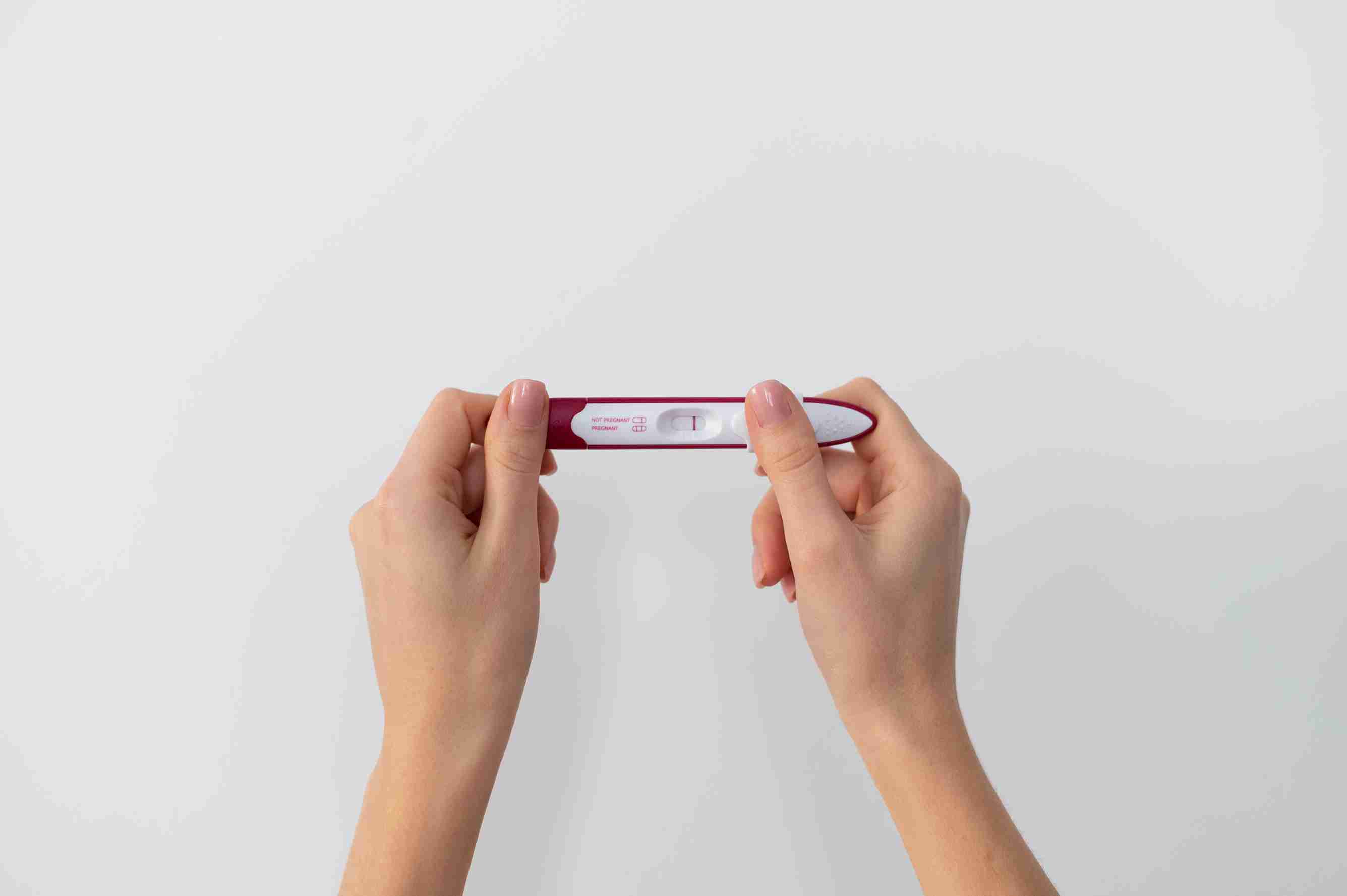
A pregnancy test looks for the presence of hCG (Human Chorionic Gonadotropin) hormone in a woman’s body, which is a direct indication for pregnancy. These tests are done using the woman’s urine or blood. If the pregnancy test is positive, it implies that the woman is pregnant and if it is negative, it means that they are not.
hCG production starts in a woman’s body the moment the embryo implants itself in the uterus. The timeline for implantation could be around 6-10 days from the date of conception. So, it is essential to perform a pregnancy test only after a minimum of 10 days after conception. In most cases, women realise they may be pregnant only when they miss their monthly menstrual cycle. By this time, the conception could be more than 10 days, and so it is the right time to perform the test.
When to take a pregnancy test for accuracy? This is the question on every pregnant couple’s mind. The best time to take a pregnancy test, either at home or at a clinic, is the first thing in the morning, as soon as you wake up. A woman’s urine is highly concentrated at this time and is ideal for detecting hCG.
If you want to get an accurate result, the test should be done on or after the first day of the missed period. If you are testing a week after you have missed your period, a urine sample taken at any time during the day is likely to have a higher concentration of hCG, and the results may be accurate.
If you are thinking about taking a pregnancy test the day after you had intercourse, it is most likely to come back as negative, as the embryo may not have implanted in the uterus and hCG levels are still low. If you have already tested and received a negative result, it is advisable to redo the test one week after your missed period.
Yes, you can take a pregnancy test before a missed period. There are a few highly sensitive tests that can detect hCG up to 6 days before the expected period. If you are testing this way, you are more likely to see false negatives cropping up, and it is recommended that you test again after a few more days.
If you are taking the pregnancy test too early, the result may show as negative, even if it is truly positive.
After an egg is implanted in the uterine wall, the placenta starts to produce hCG. This is likely to happen only 6-10 days after you conceive.
In the early stages of pregnancy, hCG levels double every 48 to 72 hours. If you test too soon, the levels may be too low for the strip to detect them.

You should repeat the pregnancy test if any one of the following is true:
Early Testing: If you have tested earlier than the date of your next period, the result may be a false negative. Repeat the test on the day of the expected period or 14 days after ovulation.
Pregnancy tests detect a hormone known as human chorionic gonadotropin, or hCG. This hormone increases when the fertilised egg implants in the uterus. Implantation does not happen immediately after conception, sometimes it may take many days too. Hence, the timing for taking such a test is important. That's why it's all about timing. Testing too early may lead to a false-negative as the egg may not have implanted itself, leading to a lesser hCG value.
Not pregnant: \(<5\) mIU/mL
3 weeks pregnant: \(5 – 50\) mIU/mL
4 weeks pregnant: \(5 – 426\) mIU/mL
5 weeks pregnant: \(18 – 7,340\) mIU/mL
Whether one uses a home test or a clinical one, the principle is the same, which is detecting hCG in the urine or blood.
● Urine tests: These are the common home pregnancy kits. They are convenient, easily available, and generally reliable once hCG levels are high enough to detect.
● Blood tests: These are clinical and even more sensitive, detecting very small amounts of hCG.
Until hCG rises high enough to be picked up, your test will show negative—regardless of whether conception has occurred.
To understand how soon a pregnancy test will read positive, it helps to break the process down step by step:
This is when the ovary releases an egg. Most women ovulate approximately 14 days before their next period.
Fertilisation occurs when sperm meets the egg within 12–24 hours of ovulation.
This is the critical moment. After fertilisation, the embryo travels to the uterus and implants itself,usually 6-12 days after ovulation.
Once implantation occurs, the body starts releasing hCG. It is then that a pregnancy test will turn positive.
hCG does not rise immediately after fertilisation. Hence, you can confirm pregnancy only a few days after conception.
Any home pregnancy test kit will use your urine to identify the presence of hCG. It may contain hCG strips that can detect as low as 10–25 mIU/mL. Some of the highly sensitive tests can even detect 6–10 mIU/mL of hCG present in the urine. Most of these at-home pregnancy test kits are about 99% accurate when used in the right way. You can buy these at any medical store or hospital pharmacy. They are very simple to use and also quite affordable. Read the instructions carefully before using any home pregnancy test kit. There are three ways to take the home pregnancy test:
Clinical blood tests check the presence of hCG in the blood. These tests are more sensitive than urine tests and can detect pregnancy as early as 7-10 days after conceiving. Your doctor may recommend a blood test for fertility treatments, high-risk pregnancies or for
early pregnancy confirmation.
In early pregnancy, hCG levels rise rapidly to support the growing embryo. In case of healthy pregnancies, these levels may double every 48 to 72 hours. There are two main types of blood tests:
Qualitative hCG Test: This test gives you a direct Yes or No for presence of hCG in your bloodstream.
Quantitative hCG Test: This test measures the exact amount of hCG in the blood and can detect as low as 1–5 mIU/mL. It is mostly used to monitor foetal growth, ensure that pregnancy is progressing as per normal guidelines and also to check for any complications like ectopic pregnancy.
Difference between Qualitative and Quantitative hCG Tests:
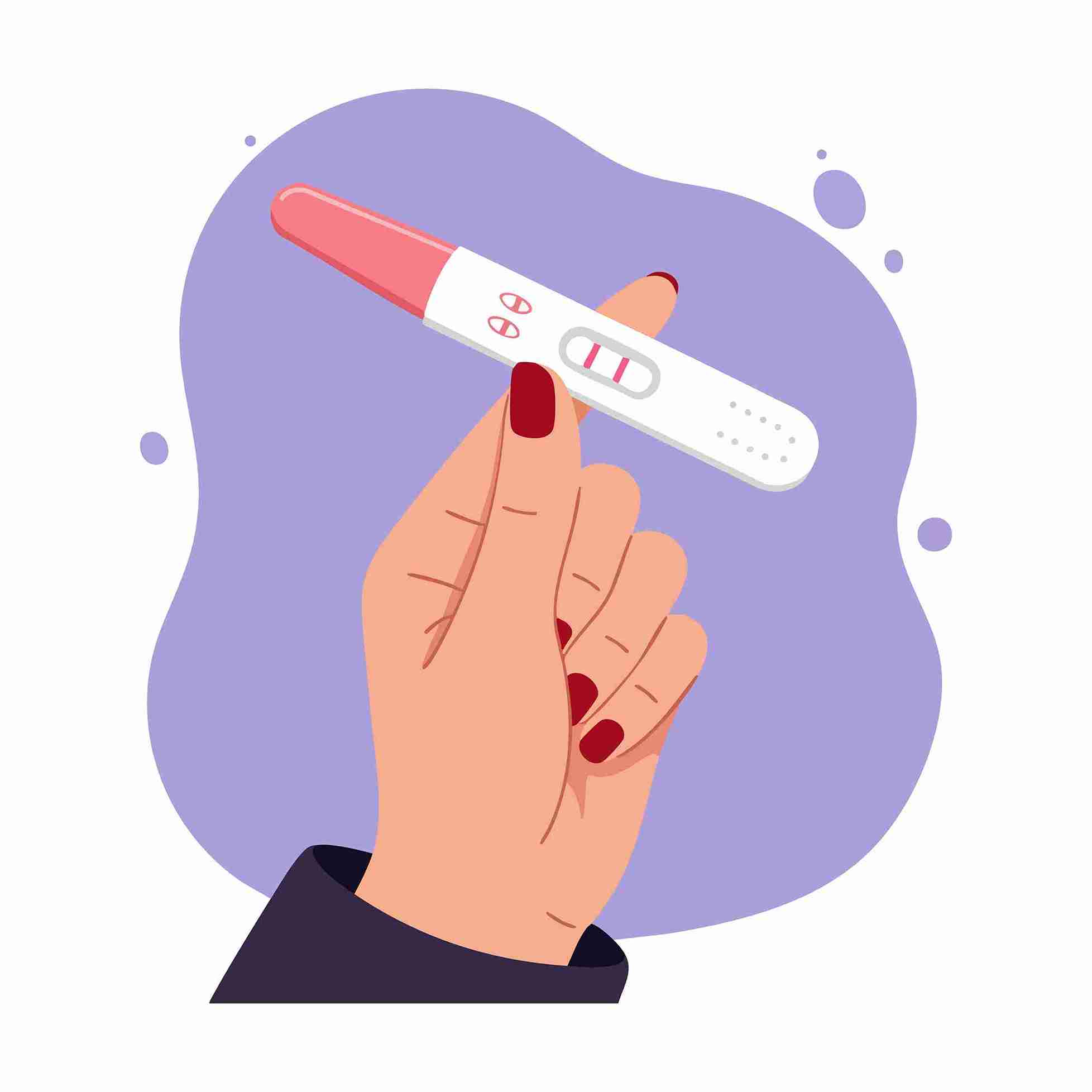
This is the most important part, and the answer varies depending on the kind of test and your body's cycle.
Only rarely can a very sensitive home test detect pregnancy about 8 days after ovulation.
This typically matches with:
● Around 2–3 days before your expected period
● About 10 days after fertilisation
Most women will get an accurate reading:
● On the first day of the missed period
● Or about 14 days after ovulation
If you want the most reliable result, take the test:
● One week following your missed period
At this point, nearly all pregnancies will produce detectable hCG levels.
This explains how many weeks will a pregnancy test read positive. Most tests turn reliably positive by 4-5 weeks of pregnancy, counting from your last menstrual period.

A false negative can occur, and here are some common reasons:
The test will show negative if implantation hasn't happened, or hCG hasn't risen enough.
Drinking a lot of water before testing will dilute the hCG concentration.
Cycles can vary, especially if you are ovulating late or if implantation takes longer than usual.
Always check the expiration date and carefully follow the instructions.
To give yourself the best chance of an accurate reading,
● Use first-morning urine, because it has the highest hCG concentration
● Test on or after your missed period
● Avoid drinking too much water before testing
● If negative, but your period hasn’t arrived, retest in 48–72 hours
Because hCG doubles approximately every 48 hours, waiting just two days can make a big difference.
You may need clinical testing if:
● You want earlier confirmation than a home test can provide
● Your urine tests remain negative, yet you strongly suspect pregnancy
● You are experiencing unusual bleeding, severe cramping, or confusing symptoms.
A healthcare provider may recommend a blood hCG test followed by an early ultrasound around 6 weeks to confirm that the pregnancy is progressing healthily.
Expert guidance will make all the difference in questions such as how soon will a home pregnancy test read positive, early symptoms, among many others. At Cloudnine, the facilities ensure comfort for the patient, modern diagnostic facilities, and a team of expert specialists who accord safety, emotional comfort, and timely care. Be it confirmation of pregnancy in the early stages, blood tests, or ultrasound evaluations, its supportive environment helps women feel informed and confident at every step.

A pregnancy test can only read positive after your body starts to produce detectable levels of hCG, which is post-implantation. While the earliest tests might show a faint positive at about 8-10 days past ovulation, the majority of women receive correct results only on or after the day of their missed period. For maximum reliability, it is best to test a week after the missed period. Knowing your cycle, correctly administering a sensitive test, and using the right timing can alleviate confusion and false negatives. If uncertainty still stands, consult your healthcare provider for a blood-based pregnancy test that can give you clearer, earlier confirmation.

A pregnancy test positive result indicates that you are pregnant. Any home-pregnancy kit checks the woman’s early-morning urine sample for hCG. If hCG is at detectable levels, the test gives a positive result, indicating that you are pregnant.
If you are wondering after intercourse, when pregnancy is confirmed, you have to wait till your next possible period date. The test results are more aligned with the type of test that you use. Some pregnancy tests can confirm pregnancy even before your expected period date, but the accuracy may be questionable.
hCG may show up in the urine about 10-14 days after conception, which is typically 6-10 days after ovulation. Though trace amounts may be present in the urine, any test done before this period may give a false-negative result.
There is no scientific proof that urine held for 2 hours will show a positive pregnancy test result. The recommendation is to use the first-morning urine as it has the highest concentration.







 Best Gynecologists in Bellandur Best Gynecologists in Electronic City Best Gynecologists in HRBR LayoutBest Gynecologists in Jayanagar Best Gynecologists in Kanakapura RoadBest Gynecologists in Malleswaram Best Gynecologists in Nagarbhavi Best Gynecologists in Old Airport RoadBest Gynecologists in Sahakarnagar Best Gynecologists in Sarjapur RoadBest Gynecologists in ThanisandraBest Gynecologists in Varthur RoadBest Gynecologists in Whitefield Best Gynecologists in Industrial Area Phase IIBest Gynecologists in OMRBest Gynecologists in T NagarBest Gynecologists in New Industrial TownBest Gynecologists in IndirapuramBest Gynecologists in Golf Course RoadBest Gynecologists in Sector 14Best Gynecologists in Sector 47Best Gynecologists in Banjara HillsBest Gynecologists in GachibowliBest Gynecologists in Hitech CityBest Gynecologists in KompallyBest Gynecologists in Gomti NagarBest Gynecologists in MaladBest Gynecologists in NerulBest Gynecologists in VashiBest Gynecologists in Kailash ColonyBest Gynecologists in PatparganjBest Gynecologists in Punjabi BaghBest Gynecologists in VikaspuriBest Gynecologists in Gaur CityBest Gynecologists in Pari ChowkBest Gynecologists in Sector 51Best Gynecologists in Sector 5 Swastik ViharBest Gynecologists in Kalyani NagarBest Gynecologists in SB RoadBest Gynecologists in Pimple SaudagarBest Pediatricians in BellandurBest Pediatricians in Electronic CityBest Pediatricians in HRBR LayoutBest Pediatricians in JayanagarBest Pediatricians in Kanakapura RoadBest Pediatricians in MalleswaramBest Pediatricians in NagarbhaviBest Pediatricians in Old Airport RoadBest Pediatricians in SahakarnagarBest Pediatricians in Sarjapur RoadBest Pediatricians in ThanisandraBest Pediatricians in Varthur RoadBest Pediatricians in WhitefieldBest Pediatricians in Industrial Area Phase IIBest Pediatricians in OMRBest Pediatricians in T NagarBest Pediatricians in New Industrial TownshipBest Pediatricians in IndirapuramBest Pediatricians in Golf Course RoadBest Pediatricians in Sector 14Best Pediatricians in Sector 47Best Pediatricians in Hitech CityBest Pediatricians in Banjara HillsBest Pediatricians in GachibowliBest Pediatricians in KompallyBest Pediatricians in Gomti NagarBest Pediatricians in MaladBest Pediatricians in NerulBest Pediatricians in VashiBest Pediatricians in Kailash ColonyBest Pediatricians in PatparganjBest Pediatricians in Punjabi BaghBest Pediatricians in VikaspuriBest Pediatricians in Gaur CityBest Pediatricians in Pari ChowkBest Pediatricians in Sector 51Best Pediatricians in Sector 5 Swastik ViharBest Pediatricians in Kalyani NagarBest Pediatricians in SB RoadBest Pediatricians in Pimple Saudagar


