
Some children start speaking very early, and some take longer. How long can you wait for your child to say their first few words or sentences? Are they just taking time, or is it a speech delay you should be concerned about? Read on to know how to recognise speech delays in toddlers and when to seek help.
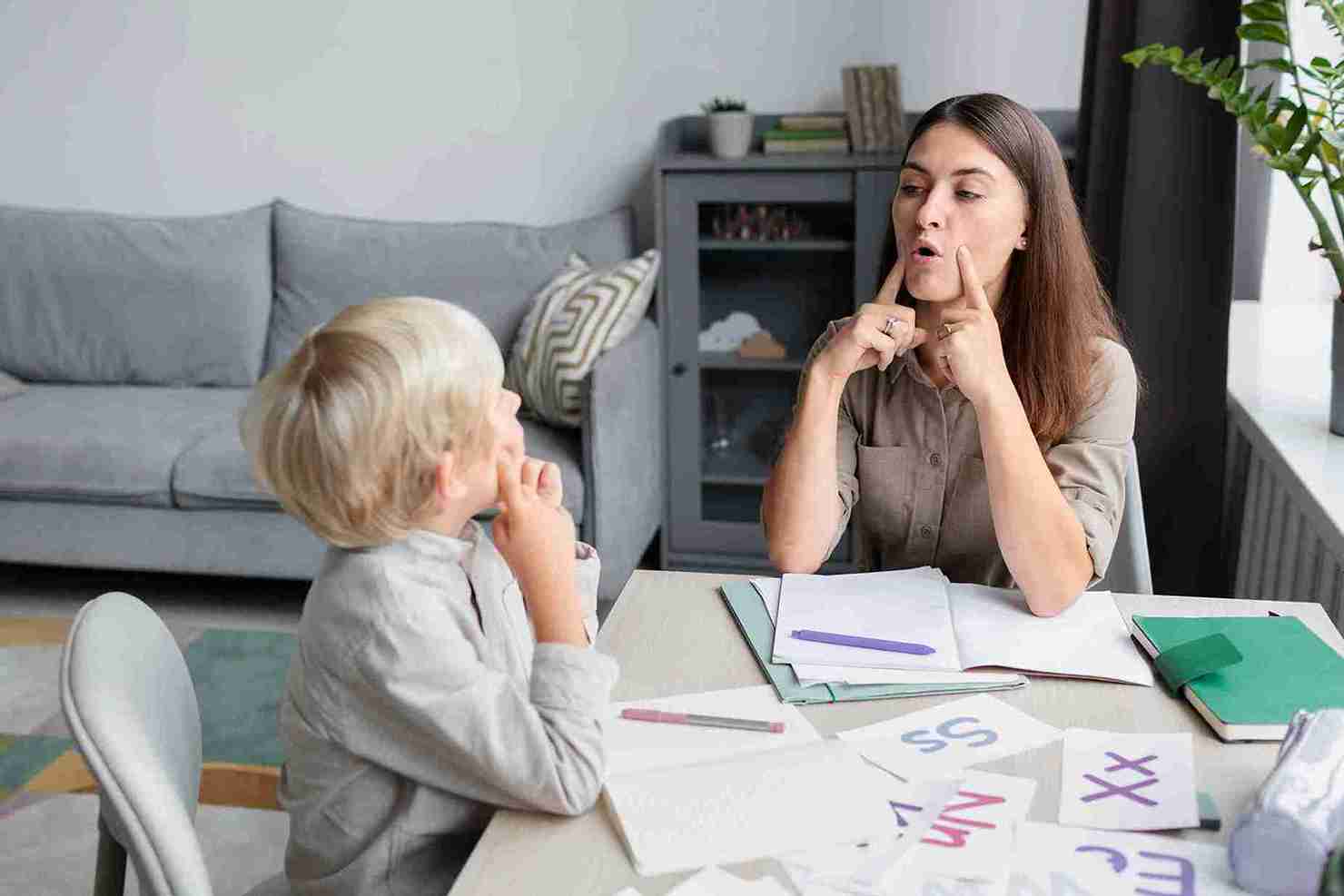
Speech is an important milestone for toddlers. Babies will start paying close attention to your face and mouth when you talk to them. In a few weeks, they will begin to mimic your mouth movements and try to make sounds similar to what you all are making.
Speech is very different from language. While language refers to the verbal, nonverbal, and written forms of communication to understand and be understood, speech refers to the verbal expression of words and sounds.
It is normal for a child to take a little more time than others to reach their speech milestone. However, you cannot keep waiting. Here are a few speech delay signs to watch out for –
If your toddler is between 12 and 24 months of age, the following can indicate a speech delay:
● They do not start babbling by their first birthday
● Does not start saying single syllable words like mama, papa, dada by 16 months of age
● Does not or makes very little eye contact
● Uses very limited or no gestures like pointing, waving, clapping, etc., for communication
● Does not imitate sounds or words
● Does not understand simple words like no, go, come, etc., by 18 months of age.
If your child is between 2-4 years of age, the following can indicate a speech delay –
● They have not started using two-word phrases like more milk, big ball, papa go, by the time they are 2 years old.
● They don’t use more than 50 words by age 3.
● Their speech is unclear, and strangers find it difficult to understand them, even when they are over 3 years old.
● They are unable to put words together to form simple sentences
● They get frustrated when they are unable to communicate what they want
● Inability to follow simple instructions like sit on the chair, get the ball, etc.
● Voice is raspy or nasal.
● They may only imitate others’ speech or actions, but not communicate spontaneously.

If you notice the following in your child, you should seek professional help. Let your paediatrician and a speech therapist evaluate your child.
● Regression – If your child suddenly forgets words or skills they previously used, it may indicate regression in their communication.
● Unable to Comprehend – If your toddler is having trouble understanding and following simple instructions for tasks they can otherwise do. For example, if your child can pick up a ball on their own but cannot follow your instructions to get it, this indicates comprehension issues.
● Breaks Down Communicating – If your child breaks down and starts screaming or crying when trying to communicate something. This shows their difficulty and inability to communicate what they are feeling or want to. The frustration causes them to break down and scream or cry.
● Socialising Difficulties – If they are having trouble socialising (different ages). This includes answering simple questions and interacting with peers.
● Unusual Speech – If your child makes a raspy noise or uses a nasal voice when communicating, it can indicate infections, reflux, sinusitis, allergies, or the growth of nodules. These are temporary issues that can be resolved quickly with the right treatment.
What causes speech delays in children? It is not an intellectual disability, but it is still considered a developmental disability or impairment. Some possible causes for such a delay are –
1. Hearing Loss – If the child has an undiagnosed hearing issue, it could be interfering with their hearing and mimicking abilities. Chronic ear infections can cause hearing issues.
2. Neurological Issues – Birth defects like cerebral palsy or brain defects affecting the speech centres can cause speech delays.
3. Developmental Disorder – Autism spectrum disorder and Down syndrome can often cause speech delays along with other developmental issues.
4. Oral-Motor Issues – Issues with the tongue, like a tongue-tie or apraxia, can hinder sound formation, thus affecting speech. Issues with the palate, like a cleft palate, a split in the mouth’s roof, can hinder speech.
5. Deficiencies – Some studies show a link between vitamin B12 deficiency and speech delays.
6. Premature Birth – Premature babies may take longer to reach developmental milestones.
7. Excess Screen Time – Studies show that children exposed to excess screen time regularly will have speech delays as the screen replaces active verbal engagement. As the child does not get to talk or interact with others, they will take more time to start conversing and communicating.
8. Trauma – Trauma, emotional distress, or even anxiety can cause speech regression or delays. Such children will require professional help to overcome the hindrances.
9. No Social Interaction – Children who are very shy or do not get enough opportunity to communicate or socialise with others will experience speech delays. The lack of exposure and opportunity will slow them down.
10. Feeding Problems – Children use the same oral muscles for sucking, chewing, swallowing, and talking. Feeding issues like poor sucking reflex or lack of coordination in direct feeding can negatively impact sound formation and result in speech delays.
As a parent, you can try the following to help your child’s speech delay:
● Talk More – Keep talking to your child at every possible opportunity. Even when you are performing a simple task like boiling milk or cutting an apple, narrate what you are doing. When you describe your actions, children learn to correlate words with the actions.
● Engage Verbally – Have an active conversation with your child where they also need to respond. As you describe the activity you are performing, ask simple questions to encourage thinking and voluntary responses. This will help them understand questions and answer using task-related vocabulary.
● Read More – If you are not reading to your child yet, it is time to start. If you already read to your child, try increasing reading time and expanding vocabulary. Read picture books, sing songs, or read and explain a story. It can help improve the child’s listening, comprehension, and language.
● Use Gestures – Use your hands, point to things, and use facial expressions in addition to your words, to communicate. Use picture cards and other visual aids to improve their word association.
● Play Games – Use vocabulary games such as finding items or words that start with the same letter or sound. This can not only improve the child’s vocabulary but also build communication skills.
● Cut Back Screen Time – If your child is spending too much time on screens, reduce their screen time and encourage in-person interaction. Let them talk to you, the helpers around the house, or neighbours. In-person interaction can accelerate speech and communication skills.

Speech delays are not something to panic about. While it can indicate a developmental delay or chromosomal abnormality, in many cases, it is simply a delay. With a little effort and support from parents or teachers, children can improve their speech and communication skills in a short time. If concerned, consult a professional who can conduct tests and analyses before making a diagnosis.

When a toddler does not meet the speech or communication-related milestones like using words, combining them with actions and gestures, framing sentences, and following instructions, it can indicate a speech delay.
If a toddler does not try to imitate the sounds or gestures people use around them, does not say more than 50 words by their 3rd birthday, becomes frustrated or throws tantrums when they are unable to communicate effectively, this may indicate a speech delay.
If your child does not start babbling by the time they are 12 months old, does not use simple words with single syllables by 18 months, and does not frame two-word sentences by 24 months, it can indicate a speech delay you need to worry about.
Your paediatrician will initially assess the child by questioning the parents about the child’s speech and by conversing with the child. If necessary, they will refer the child to relevant specialists, such as an audiologist or speech therapist, to identify the possible cause of the speech delay.







 Best Gynecologists in Bellandur Best Gynecologists in Electronic City Best Gynecologists in HRBR LayoutBest Gynecologists in Jayanagar Best Gynecologists in Kanakapura RoadBest Gynecologists in Malleswaram Best Gynecologists in Nagarbhavi Best Gynecologists in Old Airport RoadBest Gynecologists in Sahakarnagar Best Gynecologists in Sarjapur RoadBest Gynecologists in ThanisandraBest Gynecologists in Varthur RoadBest Gynecologists in Whitefield Best Gynecologists in Industrial Area Phase IIBest Gynecologists in OMRBest Gynecologists in T NagarBest Gynecologists in New Industrial TownBest Gynecologists in IndirapuramBest Gynecologists in Golf Course RoadBest Gynecologists in Sector 14Best Gynecologists in Sector 47Best Gynecologists in Banjara HillsBest Gynecologists in GachibowliBest Gynecologists in Hitech CityBest Gynecologists in KompallyBest Gynecologists in Gomti NagarBest Gynecologists in MaladBest Gynecologists in NerulBest Gynecologists in VashiBest Gynecologists in Kailash ColonyBest Gynecologists in PatparganjBest Gynecologists in Punjabi BaghBest Gynecologists in VikaspuriBest Gynecologists in Gaur CityBest Gynecologists in Pari ChowkBest Gynecologists in Sector 51Best Gynecologists in Sector 5 Swastik ViharBest Gynecologists in Kalyani NagarBest Gynecologists in SB RoadBest Gynecologists in Pimple SaudagarBest Pediatricians in BellandurBest Pediatricians in Electronic CityBest Pediatricians in HRBR LayoutBest Pediatricians in JayanagarBest Pediatricians in Kanakapura RoadBest Pediatricians in MalleswaramBest Pediatricians in NagarbhaviBest Pediatricians in Old Airport RoadBest Pediatricians in SahakarnagarBest Pediatricians in Sarjapur RoadBest Pediatricians in ThanisandraBest Pediatricians in Varthur RoadBest Pediatricians in WhitefieldBest Pediatricians in Industrial Area Phase IIBest Pediatricians in OMRBest Pediatricians in T NagarBest Pediatricians in New Industrial TownshipBest Pediatricians in IndirapuramBest Pediatricians in Golf Course RoadBest Pediatricians in Sector 14Best Pediatricians in Sector 47Best Pediatricians in Hitech CityBest Pediatricians in Banjara HillsBest Pediatricians in GachibowliBest Pediatricians in KompallyBest Pediatricians in Gomti NagarBest Pediatricians in MaladBest Pediatricians in NerulBest Pediatricians in VashiBest Pediatricians in Kailash ColonyBest Pediatricians in PatparganjBest Pediatricians in Punjabi BaghBest Pediatricians in VikaspuriBest Pediatricians in Gaur CityBest Pediatricians in Pari ChowkBest Pediatricians in Sector 51Best Pediatricians in Sector 5 Swastik ViharBest Pediatricians in Kalyani NagarBest Pediatricians in SB RoadBest Pediatricians in Pimple Saudagar


