
A late period followed by a negative pregnancy test can make you confused as well as anxious. If this makes you wonder if you are pregnant or not, you are not alone. Many women search for "negative pregnancy test but no period", and the best part is that this is quite common and does not always mean there is a problem.
A period can be delayed for many reasons; it could be stress, any sudden weight changes, travel, illness, or due to hormonal conditions. Sometimes the test itself could be the reason, as testing too early can give a false negative result.
This blog explains why your period may be delayed, how home pregnancy tests work, what spotting can mean, and when you should see a doctor.

Home pregnancy tests determine the presence or absence of human chorionic gonadotropin (hCG), a hormone secreted from the placenta shortly after implantation, in urine. If hCG is present in urine, it indicates a pregnancy. Factors that influence test accuracy are:
● Timing: Testing too soon after ovulation may not give sufficient hCG time to build up.
● Test sensitivity: Various kits for different concentrations of hCG; some are more sensitive than others.
● Urine concentration: Diluted urine, often caused by drinking large amounts of water, can reduce accuracy.
Tip: Home pregnancy tests are most reliable when taken after a missed period, preferably with the first-morning urine, which contains the highest concentration of hCG.
Several factors can cause a negative pregnancy test but no period:
If you take a test soon after ovulation or fertilisation, hCG will not yet be present. This is particularly common if your cycles are inconsistent or ovulation is later than normal.
Taking the test later in the day, drinking too much liquid, having an expired kit, or not reading the instructions very carefully can give a false negative.
Stress, illness, or travel may postpone ovulation. A delayed ovulation pushes the whole cycle, so your period and any implantation bleeding is later than usual.
Too much stress, intense exercise, or extreme weight fluctuation can cause a disturbance in ovulation and postpone menstruation.
Disorders such as Polycystic Ovary Syndrome (PCOS), thyroid disease, or high prolactin levels can disrupt cycles.
Hormonal changes during perimenopause can also cause pregnancy-like symptoms, but with missed or late periods.
Alterations in birth control pills, fertility medications, or some antidepressants can impact your cycle.
So if you are frantically searching for an answer to the question: my period is late but the pregnancy test is negative, it's important to note that a late or missed period does not always equal pregnancy.
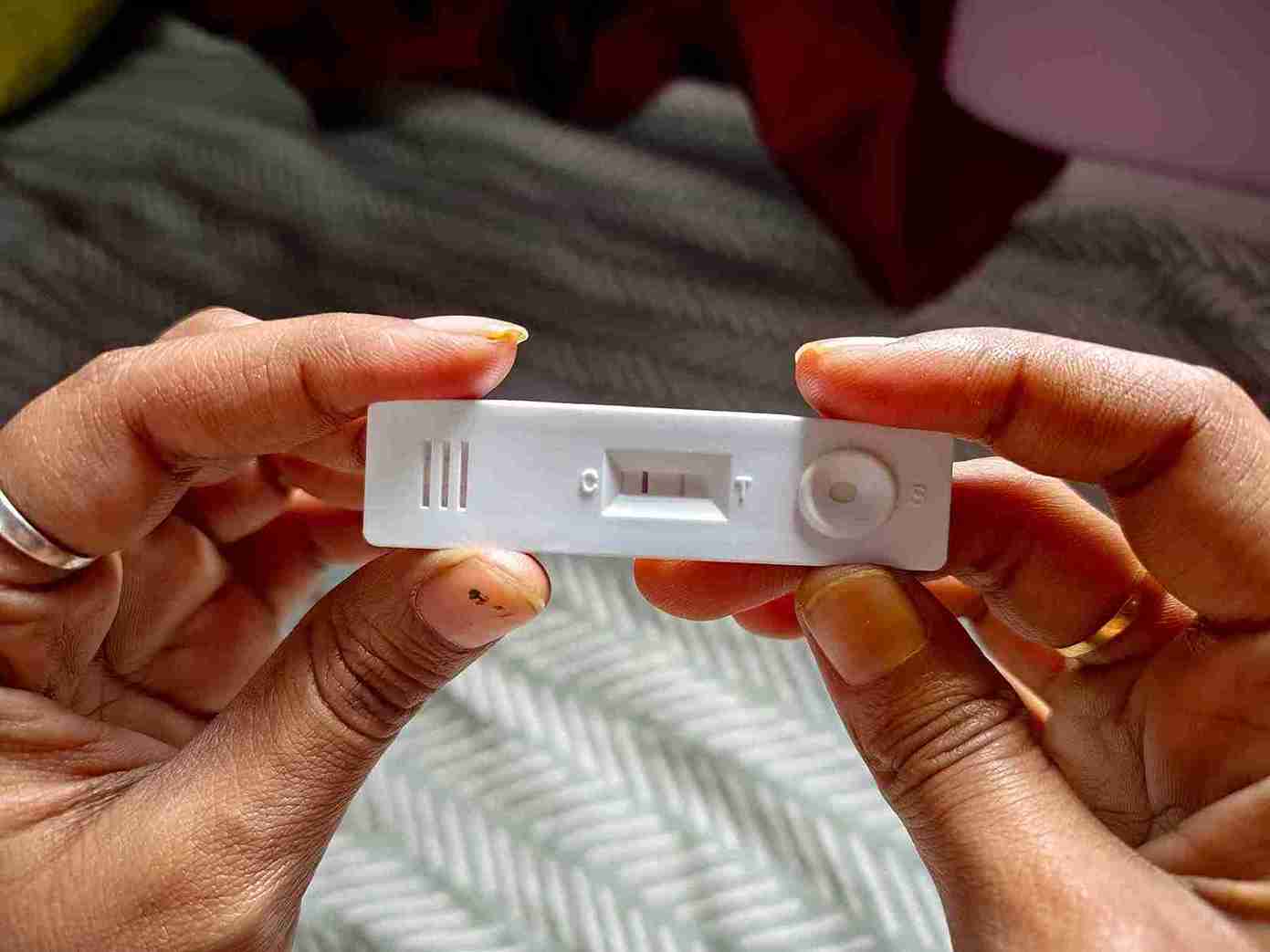
Some women experience spotting instead of period but negative pregnancy test is sometimes indicated. It may be caused by:
● Implantation bleeding: When a fertilised egg implants itself into the uterine lining and results in light spotting that is much lighter and briefer than a normal period.
● Hormonal imbalance or stress: Can lead to spotting or abnormal bleeding.
● Contraceptives or early miscarriage: Can lead to light bleeding despite a negative test.
It's best to retake after some days or visit a physician if the symptoms are long-lasting.
A negative test result may not always rule out pregnancy. A false negative is possible because of:
What you can do: If your period is still absent, repeat the test after 3-5 days using your first-morning urine, as it is the most concentrated. Check the expiry date on the kit and follow the instructions carefully.
When to see a doctor: If your period has not come even after a week and the test is still negative, or if you get repeated negative results with symptoms like nausea, breast tenderness, or abdominal pain, consult a gynaecologist. A blood test for beta-hCG (serum hCG) can detect pregnancy earlier and more sensitively than a urine test. Your doctor will read the result along with your symptoms and, if needed, an ultrasound.
You can retest for pregnancy under certain conditions.
If your period has not started on the expected date and your pregnancy test is negative, it is advisable to repeat the test again after a week. There is a possibility that the hormone levels have not reached the required levels at the time of testing, and you got a false negative.
The first-morning urine is ideal to test as it is highly concentrated and the test can capture hCG easily. This is recommended when you are testing at any time; it may make a difference, especially if you are testing early.
If your period has not started and your second test is also negative, you need to consult your gynaecologist immediately. It could either mean that you are pregnant and both the tests were false negatives, or you may have a uterine abnormality, both requiring urgent intervention.
The results of any test may depend on the timing: when ovulation occurred and when the first test was taken.

Yes, you can be pregnant with a negative home pregnancy test.
Testing early may be one reason to get a false-negative pregnancy test. At times, the hCG may not be at a detectable level when you are doing the pregnancy test, and so the result may be negative.
If you are testing too early, using diluted urine, not following the instructions on the test kit, and using different test kits for multiple tests may be reasons for a false-negative pregnancy test.
Yes, it is totally possible. If you have done only one test, then it is better to repeat it with the same test kit to be doubly sure. The possible reasons for a missed period could be delayed ovulation, a false negative, diluted urine, or, rarely, if your hCG is too high that the test missed it.
If you are consistently missing your period month on month, have any other pregnancy symptoms, or have any other menstrual concerns, you need to consult a doctor immediately.
Some causes of non-pregnancy may result in no period and some reasons for getting a negative pregnancy test can be:
● Polycystic Ovary Syndrome (PCOS): May result in irregular or missing periods due to hormonal imbalance.
● Thyroid problems: Both hypothyroidism and hyperthyroidism may delay cycles.
● Sudden weight changes: Rapid weight gain or loss can interfere with ovulation.
● Excessive physical exertion or stress: Inhibits the hypothalamus, causing a delay in menstruation.
● Chronic disease or acute infections: May temporarily disrupt hormone levels.
● Perimenopause or menopause: Irregular cycles are normal as hormone production decreases.
● Medications: Antidepressants, birth control pills that contain hormones, or chemotherapy can interfere with menstruation.
If periods continue to be irregular for longer than 2–3 months, one should seek the advice of a health care provider for evaluation and treatment.

Seek medical help if you:
● Have missed more than two periods consecutively
● See pregnancy symptoms with repeated negative tests
● Have severe cramping or abnormal bleeding
● Suspect a sudden weight gain or hair growth due to PCOS
● Have hot flashes, night sweats, or mood changes due to suspected perimenopause
The earlier you address these issues, the better, for possible hormonal imbalances, thyroid disorders, or whatever it may be.
Cloudnine is the leading hospital in terms of women’s reproductive healthcare that offers intensive support for women facing irregular cycles, late periods, or complicated pregnancies. With experienced gynaecologists, endocrinologists, and fertility experts, the facility offers:
● Comprehensive evaluation for delayed periods and negative pregnancy tests
● Hormonal analyses and scans for precise diagnosis
● Safeguarding for further tests, monitoring, and counselling
● Treatment of PCOS, thyroid problems, and related reproductive issues
● Confidential support to address existing stress and design lifestyle modifications.

Getting a negative pregnancy test along with no periods is usually the result of natural fluctuations, hormonal changes, or lifestyle factors and not pregnancy. Knowing the timing of ovulation, hCG detection, spotting, and other medical conditions can shed light.
Retesting, symptom monitoring, and calling a healthcare provider if cycles continue to be irregular guarantee proper diagnosis and peace of mind. Through specialised care at facilities such as Cloudnine, women can get personalised advice for late periods, negative pregnancy tests, and reproductive health.

Delays are different for each person. A cycle might be delayed by a week or two because of stress, sickness, or lifestyle, but regularly missed periods should be checked by a doctor.
A home pregnancy test can be negative early in pregnancy, particularly if testing is performed a few days before or after the expected period. Repeating the test in 3–5 days or through a blood test can clarify.
Yes, PCOS can cause a missed period and a negative pregnancy test. This could be due to anovulation, low progesterone levels, and delayed periods. Other possible reasons could be testing too early, high stress levels, or thyroid issues.
Yes. Too early testing, or defective kits can cause false negatives. Repeating the test or a blood test can verify results.







 Best Gynecologists in Bellandur Best Gynecologists in Electronic City Best Gynecologists in HRBR LayoutBest Gynecologists in Jayanagar Best Gynecologists in Kanakapura RoadBest Gynecologists in Malleswaram Best Gynecologists in Nagarbhavi Best Gynecologists in Old Airport RoadBest Gynecologists in Sahakarnagar Best Gynecologists in Sarjapur RoadBest Gynecologists in ThanisandraBest Gynecologists in Varthur RoadBest Gynecologists in Whitefield Best Gynecologists in Industrial Area Phase IIBest Gynecologists in OMRBest Gynecologists in T NagarBest Gynecologists in New Industrial TownBest Gynecologists in IndirapuramBest Gynecologists in Golf Course RoadBest Gynecologists in Sector 14Best Gynecologists in Sector 47Best Gynecologists in Banjara HillsBest Gynecologists in GachibowliBest Gynecologists in Hitech CityBest Gynecologists in KompallyBest Gynecologists in Jawahar NagarBest Gynecologists in Gomti NagarBest Gynecologists in Phase 3, Sector 58Best Gynecologists in MaladBest Gynecologists in NerulBest Gynecologists in VashiBest Gynecologists in Kailash ColonyBest Gynecologists in PatparganjBest Gynecologists in Punjabi BaghBest Gynecologists in RohiniBest Gynecologists in VikaspuriBest Gynecologists in Gaur CityBest Gynecologists in Pari ChowkBest Gynecologists in Sector 51Best Gynecologists in Sector 5 Swastik ViharBest Gynecologists in Kalyani NagarBest Gynecologists in SB RoadBest Gynecologists in Pimple SaudagarBest Pediatricians in BellandurBest Pediatricians in Electronic CityBest Pediatricians in HRBR LayoutBest Pediatricians in JayanagarBest Pediatricians in Kanakapura RoadBest Pediatricians in MalleswaramBest Pediatricians in NagarbhaviBest Pediatricians in Old Airport RoadBest Pediatricians in SahakarnagarBest Pediatricians in Sarjapur RoadBest Pediatricians in ThanisandraBest Pediatricians in Varthur RoadBest Pediatricians in WhitefieldBest Pediatricians in Industrial Area Phase IIBest Pediatricians in OMRBest Pediatricians in T NagarBest Pediatricians in New Industrial TownshipBest Pediatricians in IndirapuramBest Pediatricians in Golf Course RoadBest Pediatricians in Sector 14Best Pediatricians in Sector 47Best Pediatricians in Hitech CityBest Pediatricians in Banjara HillsBest Pediatricians in GachibowliBest Pediatricians in KompallyBest Pediatricians in Jawahar NagarBest Pediatricians in Gomti NagarBest Pediatricians in Phase 3, Sector 58Best Pediatricians in MaladBest Pediatricians in NerulBest Pediatricians in VashiBest Pediatricians in Kailash ColonyBest Pediatricians in PatparganjBest Pediatricians in Punjabi BaghBest Pediatricians in RohiniBest Pediatricians in VikaspuriBest Pediatricians in Gaur CityBest Pediatricians in Pari ChowkBest Pediatricians in Sector 51Best Pediatricians in Sector 5 Swastik ViharBest Pediatricians in Kalyani NagarBest Pediatricians in SB RoadBest Pediatricians in Pimple Saudagar


