
Playtime is one of the best ways for parents and babies to bond. It helps babies learn, grow, and explore their new world while giving parents a chance to enjoy these early moments. Among all the playful activities, tummy time holds a special place!
In this article, we shall learn how tummy time is more than just a fun experience. Tummy time benefits are aplenty, and it goes way beyond just spending some quality time with your baby.
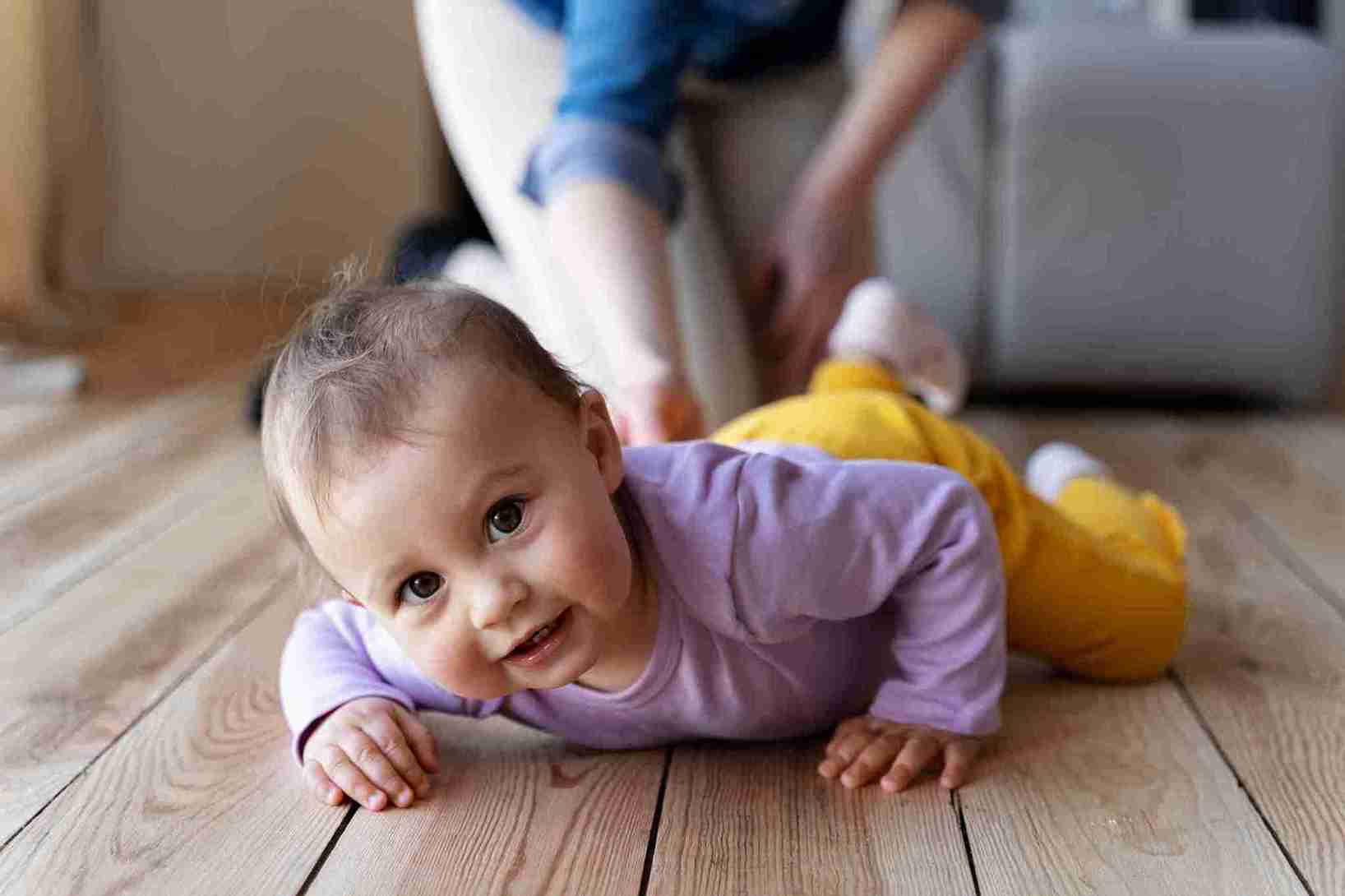
Tummy time is a simple and fun activity that’s incredibly important for a baby’s development. Simply put, it involves placing a baby on their tummy for brief periods each day to build upper-body strength — their head, neck, arms and shoulders.
Spending a few minutes each day on their tummy helps babies in numerous ways. Here is why tummy time is important for your baby’s overall health and development:
Tummy time is your baby’s personal fitness routine! Practising tummy time daily will help strengthen all the muscles in the infant’s body. The baby’s core muscles, hand muscles and hip flexors will become strong. Tummy time will also stimulate the baby to start turning the head to both sides. Ultimately, this will build the baby’s sense of balance and prepare them for crawling.
Babies learn new body postures and movements through tummy time. It provides them a fresh new perspective on their environment and teaches them how their arms and legs work together. Being on the tummy provides a unique and fascinating viewpoint, as most babies spend a significant portion of their time lying on their backs. Additionally, it teaches them how to look down and investigate their surroundings.
Tummy time activities help develop both gross and fine motor skills. Apart from assisting babies in lifting their heads, rolling over, and later crawling, it also supports smaller movements, such as reaching for and holding their toys. These movements help them balance their bodies, control their movements more effectively, and improve hand-eye coordination and grip.
By encouraging little ones to move their head back and forth, spending time on their tummy helps to develop and stretch their neck muscles. This is especially helpful for babies with torticollis, a condition in which tight neck muscles make head movement difficult. Regular tummy time sessions can help increase flexibility and reduce stiffness.
It can even help prevent flat head syndrome (also called positional plagiocephaly or brachycephaly). This is a health issue that happens when babies lie on their backs for long periods of time. During tummy time, shifting the infant's position promotes a healthy head shape and provides uniform pressure on the skull.
Tummy time is one of the most fun activities that parents can do with their little ones. These interactive sessions are precious moments since they create opportunities for parents to bond with their babies.

Contrary to popular belief, tummy time can begin quite early, even during the newborn stage. Let’s take a quick look at how we can incorporate tummy time into the baby’s routine, right from the time they are newborns.
Tummy time can be quite tiring for newborns since their muscles are still developing. For a newborn baby, even lifting their head for a few seconds is a big effort. Therefore, it’s best to have short sessions in the beginning, around two or three times a day, for about three to five minutes each. Gradually increase the time as strength improves. The main goal at this stage is to help babies lift their heads, look around, and get used to being on their tummy. If they fuss, keep it brief and try again later.
Place the baby on their belly on a firm and flat surface, such as a blanket spread on the floor. Some newborns, however, enjoy lying on a parent’s chest or stomach. In addition to strengthening the shoulders and neck, this provides comfort and strengthens the bond between the parent and child. With practice, tummy time soon becomes easier and more natural for the newborn.
Tummy time becomes an important daily routine, as this is when they start lifting their heads and chests while lying on their tummies. Try to give them about 30 minutes of tummy time each day, split into short sessions. This helps strengthen their neck, back, and shoulder muscles. These sessions also prepare them for rolling and sitting later. Babies will also begin to look around more, follow movement, and reach for toys. Their vision improves. They start to notice faces and sounds better. Tummy time keeps them active and helps their overall growth.
Once the babies reach 4 to 6 months, they have become stronger, and they usually have better core strength. They will begin rolling over. At this age, they are also very inquisitive and will start reaching for objects around them. So, tummy time sessions will have to be more engaging. This can be done by placing the baby’s toys around them and allowing them to grasp them.
Six-month-old babies need a bit more tummy time, ideally around 60 to 90 minutes, split into multiple sessions. Tummy time will continue till they begin to crawl and pull themselves up. Eventually, tummy time will phase out as the baby starts walking.
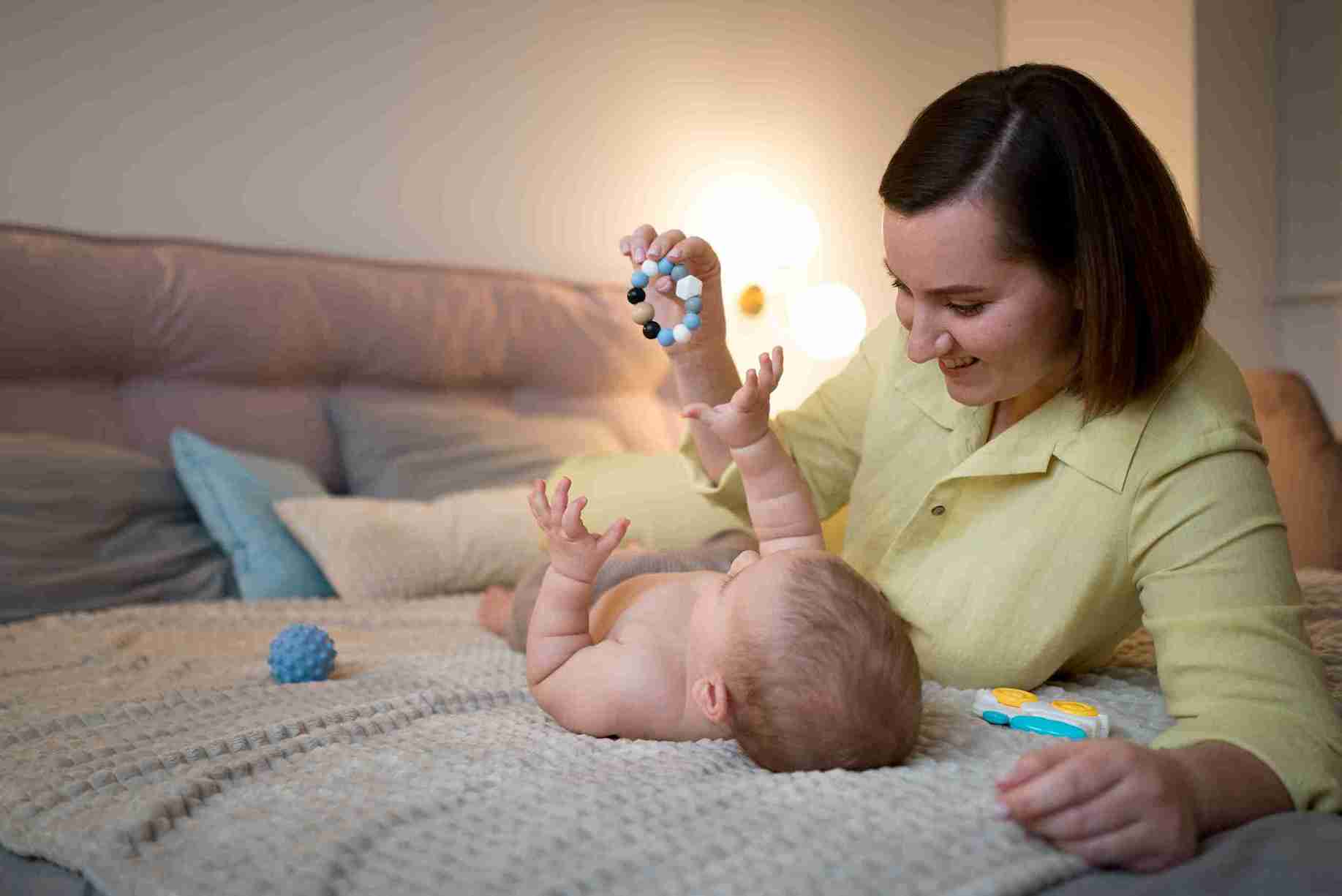
Here are a few things experts recommend keeping in mind while performing tummy time with your baby:
● Find a safe and comfortable space for your baby’s tummy time. This should be a clean, flat surface, with a baby blanket or mat spread on it. It’s best not to place the baby on the bed, since they could roll over and fall off. For older babies, inflatable tummy time water mats can be used.
● Never do tummy time right after a breastfeeding session. Placing the baby on a full stomach may cause them to spit up. Wait for at least 20 to 30 minutes before starting tummy time.
● Keep a rolled-up hand towel or blanket under their chest to prop them slightly up. This will help them raise their head and, eventually, prop themselves up on their forearms.
● Make the area interesting. Babies are naturally inquisitive, and they need things to look at and grasp. Place toys, activity gyms, unbreakable mirrors, colourful illustrated baby books, etc., around them.
● While the baby does the tummy time exercises, safety tips need to be followed. Always be vigilant during tummy time. Do not put any small objects, food, or drink nearby, as the baby might grab them and put them in the mouth. Never leave the baby alone, even for a second. Babies can get into trouble quickly and will need immediate help when they do.
● Always ensure the baby is ready and healthy enough to start tummy time. Tummy time may not be safe for babies who were born prematurely or have health issues like reflux disease. In such cases, follow the advice given by the baby’s doctor.
● Sit or lie next to the baby. Sing a song, tell a story, or just play with them. These are precious moments and need to be enjoyed.
Not all babies enjoy tummy time. So, what can be done if this is the case?
● Start tummy time sessions when the baby is calm, relaxed, and least fussy.
● Check if there aren’t any health issues that are making the infant uncomfortable.
● Keep the baby’s favourite toys nearby.
● Lie on the floor alongside them and keep them engaged.

Tummy time sessions are important because these activities help build strength, coordination and self-confidence. It’s more than just a typical routine in the baby’s day. It’s a moment of pure joy that helps build a strong bond between the baby and the parents. So, dedicate an appropriate amount of time to this activity, because it’s worth it!

Tummy time helps develop the baby’s muscles, hand-eye coordination and cognitive skills.
For newborns, 30 minutes of tummy time that’s split into multiple short sessions throughout the day is enough.
Place the baby on colourful, inflatable water mats and keep toys, unbreakable mirrors, activity gyms, etc., around them.
Tummy time can start as early as a baby's first days.







 Best Gynecologists in Bellandur Best Gynecologists in Electronic City Best Gynecologists in HRBR LayoutBest Gynecologists in Jayanagar Best Gynecologists in Kanakapura RoadBest Gynecologists in Malleswaram Best Gynecologists in Nagarbhavi Best Gynecologists in Old Airport RoadBest Gynecologists in Sahakarnagar Best Gynecologists in Sarjapur RoadBest Gynecologists in ThanisandraBest Gynecologists in Varthur RoadBest Gynecologists in Whitefield Best Gynecologists in Industrial Area Phase IIBest Gynecologists in OMRBest Gynecologists in T NagarBest Gynecologists in New Industrial TownBest Gynecologists in IndirapuramBest Gynecologists in Golf Course RoadBest Gynecologists in Sector 14Best Gynecologists in Sector 47Best Gynecologists in Banjara HillsBest Gynecologists in GachibowliBest Gynecologists in Hitech CityBest Gynecologists in KompallyBest Gynecologists in Gomti NagarBest Gynecologists in MaladBest Gynecologists in NerulBest Gynecologists in VashiBest Gynecologists in Kailash ColonyBest Gynecologists in PatparganjBest Gynecologists in Punjabi BaghBest Gynecologists in VikaspuriBest Gynecologists in Gaur CityBest Gynecologists in Pari ChowkBest Gynecologists in Sector 51Best Gynecologists in Sector 5 Swastik ViharBest Gynecologists in Kalyani NagarBest Gynecologists in SB RoadBest Gynecologists in Pimple SaudagarBest Pediatricians in BellandurBest Pediatricians in Electronic CityBest Pediatricians in HRBR LayoutBest Pediatricians in JayanagarBest Pediatricians in Kanakapura RoadBest Pediatricians in MalleswaramBest Pediatricians in NagarbhaviBest Pediatricians in Old Airport RoadBest Pediatricians in SahakarnagarBest Pediatricians in Sarjapur RoadBest Pediatricians in ThanisandraBest Pediatricians in Varthur RoadBest Pediatricians in WhitefieldBest Pediatricians in Industrial Area Phase IIBest Pediatricians in OMRBest Pediatricians in T NagarBest Pediatricians in New Industrial TownshipBest Pediatricians in IndirapuramBest Pediatricians in Golf Course RoadBest Pediatricians in Sector 14Best Pediatricians in Sector 47Best Pediatricians in Hitech CityBest Pediatricians in Banjara HillsBest Pediatricians in GachibowliBest Pediatricians in KompallyBest Pediatricians in Gomti NagarBest Pediatricians in MaladBest Pediatricians in NerulBest Pediatricians in VashiBest Pediatricians in Kailash ColonyBest Pediatricians in PatparganjBest Pediatricians in Punjabi BaghBest Pediatricians in VikaspuriBest Pediatricians in Gaur CityBest Pediatricians in Pari ChowkBest Pediatricians in Sector 51Best Pediatricians in Sector 5 Swastik ViharBest Pediatricians in Kalyani NagarBest Pediatricians in SB RoadBest Pediatricians in Pimple Saudagar


