





It's been a day or two since your infant had a dirty diaper, but you can hear those tiny farts clearly. You start wondering: is anything wrong? If your newborn is not pooping but passing gas, you're definitely not the only parent experiencing this. Many parents experience this after the first few weeks of their baby being born and wonder if their baby's belly is upset or constipated.
For most, it's totally normal, but occasionally, it can be a sign of a digestive problem that requires attention. In this article, you'll learn the potential causes, soothing home treatments, and plain red flags to be aware of and immediately call a paediatrician.
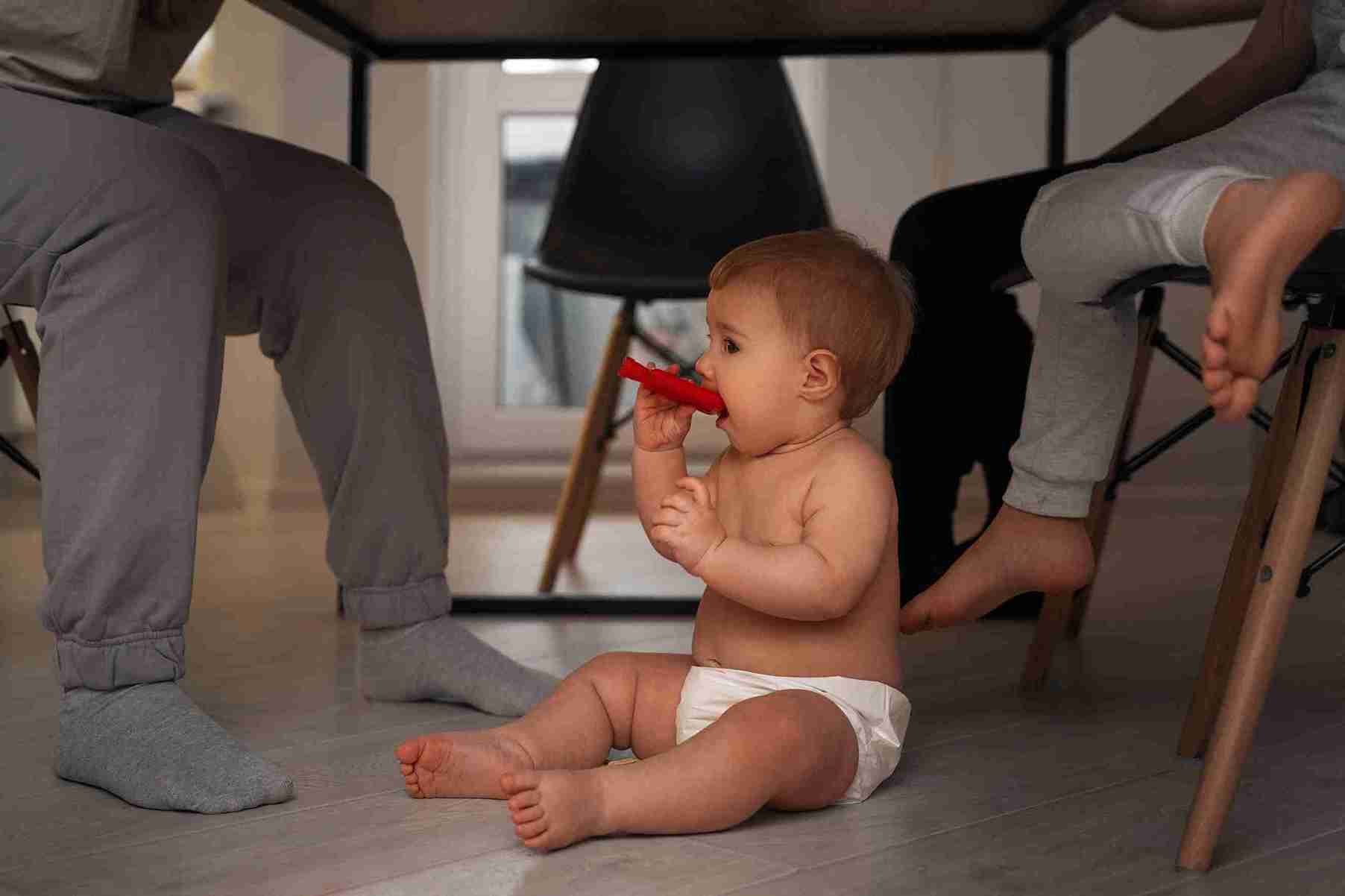
Every newborn has a unique poop pattern. Some babies poop several times a day, while others may skip a day or two; both can be normal. What matters most is the baby’s comfort and stool consistency, not the frequency.
Breastfed babies will frequently have loose stools and may not pass stools for several days once their digestive system adapts. This is due to the fact that breast milk is specially formulated for easy digestion, and little waste remains.
Formula-fed babies, on the other hand, poop more frequently and have firmer stools.
As for gas, it’s a normal part of digestion. Newborns swallow air while feeding or crying, and their immature digestive system takes time to process it. So, a newborn farting but not pooping doesn’t always mean constipation; it can just mean their tiny tummy is still learning to function smoothly.
Wondering how often should a newborn poop? The answer changes quite a bit in the first few weeks, so here is a simple breakdown.
Your baby will pass meconium, a thick, dark green or black, tar-like stool. This usually happens within the first 24 hours and continues for a day or two.
As your baby starts feeding well, stools change to a greenish-yellow, then to a mustard-yellow, seedy texture by around day 5-7. Most babies pass stool at least 3-4 times a day during this period.
Breastfed babies often poop after every feed during this stage, sometimes 5-8 times a day. Some babies settle into fewer, larger stools instead, and both patterns can be normal as long as the baby is feeding well and gaining weight.
This is when a breastfed baby not pooping for a few days becomes more common and is usually not a cause for worry. Breastmilk is digested so efficiently that some babies may go 3-7 days, or occasionally longer, between stools without any problem, provided the stool is soft when it does come, and the baby is otherwise comfortable, feeding well, and gaining weight.
Breastfed babies tend to have looser, more frequent stools early on, and often show wider gaps between stools after 6 weeks. Formula-fed babies usually poop more predictably, often once a day or every other day, and their stools tend to be firmer and darker than those of breastfed babies. If a formula-fed baby goes several days without pooping, it is more likely to need attention compared to a breastfed baby doing the same.

There are a few explanations for why your newborn is not pooping but passing gas. Let's understand the most common causes:
During the first few months, your baby's digestive system is still maturing. Muscles that contract to move food through the intestines (peristalsis) haven't yet developed into a coordinated system. This can allow gas to pass freely while poop lingers on its journey.
Babies who eat too quickly, cry excessively, or nurse with a bad latch are prone to swallowing more air. This air builds up in the form of gas bubbles in their tummies and makes them gassy even when they haven't yet pooped.
A newborn not pooping but passing gas, breastfed, is usually absolutely normal. By the first few weeks, breastfed infants can go as long as 5–7 days without a bowel movement since breast milk is almost fully digested. Provided that your baby seems happy and the abdomen is soft, there is no need to worry.
Occasionally, a temporary slowdown in digestion may occur because of dehydration, weather change, or minor illness. This temporary constipation generally gets resolved with proper care and patience.
If you just switched your baby from one formula to another, or if you are breastfeeding and drastically altered your diet (by increasing dairy, caffeine, or spicy foods), your baby's digestive system may temporarily respond with gas or slowed pooping.
If your newborn is not pooping but passing gas though being breastfed, you may start worrying if your baby is getting enough milk. Here are some signs that can help:
Watch for fewer than 5 wet diapers a day, dark yellow or strong-smelling urine, poor weight gain, constant fussiness after feeds, or a baby who seems unusually sleepy and hard to feed. If your baby is not pooping but is passing gas and also showing any of these signs, it is worth checking with your paediatrician, since stool patterns are closely linked to how much milk your baby is actually taking in.

It's important to know the difference between normal and when to seek medical care.
Quick Check: Normal vs Red Flag
● Baby is happy and feeding well.
● Tummy is soft, not tight or swollen.
● Baby easily passes gas.
● Poop is soft
● No extra crying or distress.
● No stool for over 4 days.
● Hard, pellet-like poop.
● The abdomen is swollen or tight.
● Baby strains or cries in pain.
● Vomiting, refusing feeds, or poor feeding.
● Blood in stool.
If you notice a red flag, it's best to have your baby checked out.
Call your physician if your newborn hasn't had a bowel movement in a few days, particularly if they are uncomfortable, won't feed, or vomit. These may signal constipation, intestinal blockage, or an illness such as Hirschsprung's disease, in which sections of the intestines don't work properly.
Early assessment prevents your baby from being uncomfortable and ensures they remain healthy.

Unless your baby has a medical condition or seems otherwise unwell, there are some safe, gentle methods of stimulating bowel movement and easing gas at home.
Place your baby on their back and rub their stomach gently in a clockwise direction with your fingertips. This facilitates the movement of trapped gas along the intestines. You may also have your baby do the "bicycle legs" action, pedalling back and forth to help dislodge gas and stimulate the bowels.
A warm bath relieves your baby's abdominal muscles, easing them to pass stool or gas. It also calms any pain brought about by trapped air.
It is important to burp your baby correctly during and after every feed. This avoids too much air from entering the tummy and minimises gassiness.
If you’re breastfeeding, ensure your baby has a deep, proper latch to reduce swallowed air. If bottle-feeding, hold the bottle at an angle so the nipple stays full of milk, not air.
Never use over-the-counter laxatives, suppositories, or home remedies unless advised by your paediatrician. Babies’ digestive systems are delicate and can react unpredictably to such treatments.
Newborn care at Cloudnine Hospitals is more than mere medical treatment; it is personalised attention for the baby as well as the parents. Their staff of specialist paediatricians and neonatologists guarantees round-the-clock attention to even the smallest issues, ranging from gas problems to severe digestive problems.
Cloudnine focuses on evidence-based practices, hand-holding of newborns, and open communication with the parents so that each family feels a sense of support. Whether it is a regular checkup or neonatal speciality care, Cloudnine brings together expertise, empathy, and state-of-the-art facilities for your baby's finest beginning in life.

If your newborn is farting but not pooping, don't worry, in most instances, it's perfectly normal and temporary. Newborn digestive systems take time to mature, and gas tends to clear faster than poop. But always monitor your baby's comfort, feeding habits, and softness of the tummy.
If ever you are unsure or your infant appears to be in discomfort, get in touch with your paediatrician. Each baby's belly is unique. Listen to your instincts and ask for assistance if anything doesn't feel right. With tender care and medical support, your infant's digestive rhythm will regain its natural balance.

Their immature digestive tract and swallowed air can lead to gas. It's usually normal unless it's associated with pain or other warning signs.
For breastfed babies, 5–7 days can be normal. For formula-fed babies, see a doctor if it's been over 3–4 days.
Attempt tummy massages, bicycle legs, warm baths, and good burping with feeds. These soothing strategies may stimulate movement.
Hard pellet-shaped stools, bloated tummy, excessive crying, straining, or refusal to feed are typical signs. Consult your paediatrician if you see these.


 Best Gynecologists in Bellandur Best Gynecologists in Electronic City Best Gynecologists in HRBR LayoutBest Gynecologists in Jayanagar Best Gynecologists in Kanakapura RoadBest Gynecologists in Malleswaram Best Gynecologists in Nagarbhavi Best Gynecologists in Old Airport RoadBest Gynecologists in Sahakarnagar Best Gynecologists in Sarjapur RoadBest Gynecologists in ThanisandraBest Gynecologists in Varthur RoadBest Gynecologists in Whitefield Best Gynecologists in Industrial Area Phase IIBest Gynecologists in OMRBest Gynecologists in T NagarBest Gynecologists in New Industrial TownBest Gynecologists in IndirapuramBest Gynecologists in Golf Course RoadBest Gynecologists in Sector 14Best Gynecologists in Sector 47Best Gynecologists in Banjara HillsBest Gynecologists in GachibowliBest Gynecologists in Hitech CityBest Gynecologists in KompallyBest Gynecologists in Gomti NagarBest Gynecologists in MaladBest Gynecologists in NerulBest Gynecologists in VashiBest Gynecologists in Kailash ColonyBest Gynecologists in PatparganjBest Gynecologists in Punjabi BaghBest Gynecologists in VikaspuriBest Gynecologists in Gaur CityBest Gynecologists in Pari ChowkBest Gynecologists in Sector 51Best Gynecologists in Sector 5 Swastik ViharBest Gynecologists in Kalyani NagarBest Gynecologists in SB RoadBest Gynecologists in Pimple SaudagarBest Pediatricians in BellandurBest Pediatricians in Electronic CityBest Pediatricians in HRBR LayoutBest Pediatricians in JayanagarBest Pediatricians in Kanakapura RoadBest Pediatricians in MalleswaramBest Pediatricians in NagarbhaviBest Pediatricians in Old Airport RoadBest Pediatricians in SahakarnagarBest Pediatricians in Sarjapur RoadBest Pediatricians in ThanisandraBest Pediatricians in Varthur RoadBest Pediatricians in WhitefieldBest Pediatricians in Industrial Area Phase IIBest Pediatricians in OMRBest Pediatricians in T NagarBest Pediatricians in New Industrial TownshipBest Pediatricians in IndirapuramBest Pediatricians in Golf Course RoadBest Pediatricians in Sector 14Best Pediatricians in Sector 47Best Pediatricians in Hitech CityBest Pediatricians in Banjara HillsBest Pediatricians in GachibowliBest Pediatricians in KompallyBest Pediatricians in Gomti NagarBest Pediatricians in MaladBest Pediatricians in NerulBest Pediatricians in VashiBest Pediatricians in Kailash ColonyBest Pediatricians in PatparganjBest Pediatricians in Punjabi BaghBest Pediatricians in VikaspuriBest Pediatricians in Gaur CityBest Pediatricians in Pari ChowkBest Pediatricians in Sector 51Best Pediatricians in Sector 5 Swastik ViharBest Pediatricians in Kalyani NagarBest Pediatricians in SB RoadBest Pediatricians in Pimple Saudagar


